I turned off Rifle River Road onto the snow-covered driveway leading to the Ogemaw County Fairgrounds. Two sets of tire tracks told me I was last to arrive. Following them, I passed a collection of small historic buildings gathered from around the community to form the Antique Village. During Fair Week each August, crowds wandered through them to view old-fashioned farm implements salvaged from fading barns, saws from the lumbermen who settled the county in the 1800s, and other items few visitors could identify. Displayed without connection to the person who used them, or at least a good story, they were merely curiosities from a by-gone era. It saddened me that the people who used these tools, studied in the one-room schoolhouse, shopped in the general store and worshipped in the chapel, had slipped away with few left to remember them.
Three wild turkeys flapped across the road in front of my vehicle. They ran under an old wagon as I continued my drive to the Veterans Museum. When I pulled up in front, Rich walked out onto the front step. Tall, with a grayish-orange beard that hung over his black VFW jacket, he wore his ever-present shades with a floppy hat emblazoned with the words “Vietnam Veteran.”
“You made it,” Rich called. “What can I carry for you?”
I stepped out into ankle deep fresh snow and opened the back door of my truck. Inside was a library-quality scanner, my laptop and a studio box for consistent lighting. Together, we carried the items inside the rectangular building sided with pine logs for that “rustic look.”
John called from the top of a ladder: “We’ve already started. We wanted you to have some stuff to do right away, so we got here early. Besides, when I was done with the ladies, there was no reason not to head here.”
“How many cows you got, John?” I asked.
“Two hundred. I start milking at 0430.”
“So, when you joined the Army, it was so you’d have a chance to sleep in?”
“You know it.”
I found a spot in the back of the smaller of the two rooms and hooked up the scanner. Rich and John continued taking photos off the wall, out of frames, and lining them up on top of the display cases.
These men are gems. When I first told them what I wanted to do, I expected the guys would think I was crazy. Who volunteers to digitize an entire museum? But when I pointed out that one fire or flood could wipe out the history of Ogemaw County Veterans, they listened. For years, families had been donating the memorabilia from their loved one’s military service to the museum, which could now barely contain all the items. Photos covered walls up to the ceiling, display cases threatened to take over aisles, and racks were packed with uniforms from the Civil War to the present.
“As long as you know what you’re doing, I’ll help,” John had said when he volunteered. “If it has four teats, moos and gives milk, I know what to do with it. Beyond that, it’s up to you.”
Though not too familiar with computers, at seventy-four, John has a mind like one. For the last ten years, he’s been interviewing veterans and writing their stories. To hear him tell one, all I needed to do was hand him a photo.
“Hey John, what’s up with these photos of a tiger?” I held two fading snapshots that were curling at the corners.
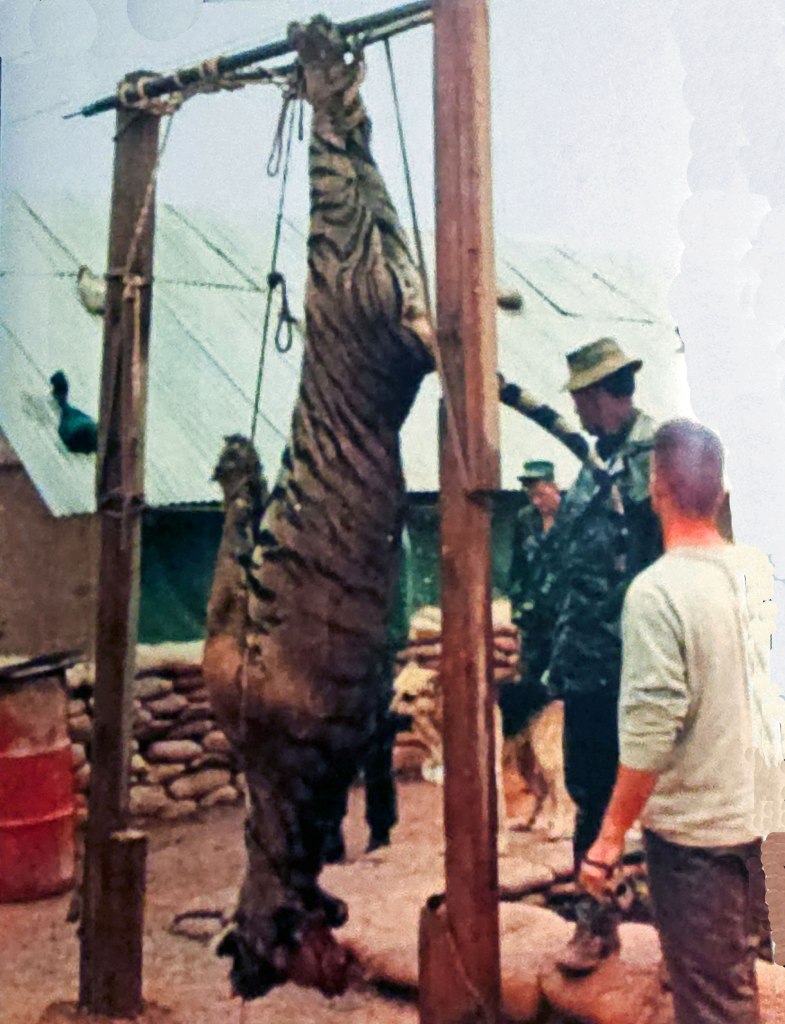
“Oh, that happened in the A Shau Valley in Vietnam. Marine Sergeant Bob Phleger was a Force Recon team leader. He took his men up on Razorback Ridge to patrol for a few days. Because the ridge was so narrow, they couldn’t set up a proper nighttime perimeter, so they slept head to toe in a line. Bob was on the far end. In the middle of the night, they heard him scream. Then he disappeared. Since they were under light restriction, they had to wait until morning to look for him. They found a boot near a bloody trail. Following it, they found a Bengal tiger guarding its prey. They shot at the tiger, and it ran. They called in a medivac and gathered Bob’s remains. As they were loading his body onto the chopper, the tiger rushed at them from where it had been hiding in the brush. One of the men shot it dead. So, they loaded the tiger, too, and brought it back to their base camp. Of all the things I worried about in Vietnam, being eaten by a tiger was not one of them.”
“Who’d even think of it? I feel for that chaplain who had to make the casualty assistance call to his family. I’ve had to deliver bad news many times, but never because the deceased had been eaten.”
I flattened the tiger photos just enough to get a clear picture, then placed them on top of their frame. When I had scanned another dozen, I walked them back to John.
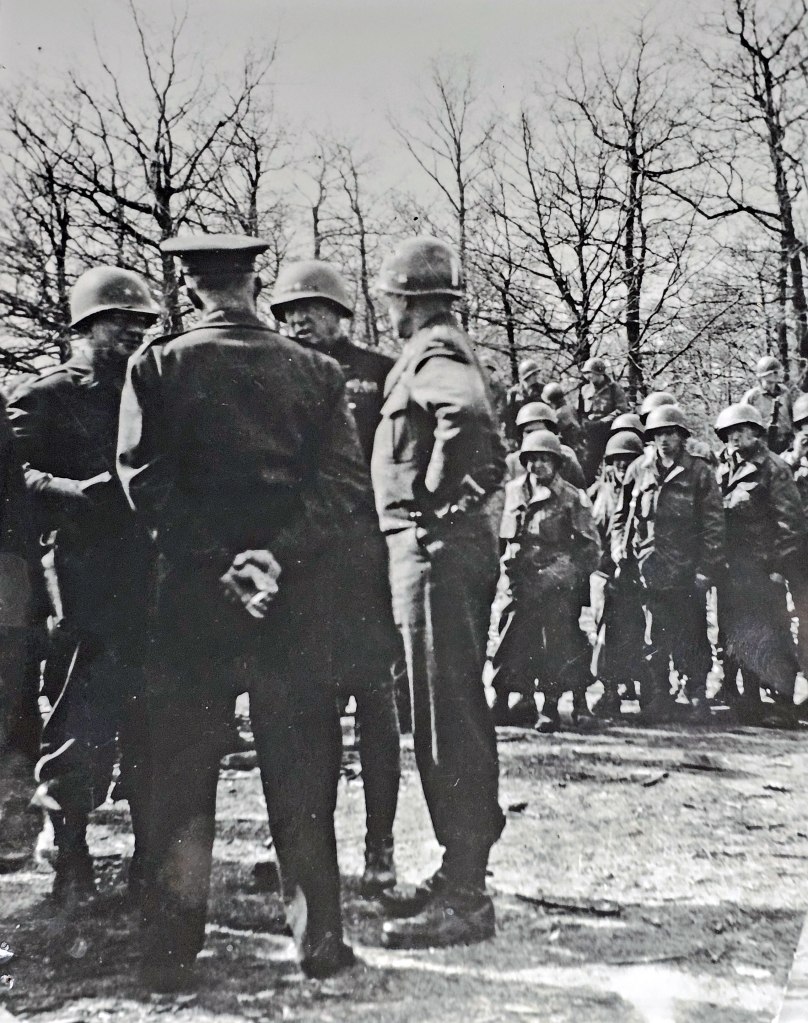
John held out two older photos. “Do you recognize anybody in these?”
“Is that Omar Bradley?”
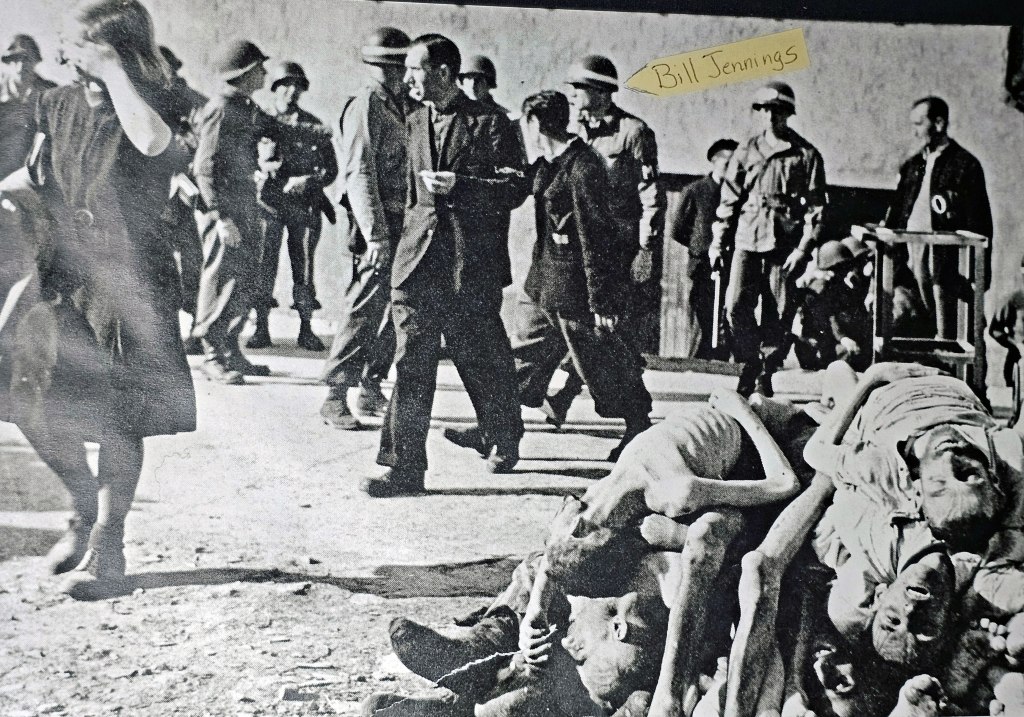
“Yep. And this here is General Eisenhower, that’s General Patton. And see this guy? That’s Bill Jennings. He was one of their drivers.
And look at this second photo taken at a concentration camp. Bill told me he was ordered to make the townspeople walk past piles of bodies, then assist in the burials. You don’t think this is too gory to display, do you?”
Rich answered from across the room. “People need to know the truth.”
I nodded. “That’s what’s happening in Bill Jennings’ photo. People are being made to see the truth of war. We have to continue that legacy, John.”
On my way back toward the scanner with a new pile of photos, I wandered over to Rich. “How are you feeling? You had chemo this morning, didn’t you?”
“I’m okay. I only have thirty-six treatments to go. Today was the seventh.”
“There’s a comfy wheelchair in the corner if you need a sit-down.” Rich ignored me and continued working. That’s how he handled everything difficult. He just kept going. To get away from a less than stellar home life, he’d volunteered to serve in the Army. As a Combat Engineer, he’d spent two years building bridges and roads along the Ho Chi Minh Trail near Saigon and Bien Hoa. When he returned home, he’d worked in a sugar beet factory, a Buick plant and as a “carnie” maintaining the rides. Finally settling in West Branch, he adopted the local veterans as his family. He never misses an event or a chance to volunteer. I patted last year’s ‘Veteran of the Year,’ on the shoulder, grabbed the pile of photos he had unframed and went back to scanning. Soon, John brought me a second pile. He must have thought I was working too fast, so he decided to tell a few more stories.
“See this one? This is my first best friend, Diehl. We grew up together. What a great guy… He didn’t come home from Vietnam.

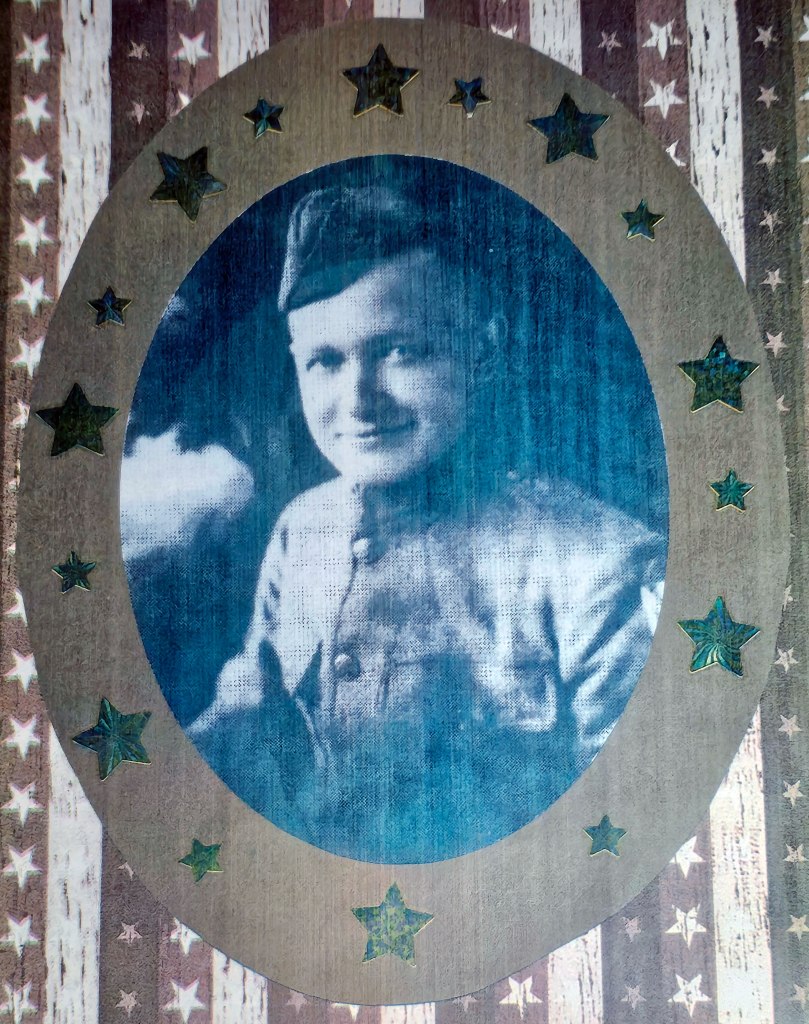
Here’s one of Ernest Andrews. He was part of the 339th U.S. Army’s Polar Bear Expedition deployed just below the Arctic Circle to fight the Bolsheviks months after WWI ended. Most of the guys in his unit were from Michigan and Wisconsin, so it was thought they could withstand the cold.
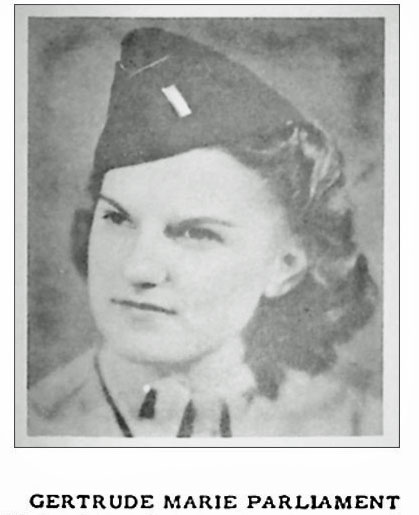
Check out this one. That’s Gertrude Parliament. She was an Army Nurse who served with the first field hospital to land at Normandy. As she and two other nurses crossed the beach, some commander yelled, ‘What are you women doing here?’ Gertrude’s answer? ‘We’re here to save you.’
Here’s one of Doyle Brindley. You know him, he comes to your monthly vet’s coffee with his wife. Doyle survived the bloody Battle of Pork Chop Hill just before the end of the Korean War.”

“John, you know so many stories about Ogemaw County Veterans. Why did you start collecting them?”
“Ten years ago, I drove my wife to the mall in Saginaw. She likes to look at stuff and take her time. I found a seat next to an older man wearing an Army ball cap. I asked him when he’d served and he said WWII. Then he told me he’d landed on the beach at Normandy. He told me how frightened everyone was in the landing craft; how some were praying, others crying. He said as they got closer to the shore, he remembered a sergeant once told him if he got into that kind of situation, he should take off his pack. He did, and soon after, the bullets came flying. He ended up in the water and somehow lost both his gun and his helmet. When he washed up on shore, he saw two dead soldiers slumped over each other. He asked God to forgive him as he crawled over to the bodies to use them as a shield. A little while later, he felt a hand grab the back of his shirt and lift him up. ‘You gotta get off this beach or you’ll die,’ the soldier said as they ran together. He told me how he’d survived the hedgerows, then fought in the Battle of the Bulge. When his wife arrived, she asked me if he was boring me with his old stories. I was so mesmerized by what he was saying, I hadn’t noticed a crowd had gathered behind me to listen. They applauded as he and his wife walked away. I wish I had gotten his name. But his story is what’s inspired me to collect other veteran’s experiences.”
“How many have you interviewed?”
“Sixty-five so far. Some have a harder time talking about their service. Like this one WWII vet. He was telling me about eating chow in a foxhole in Metz with his buddy. They had just opened their rations when a round came in and splashed his buddy’s head all over him. He stopped talking after he said that. When he started again, he asked me about fishing for brown trout in Lake Superior.”
“It must take a toll on you to hear some of these stories.”
“Yeah, sometimes it does.” He fidgeted with a frame on the counter. “Well, I better get back to work.”

“Me, too.” I placed an older photo in front of me and tried to duplicate the image without glare. So many of the pictures were fading, curling, and cracking. Add a few years, and the history captured in light and shadow will be lost, like so many veterans and the stories they never told.
I commit mine to paper so they won’t be forgotten. It’s easier to carry them there than in my head. But to tell them? Too often a memory grabs my throat mid-sentence, choking me into silence. Other times, the visage of my listener tells me they can’t bear any more; they can’t bear to hear what it really costs to serve our country. Too revealing of horrors endured and deeds required, they’d rather not know.
Rich placed a stack of news clippings in front of me. “These were in a file drawer. I think they’re from World War Two.”

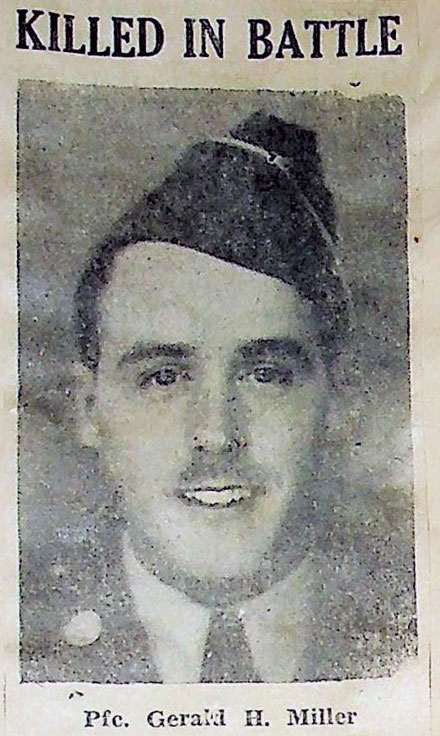
The print on the yellowed pages had faded, but the stories were there. Brothers Russell and Richard White had been lost at sea when their battle cruiser, USS Juneau, sank off Guadalcanal. Gerald Miller had been killed in “bitter fighting” in New Guinea. Though wounded himself, Charles Corwin had been awarded the Silver Star for giving first aid to others and fighting off the air attack on his flying fortress, Stupefier II.


I placed the pages on the scanner and tapped the button. Again, and again. These stories must not be forgotten. Theirs. Mine. Every one we can preserve.
At 1630, John got a phone call. “That was my wife. She had only one word to say: Cows. I guess it’s time for me to head home.”
The three of us tidied up our work areas and put on winter gear before heading to our trucks. Fresh snow crunched under my tires as I made my way toward the exit. I paused for a moment near the Antique Village. Although picturesque in the wintery twilight, it offered only a glimpse into a time that was and is no more. But at the Veterans Museum, every story brought to life a tale of sacrifice and service. Each weapon, piece of gear, uniform and medal provided tangible evidence of hardship endured. Every photo gave us a glimpse of the men and women upon whose shoulders we stand, and a challenge to honor their courage and commitment with our own.
Copyright © 2026 bendertales.com
- χαρακτήρ
- You Remember That Woman Who Gave the Apple to Snow White?
- When It Really Matters
- What I Learned From Wounded Warriors
- War in Pieces
- Vulture Strike
- Touching Steel
- To Shield and Protect
- To Honor Their Courage and Commitment
- To Adult or Not to Adult: That Shouldn’t Be A Question
- The Twins
- The Third Death
- The Same Flight
- The Right Time
- The Mighty Pen Project
- The Message
- The Living Nativity
- The Living Last Supper Follies
- The Homegoing
- The Guys
- Semper Fire
- Rope Walking
- Questions
- Posing for my Statue
- Pickled Peter Picked a Pyre
- Pickle Sunday
- Overworked and Blessed: A Christmas Story
- One Day in September
- Okay So Far
- Never Forget
- Look at the Fish
- Later
- Kuwaiti Exchange
- It’s the Thought That Counts
- If It’s Not One Thing, It’s Your Mother
- I Remember You
- How to Prepare for Reassignment
- Harmony
- Glimpses
- Gifts for Living
- Get Home Safe
- Front Toward Enemy
- For the 25th Anniversary of 9/11
- Facing the Philistines
- Eyesore
- Dear Elmer
- Dead in the Head
- Crumbs to a Beggar
- Cora
- Close at Hand
- Calling Home
- At the American Cemetery in Normandy
- A Word for Those Who Need It: Holiday Version
- A Word for Those Who Need It
- A Single Light
- A Sign for Our Times
- A Letter for the Generations
- A DUCK TALE (A Guest Post!)

