You Remember That Woman Who Gave the Apple to Snow White?

A light snow fell as I turned into our driveway. I parked at the far end. Our yellow house, built in 1927 from a Sears and Roebucks kit, glowed in the afternoon sun. Surrounded by a white picket fence, our home was almost cliché. Thankful for a half-day of work at the Naval Chaplains School, I headed to the front porch to sit on the swing. Even in the cold weather, I enjoyed this spot. Slipping off a mitten, I punched the familiar number into my flip phone. My husband answered on the third ring.

“How goes the battle, Ken?”

“You owe me.”

“Where are you now?”

“On the Orient Point Ferry.”

“And how are they?”

“I dunno. They might have gotten arrested.”

“What?”

“You know your mother. She wouldn’t get out of the car.”

“Again? She knows she isn’t allowed to ride on the vehicle deck.”

“I told her. The guy in charge told her. She’s still there.”

“And my father?”

“What do you think?”

“You’re a saint.”

“Yeah. Saint Kenneth the Long-Suffering Son-In-Law. Gotta go. We’re nearing the port. See you in an hour if they aren’t in handcuffs.”

I closed my eyes and took a deep breath of icy fresh air. Since no calming exercise could prepare me for a parental visit, I headed into the house to get the guestroom ready and steel myself for the inevitable.

When Ken parked next to the porch steps, I came out to greet him.

“Your mother complained the entire trip,” he whispered.

From the backseat, she responded. “Aw, see. I knew you’d talk about me.”

“Your mother stayed awake the entire trip,” Ken said louder. He turned toward her. “Wait, I’ll help you into the house.”

The rear passenger door opened. Two small feet slid onto the wet pavement. Tiny and bent over from rheumatoid arthritis, my mother, Gloria, lived in perpetual battle mode.

“That damn guy on the ferry. He annoyed me. It was none of his business where I sat.”

“Hi Glo.” I walked toward her, then leaned down for a hug.

“Hi, Lovey. I’m surprised you invited us, since you never call.”

Nope. Not biting on this one. I call every week, and we both know it. Why would I miss the chance to hear “not good,” every time I ask how she is?

Glo took Ken’s arm as they headed into the house. I opened the car door for my father.

“Hi, Dad. You survived?”

He grunted.

“C’mon, let’s get you out of the cold.”

He swung his legs out the door, then stood. Turning toward the car, he placed his bare hands on the roof. “Wait.”

“Where’s your oxygen?”

“I had to turn it off. Your mother said it was making too much noise.”

I put my hand on his back. “Take as long as you need.”

We stood in the cold and breathed together until the screen door flung open and my mother stuck out her head.

“Dick, you get in here, now.”

“Dad, are you ready to go in?”

He nodded, then took my arm as we walked up the porch steps and into the warm house. I guided him to the recliner, then retrieved his oxygen. “Please use this.” I turned on the television to mask the noise.

Before my mother could interfere, I offered a distraction. “C’mon, Glo. Let’s sit in the kitchen. I’ll make some tea while Ken heats the casserole.”

My mother followed, eager to share her litany of complaints about neighbors and the folks at church. Creative additions included her pastor dating a Rockette named Trudy and the guy who came to give her an estimate for a new roof, who she was certain had peed into the vacuum cleaner she’d left on the back porch. I listened until rescue arrived.

“Dinner’s ready,” Ken said, casserole balanced between hot mitts.

“I’ll get my dad.”

After dinner, we put on a movie. Glo crocheted while we watched.

“What are you making?” I asked. “Those are the same colors as the sunflower afghan I’ve been working on.

She smirked. “I’m making that afghan for you. You never finish anything you start, so at least you’ll have the afghan you want.”

“But I already bought all the yarn, and it’s half done.”

“And that’s as done as it’ll ever get. I’m your mother. I know you.”

I took a deep breath and reminded myself I “didn’t have to attend every argument to which I was invited.” That’s it. Mother management by mantra. The only way to survive. And what was that other one? “You can’t take out with reason what reason didn’t put in in the first place.” It’s going to be a long weekend.

At the end of the movie, Ken announced, “Okay, everyone. Thanksgiving’s tomorrow. Let’s all get some rest.”

“I can’t miss the Macy’s Thanksgiving Parade. I have to see it,” Glo said.

“Laura will watch it with you while I cook. See you in the morning.”

My parents shuffled to the guestroom, and Ken and I headed upstairs.

“Your job tomorrow is to keep her out of my kitchen while I cook, Ken said. I don’t need any help other than the chance to be away from her.”

“Lucky you. You get the easy job.”

“She’s your mother. I had her from Long Island to Rhode Island. You can handle the sofa.”

 Not long after we’d gone to bed, the shouting began. I donned my robe and padded downstairs.

“What’s wrong?” I asked my mother.

“Your father keeps falling asleep.”

“Isn’t that the point of going to bed?”

“No. If he falls asleep, he’ll die.”

“If he doesn’t sleep, he’ll die quicker. Let the man get some rest.”

From the other side of the bed, a raspy voice spoke. “Don’t be mean to your mother.”

“Okay. You. Use your oxygen.” I pointed at Glo. “And you, stop yelling. I’m going back to bed. Oh, and since it’s after midnight, Happy Thanksgiving.”

In the morning, Ken turned toward me. “She kept me awake all night.”

“Me too. My poor father. He’s too frail for this nonsense.”

I headed downstairs. My mother was already on the couch crocheting. My father sat in the recliner with his feet propped, trying to stay awake. Ken brought us strong coffee and bagels as we waited for the Macy’s parade to start. Then he retreated to the safety of the kitchen to cook the turkey.

Glo stayed out of the kitchen until halfway through the Westminster Dog Show that followed the parade. I’d only been in the bathroom two minutes when I heard the shouting.

“How dare you say I shouldn’t have kept Dick awake all night. Why do you have to be so hurtful and mean? You don’t really care what happens to us. He could die. And frankly, I don’t care if you two didn’t get any sleep. I bet Miss Wonderful put you up to saying this.”  

I walked into the kitchen. “What’s going on in here?”

“I hope you’re happy. You married a very mean man. I guess you deserve each other.”

Glo shuffled to the guestroom and slammed the door.

I shrugged. “Well, at least my dad can take a nap now. How soon is dinner?”

“Another hour and a half. Do you think she’ll be joining us?”

“Let’s hope not.” I headed into the living room to check on my father. Thankfully, he was asleep.

I stared at the TV screen until dinner was ready.

“Where’s your mother?” my dad asked when I woke him.

“She’s been taking a nap, just like you.”

A voice bellowed from the guestroom. “How could you let him sleep?”

I walked to her door. “Dinner’s ready.”

“I’m not eating with you two.”

“Suit yourself.”

“Why isn’t your mother going to eat? What did you say to her?” my father asked mid-shuffle.

“Just take your seat in the kitchen, Dad. Doesn’t dinner smell yummy?”

“I won’t eat if she won’t.”

Ken lost it. “Everyone. Get your ass in the kitchen. I’m hungry. Fight it out after dinner.”

Lured by the smell and his love of food, my father continued to the booth seating in our 1920s kitchen. “What’s that thing in the wall?” He pointed to the hinged wooden piece close to the table.

“That’s the ironing board. They used to make them that way,” Ken said.

With a change of subject, my mother sauntered in and took her seat. Ken said grace. Then we settled in to a much-welcomed silent meal. When I cleared the table, I noticed my father had not finished his dinner. Usually a voracious eater, this surprised me.

Following the meal, it was rinse and repeat. Crocheting, television, yelling through the night, no sleep for anyone.

In the morning, with two cups of strong coffee under his belt, Ken tried a new form of distraction. Sitting at his baby grand piano, he regaled us with old hymns and familiar show tunes. How he could play the piano on no sleep was beyond me. I was ready to drop, but I sang along anyway.

When it was my turn to distract them, I bundled my parents into the backseat and drove them around Newport, wishfully thinking they might enjoy a bit of benign tourism. We started at the colonial seaport, made even more charming with snow masking the more modern features. Then we headed to Mansion Row. With no other cars on the road, we paused at each estate to recall what we knew of its history. We also pointed out the mansion where Ken and I would be performing with the Salve Regina concert band the following week.

My mother asked, “You still play that clarinet?”

“Yes, and for this concert, Ken is playing French horn.”

Glo grunted. To lengthen our trip, we took the long way home along the shoreline road so my parents could see the wild Atlantic whipping the waves over the frozen sand.

Back home, we headed to the kitchen for Thanksgiving leftovers. I made a plate for my father and heated it in the microwave. When Ken, Glo and I had plates ready, I did likewise. Conversation over dinner centered on things we’d seen along the drive; an improvement over the previous evening’s silence. Everyone joined in except my dad. With eyes partially closed, he stared at the food he’d barely touched. My mother, who by then had found a way to be the center of attention, kept yakking.

When the meal was over, I walked my dad to the couch and made sure he used his oxygen. I turned on the television, and Glo settled in with her crocheting. Halfway through a documentary on penguins, I noticed my dad awkwardly slumped in the recliner, breathing irregularly.

I leaned toward him. “Are you okay?”

He raised his head and shrugged.

“Do you need to go to the hospital?”

He closed his eyes. “Yes.”

Not the answer I expected from a man whose wife controlled his every movement.

“Yes,” he said again.

I stood up. “Okay, change of plans. Dad isn’t feeling well. He needs to go to the hospital.

Ken stood. “I’ll get the car.”

“What do you mean?” Glo asked. “How did you decide that?”

“Dad told me he needed to go, so we’re taking him.”

“No, now, no,” she said loudly. “No, now, no.”

I hated that phrase. Once she’d said it, it couldn’t be contradicted, and woe betide anyone who tried. She’d used it for as long as I could remember.

“Yes. My father is ill. We’re taking him to the emergency room. There’s an excellent hospital a mile from here.”

“Dick, tell her you won’t go. Tell her. Damn it Laura, I have cats. If he has to stay in the hospital here, my cats will die. They’ll be nobody to feed them. Dick, tell her.”

With great effort, my father raised his head. “Your mother is right. I can’t go here. I’ll be alright. I just need to sleep.”

“No, Dick. You can’t sleep. If you sleep, you’ll die.”

I glared at her.

“Okay,” she said, changing tactics. “If he really has to go to the emergency room, he can go to the one at St. Catherine’s in Smithtown.”

“That’s ridiculous. That hospital is four hours away,” I said.

“Please don’t yell at your mother,” my father said. “She has cats. We have to go home. We can’t leave the cats alone too long.”

“But…”

“I won’t go anywhere but St. Catherine’s,” he said.

“Do what your father tells you,” Glo said, with a look on her face that meant she’d won.

I motioned for Ken to meet me in the kitchen. “Neither one of us has slept for the last two nights. The roads are likely to be icy at least through Connecticut, and there’s always traffic around New York City, no matter what time it is. We can’t make that drive.”

Ken shook his head. “I can do it. I worked the road patrol at night for many years. Tired or not, I made it through. Besides, haven’t we suffered enough?”

“Yeah. I’ll be glad for them to go home.”

Ken made a pot of extra-strong coffee while I packed our overnight bags. Glo gathered their things and was standing by the door when I came downstairs. Ken carried our bags and the travel mugs out to the car while I helped my mother outside and into the backseat. Then, Ken and I returned to the house for my father. He could barely walk, even with us both holding him up. Once seated, I affixed his oxygen mask and told my mother he had to keep it on during the trip.

“We’ll see,” she said.

We started our trek just before midnight. All went well at first, but soon I noticed Ken weaving across lanes on I-95.

“The next rest area, you pull in. I’m going to drive.” He didn’t argue.

An hour later, I stopped at the last rest area in Connecticut, near the New York State line. “I need to sleep. I can’t keep myself awake.” I turned to Glo. “Ken and I are too tired to continue safely. We’re going to get a short nap before we continue.”

I reclined the seat slightly and closed my eyes. Ken did the same. Within minutes my mother began a tirade: we weren’t taking care of my father, they were freezing in the backseat and their only daughter didn’t care, we could get mugged in a place like this, what would happen to her cats if she didn’t make it home…

Ken put his seat upright and rolled down the window. “That’s it. I’m driving. Move.”

We got out and met behind the car. He gave me a hug. “You. Keep me awake.”

“Roger, that.”

As he rolled down the driver’s side window, I found a rock station on the radio and cranked it up.

For the next two hours, we blasted ourselves with cold air and loud music. Just after 4 a.m., we pulled up in front of St. Catherine’s emergency room. I checked my father before heading in to get help. He was unconscious.

The staff responded immediately. They transferred him from the car to a wheelchair, then into a bed. While they took his vitals, I returned to the vehicle to retrieve my mother. Once he’d parked, Ken joined us bedside.

“Please stand back,” a nurse said.

“She can’t tell me what to do,” Glo said.

“She’s taking care of your husband,” Ken said. “Let’s give them some room. We moved out of the way, taking Glo with us. We heard the code blue called a few minutes later. As emergency personnel surrounded my father, a paramedic walked over to see if we were okay.

“You all look exhausted. Why didn’t you call an ambulance?”

“We were four hours away,” I said.

“Why didn’t you go to a hospital where you were?”

For a frail woman hunched over with rheumatoid arthritis, my mother made an incredible transformation. Standing as straight as she could, she lunged at the paramedic. “Mind your own damn business. You can’t tell me what to do,” she screamed. “Who do you think you are?”

Hearing the commotion, a nurse approached. Looking right at Ken, she said, “Get her out of here, now.”

Launching into cop mode, Ken grabbed my mother’s left arm with his left hand and placed his right hand on her back. In that position, he walked her out to the lobby. “Sit down and shut up.”

She continued to scream. “Stop that man. Someone, arrest him. He pushed me. Arrest him.”

Ken walked out the door and across the parking lot to a frozen picnic bench to cool off. When no one responded to my mother’s tantrum, she sat down as she had been told.  

I waited a minute, then walked over and stood in front of her in silence.

She started again. “You let him treat me that way? Some daughter you are. You two deserve each other. You know I have cats. We had to come here so I could get home for them.”

I remained silent.

“Oh, so now you’re not talking to me. Fine. Be that way.”

I leaned down and looked right into my mother’s eyes. “Are you a widow?”

She stared back at me, but made no response.

“Are you a widow? Do you even know if your husband is still alive? Do you care? Because it sounds like all you care about are your filthy cats. That’s my father in there fighting to stay alive. You hateful witch.”

I turned and walked outside to sit with Ken.

Twenty minutes later, the automatic door opened and my mother shuffled out. Behind her, she dragged a clear plastic bag filled with my father’s clothes. 

“The drama continues,” I said. “Let’s get her before she causes more problems.”

We hurried to the car. When we pulled up next to her, I rolled down the window. “Get in.”

She turned her head and continued walking.

“This is ridiculous. Get in.”

“If you must know, they’ve admitted him,” she said. “I’m going to call a cab.”

Ken leaned over me. “Get in, Gloria. Now. We’re taking you home.”

“Laura, do you let him boss you around like that? I’d feel sorry for you, but you deserve what you get.”

Ignoring the vitriol I’d heard too many times, I got out and stuffed the bag of clothes into the backseat. “Get in.”

No one spoke on the way to her house. When we arrived, Ken said, “Look, we’re all exhausted. Laura and I are heading to the diner for breakfast. Come with us. After we’ve all had hot coffee and a good meal, we’ll drop you at home. Then Laura and I will find a hotel room so we can rest.”

Glo fumbled with the car door. When it opened, she slid out and threw the bag of clothes on the lawn. She did the same with her overnight bag. Then she hurried as best she could up the cement path. Grabbing the handrail, she pulled herself up the stoop, unlocked the door and went inside. “Mommy’s home!” she called to her kitties before slamming the door behind her.

I turned toward Ken. “When I was a child, Glo would often gather her cats at her feet and tell them she wished she’d had cats instead of a daughter. She’s finally gotten her wish.”

Ken took my hand. “C’mon, let’s get breakfast.”

Copyright © 2025 bendertales.com

(My father survived for several years after our Thanksgiving celebration. Thank you for your concern...)
To Honor Their Courage and Commitment

I turned off Rifle River Road onto the snow-covered driveway leading to the Ogemaw County Fairgrounds. Two sets of tire tracks told me I was last to arrive. Following them, I passed a collection of small historic buildings gathered from around the community to form the Antique Village. During Fair Week each August, crowds wandered through them to view old-fashioned farm implements salvaged from fading barns, saws from the lumbermen who settled the county in the 1800s, and other items few visitors could identify. Displayed without connection to the person who used them, or at least a good story, they were merely curiosities from a by-gone era. It saddened me that the people who used these tools, studied in the one-room schoolhouse, shopped in the general store and worshipped in the chapel, had slipped away with few left to remember them.

Three wild turkeys flapped across the road in front of my vehicle. They ran under an old wagon as I continued my drive to the Veterans Museum. When I pulled up in front, Rich walked out onto the front step. Tall, with a grayish-orange beard that hung over his black VFW jacket, he wore his ever-present shades with a floppy hat emblazoned with the words “Vietnam Veteran.”

“You made it,” Rich called. “What can I carry for you?”

I stepped out into ankle deep fresh snow and opened the back door of my truck. Inside was a library-quality scanner, my laptop and a studio box for consistent lighting. Together, we carried the items inside the rectangular building sided with pine logs for that “rustic look.”

John called from the top of a ladder: “We’ve already started. We wanted you to have some stuff to do right away, so we got here early. Besides, when I was done with the ladies, there was no reason not to head here.”

“How many cows you got, John?” I asked.

“Two hundred. I start milking at 0430.”

“So, when you joined the Army, it was so you’d have a chance to sleep in?”

“You know it.”

I found a spot in the back of the smaller of the two rooms and hooked up the scanner. Rich and John continued taking photos off the wall, out of frames, and lining them up on top of the display cases.

These men are gems. When I first told them what I wanted to do, I expected the guys would think I was crazy. Who volunteers to digitize an entire museum? But when I pointed out that one fire or flood could wipe out the history of Ogemaw County Veterans, they listened. For years, families had been donating the memorabilia from their loved one’s military service to the museum, which could now barely contain all the items. Photos covered walls up to the ceiling, display cases threatened to take over aisles, and racks were packed with uniforms from the Civil War to the present.

“As long as you know what you’re doing, I’ll help,” John had said when he volunteered. “If it has four teats, moos and gives milk, I know what to do with it. Beyond that, it’s up to you.”

Though not too familiar with computers, at seventy-four, John has a mind like one. For the last ten years, he’s been interviewing veterans and writing their stories. To hear him tell one, all I needed to do was hand him a photo.

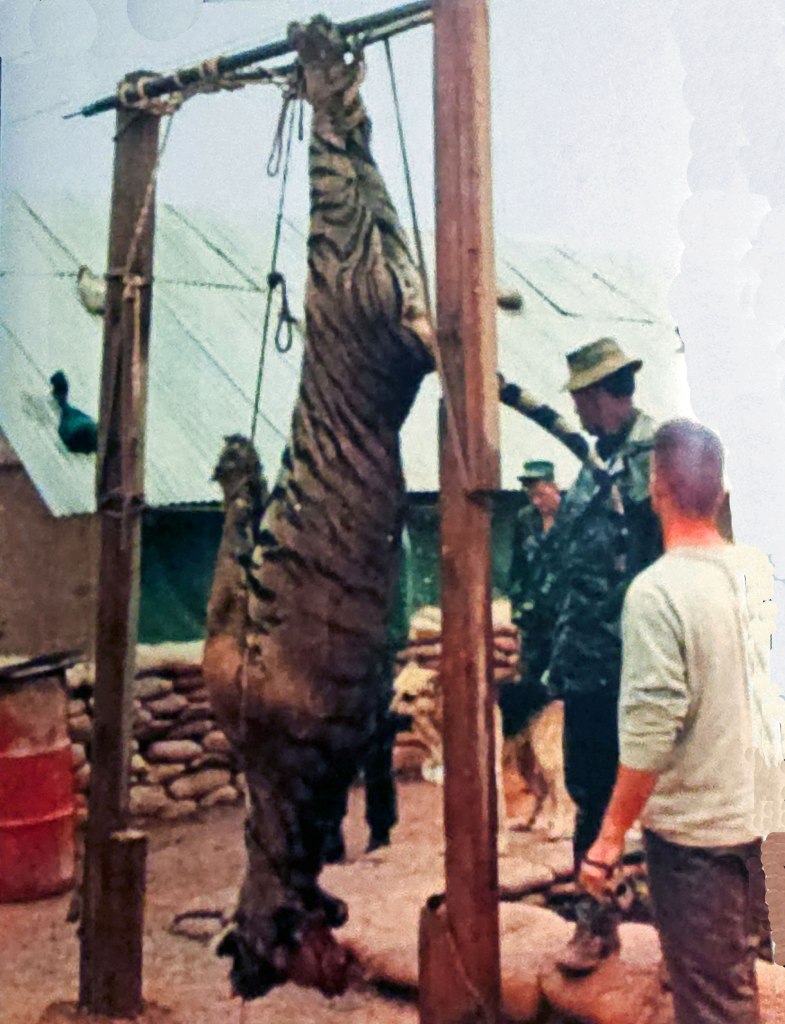
“Hey John, what’s up with these photos of a tiger?” I held two fading snapshots that were curling at the corners.

“Oh, that happened in the A Shau Valley in Vietnam. Marine Sergeant Bob Phleger was a Force Recon team leader. He took his men up on Razorback Ridge to patrol for a few days. Because the ridge was so narrow, they couldn’t set up a proper nighttime perimeter, so they slept head to toe in a line. Bob was on the far end. In the middle of the night, they heard him scream. Then he disappeared. Since they were under light restriction, they had to wait until morning to look for him. They found a boot near a bloody trail. Following it, they found a Bengal tiger guarding its prey. They shot at the tiger, and it ran. They called in a medivac and gathered Bob’s remains. As they were loading his body onto the chopper, the tiger rushed at them from where it had been hiding in the brush. One of the men shot it dead. So, they loaded the tiger, too, and brought it back to their base camp. Of all the things I worried about in Vietnam, being eaten by a tiger was not one of them.”

“Who’d even think of it? I feel for that chaplain who had to make the casualty assistance call to his family. I’ve had to deliver bad news many times, but never because the deceased had been eaten.”

I flattened the tiger photos just enough to get a clear picture, then placed them on top of their frame. When I had scanned another dozen, I walked them back to John.

John held out two older photos. “Do you recognize anybody in these?”

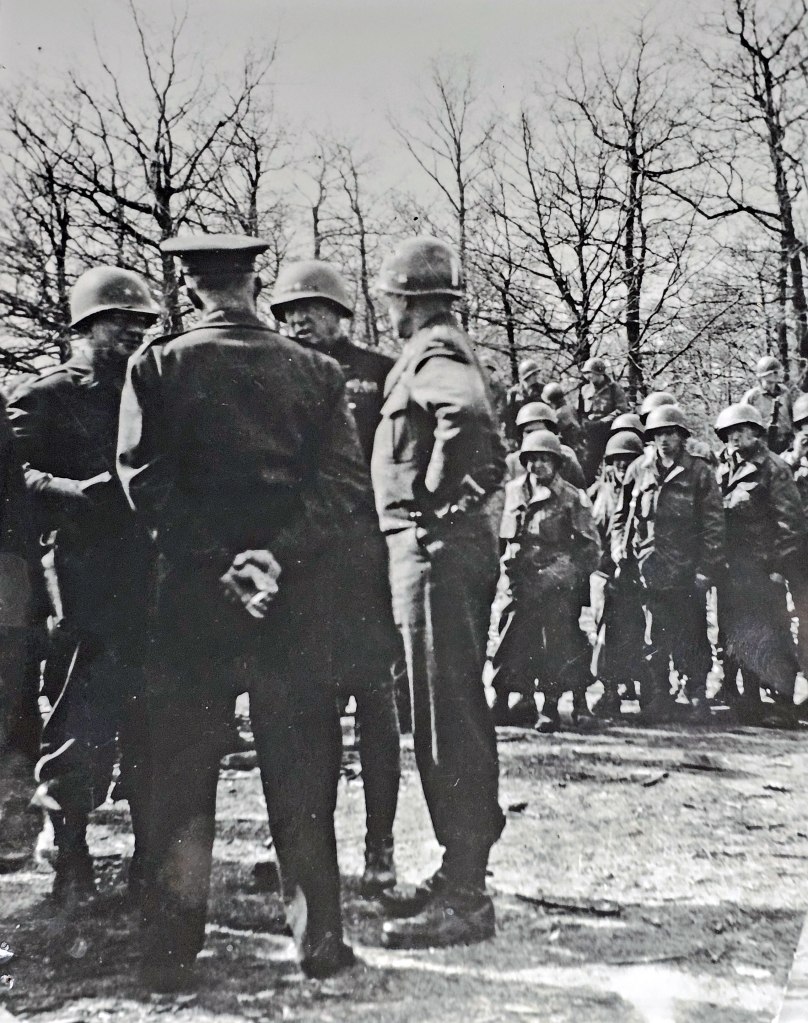
“Is that Omar Bradley?”

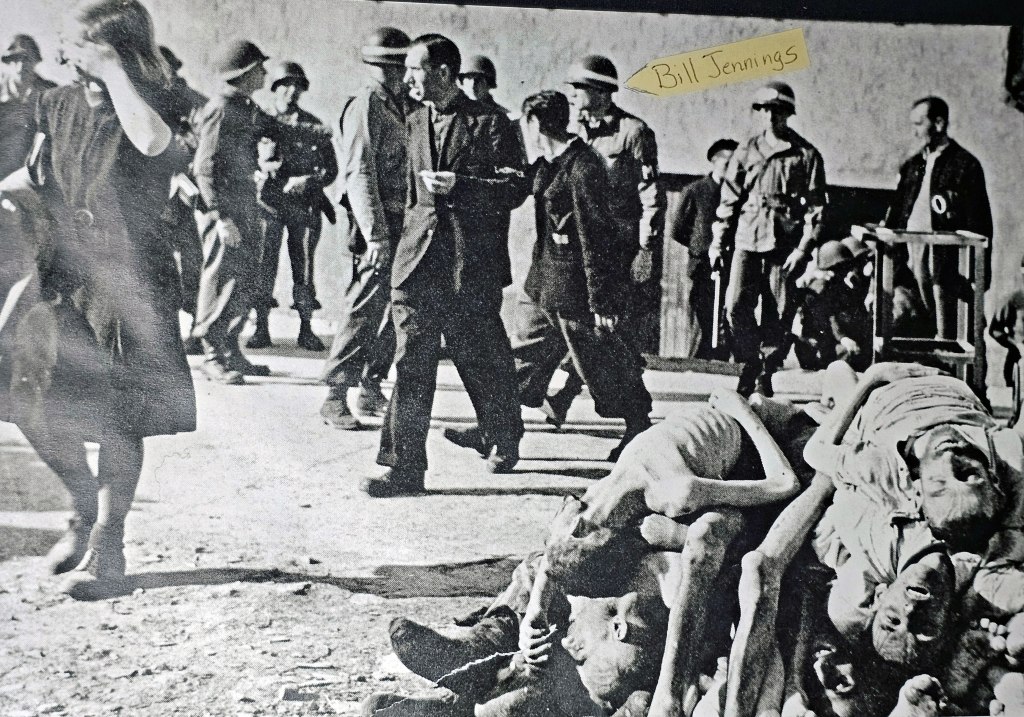
“Yep. And this here is General Eisenhower, that’s General Patton. And see this guy? That’s Bill Jennings. He was one of their drivers.

And look at this second photo taken at a concentration camp. Bill told me he was ordered to make the townspeople walk past piles of bodies, then assist in the burials. You don’t think this is too gory to display, do you?”

Rich answered from across the room. “People need to know the truth.”

I nodded. “That’s what’s happening in Bill Jennings’ photo. People are being made to see the truth of war. We have to continue that legacy, John.”

On my way back toward the scanner with a new pile of photos, I wandered over to Rich. “How are you feeling? You had chemo this morning, didn’t you?”

“I’m okay. I only have thirty-six treatments to go. Today was the seventh.”

“There’s a comfy wheelchair in the corner if you need a sit-down.” Rich ignored me and continued working. That’s how he handled everything difficult. He just kept going. To get away from a less than stellar home life, he’d volunteered to serve in the Army. As a Combat Engineer, he’d spent two years building bridges and roads along the Ho Chi Minh Trail near Saigon and Bien Hoa. When he returned home, he’d worked in a sugar beet factory, a Buick plant and as a “carnie” maintaining the rides. Finally settling in West Branch, he adopted the local veterans as his family. He never misses an event or a chance to volunteer. I patted last year’s ‘Veteran of the Year,’ on the shoulder, grabbed the pile of photos he had unframed and went back to scanning. Soon, John brought me a second pile. He must have thought I was working too fast, so he decided to tell a few more stories.

“See this one? This is my first best friend, Diehl. We grew up together. What a great guy… He didn’t come home from Vietnam.

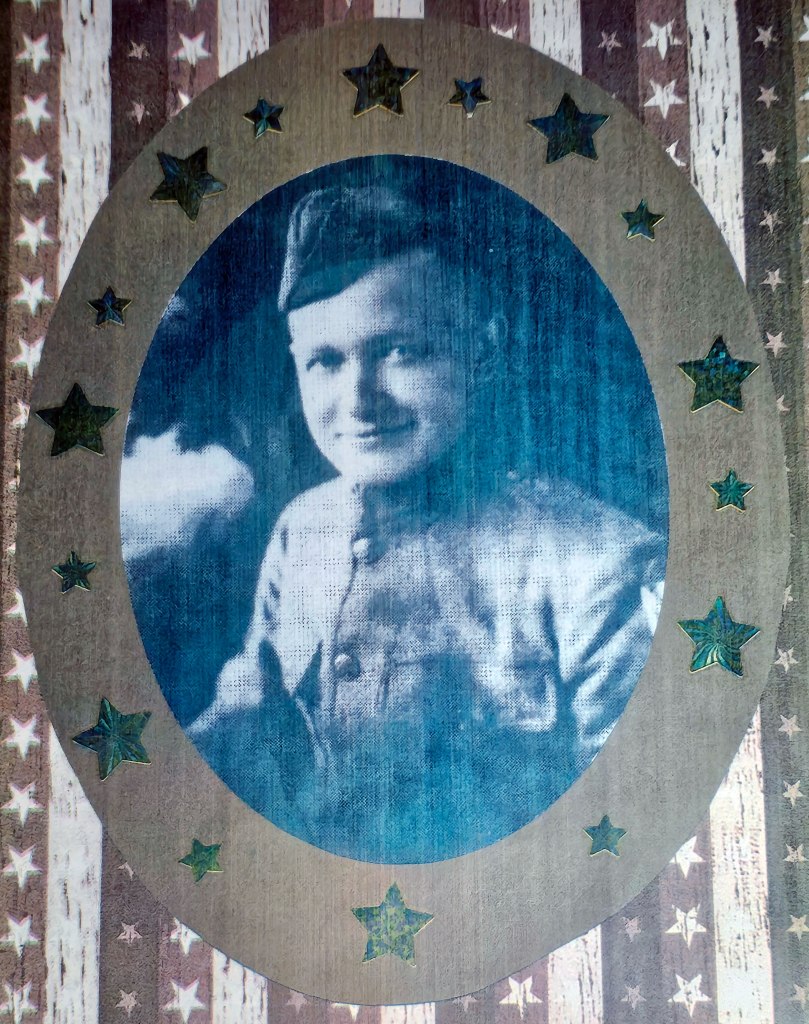
Here’s one of Ernest Andrews. He was part of the 339th U.S. Army’s Polar Bear Expedition deployed just below the Arctic Circle to fight the Bolsheviks months after WWI ended. Most of the guys in his unit were from Michigan and Wisconsin, so it was thought they could withstand the cold.

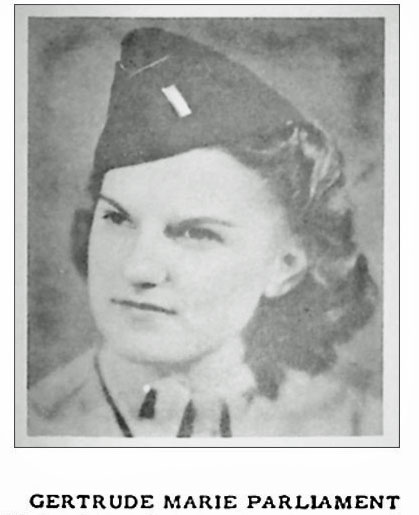
Check out this one. That’s Gertrude Parliament. She was an Army Nurse who served with the first field hospital to land at Normandy. As she and two other nurses crossed the beach, some commander yelled, ‘What are you women doing here?’ Gertrude’s answer? ‘We’re here to save you.’

Here’s one of Doyle Brindley. You know him, he comes to your monthly vet’s coffee with his wife. Doyle survived the bloody Battle of Pork Chop Hill just before the end of the Korean War.”

“John, you know so many stories about Ogemaw County Veterans. Why did you start collecting them?”

“Ten years ago, I drove my wife to the mall in Saginaw. She likes to look at stuff and take her time. I found a seat next to an older man wearing an Army ball cap. I asked him when he’d served and he said WWII. Then he told me he’d landed on the beach at Normandy. He told me how frightened everyone was in the landing craft; how some were praying, others crying. He said as they got closer to the shore, he remembered a sergeant once told him if he got into that kind of situation, he should take off his pack. He did, and soon after, the bullets came flying. He ended up in the water and somehow lost both his gun and his helmet. When he washed up on shore, he saw two dead soldiers slumped over each other. He asked God to forgive him as he crawled over to the bodies to use them as a shield. A little while later, he felt a hand grab the back of his shirt and lift him up. ‘You gotta get off this beach or you’ll die,’ the soldier said as they ran together. He told me how he’d survived the hedgerows, then fought in the Battle of the Bulge. When his wife arrived, she asked me if he was boring me with his old stories. I was so mesmerized by what he was saying, I hadn’t noticed a crowd had gathered behind me to listen. They applauded as he and his wife walked away. I wish I had gotten his name. But his story is what’s inspired me to collect other veteran’s experiences.”

“How many have you interviewed?”

“Sixty-five so far. Some have a harder time talking about their service. Like this one WWII vet. He was telling me about eating chow in a foxhole in Metz with his buddy. They had just opened their rations when a round came in and splashed his buddy’s head all over him. He stopped talking after he said that. When he started again, he asked me about fishing for brown trout in Lake Superior.”

“It must take a toll on you to hear some of these stories.”

“Yeah, sometimes it does.” He fidgeted with a frame on the counter. “Well, I better get back to work.”

“Me, too.” I placed an older photo in front of me and tried to duplicate the image without glare. So many of the pictures were fading, curling, and cracking. Add a few years, and the history captured in light and shadow will be lost, like so many veterans and the stories they never told.

I commit mine to paper so they won’t be forgotten. It’s easier to carry them there than in my head. But to tell them? Too often a memory grabs my throat mid-sentence, choking me into silence. Other times, the visage of my listener tells me they can’t bear any more; they can’t bear to hear what it really costs to serve our country. Too revealing of horrors endured and deeds required, they’d rather not know.

Rich placed a stack of news clippings in front of me. “These were in a file drawer. I think they’re from World War Two.”

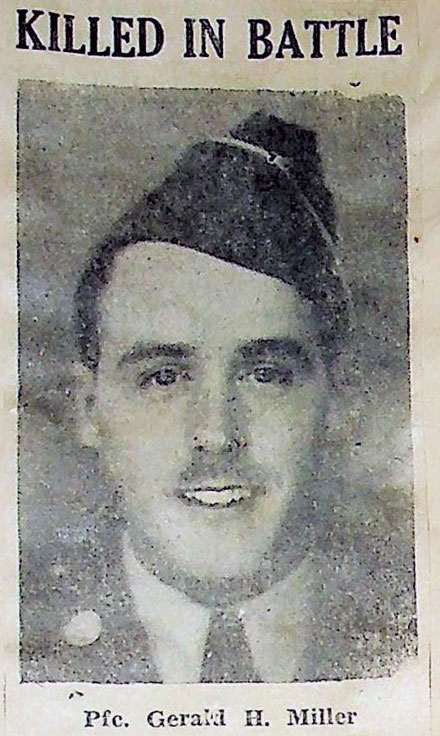
The print on the yellowed pages had faded, but the stories were there. Brothers Russell and Richard White had been lost at sea when their battle cruiser, USS Juneau, sank off Guadalcanal. Gerald Miller had been killed in “bitter fighting” in New Guinea. Though wounded himself, Charles Corwin had been awarded the Silver Star for giving first aid to others and fighting off the air attack on his flying fortress, Stupefier II.

I placed the pages on the scanner and tapped the button. Again, and again. These stories must not be forgotten. Theirs. Mine. Every one we can preserve.

At 1630, John got a phone call. “That was my wife. She had only one word to say: Cows. I guess it’s time for me to head home.”

The three of us tidied up our work areas and put on winter gear before heading to our trucks. Fresh snow crunched under my tires as I made my way toward the exit. I paused for a moment near the Antique Village. Although picturesque in the wintery twilight, it offered only a glimpse into a time that was and is no more. But at the Veterans Museum, every story brought to life a tale of sacrifice and service. Each weapon, piece of gear, uniform and medal provided tangible evidence of hardship endured. Every photo gave us a glimpse of the men and women upon whose shoulders we stand, and a challenge to honor their courage and commitment with our own.

Copyright © 2025 bendertales.com

Overworked and Blessed: A Christmas Story

I stopped for another traffic light. Dear God, I don’t have time for this. It’s almost Christmas and I’m not ready. I’m so tired and my head hurts. Please, I need help.

A few minutes later, I rounded the corner and parked in the driveway near the back door of my parsonage. On the way through the kitchen, I grabbed a cup of day-old coffee, popped it in the microwave, then made a quick trip to the bathroom. Coffee out, coffee in. Thank God for coffee.

Mug in hand, I walked through the den, unlocked the door separating my home from the church building and let myself into the stairwell. Heading straight to the secretary’s office, I plopped into the chair in front of the IBM 386 desktop computer. Dear God, help me focus. I’ve got three bulletins to prepare before I can finish the sermons. The phone rang.

“What time are services on Christmas Eve?”

“The family service is at seven and includes the children’s pageant. The communion service is at eleven.”

After the caller hung up, I pulled out my bulletin notes. I had just finished typing the responsive prayer when the phone rang again.

“Are you having services on Christmas? My family is in town and my mother-in-law thinks we attend church, so we have to take her.”

“The family service is at seven. Communion is at…”

The caller hung up. I not-very-gently replaced the receiver and started typing again.

“Pastor Laura.”

I turned toward the voice.

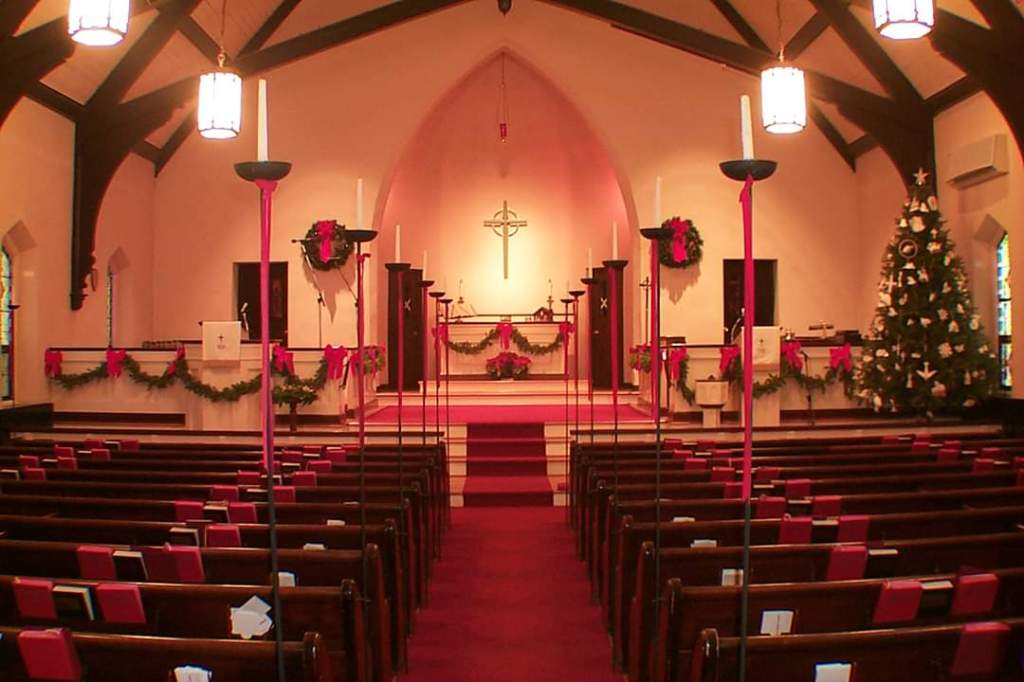
“I’ve finished setting out the poinsettias, and put the large arrangement from yesterday’s funeral on the mantel under the cross. I heard the family liked the eulogy. Oh, can you tell the secretary to include a note in the bulletin about the unclaimed serving dishes from the luncheon?

“Okay, I’ll include it.”

“Where’s the secretary?”

“She quit last week. She’s eight months along and having some complications. Her doctor wants her to stay home.”

“Who’s filling in for her?”

“Me. Everyone else is busy. Christmas is two days away.”

The phone rang again. When I reached for the receiver, my parishioner waved, then headed for the door.

 “What time are the Christmas services?” the caller asked.

“Seven and eleven.”

“Thanks.”

I took a sip of coffee. Ice cold, but caffeinated. My usual. I closed my eyes. Dear God, I’m running out of time. I’ve still got sermons to finish and all I feel is exhausted. When do I get to celebrate Christmas?

Over the whirring sound of the copy machine, I heard the doorbell. Moving to the window, I leaned in to see a man on the steps below. Not familiar. A bit scruffy. Probably wants food from the pantry. That pantry! People come at all hours for food. The last requester woke me up at 2 am because he needed coffee filters and a can of tuna. I don’t have time to babysit this new guy while he selects his groceries. I’ve got to get ready for everyone else’s Christmas celebration. The bell rang again. Swallowing the rest of my rant, I headed for the entryway. An older man stood outside, smiling.

I opened the door. A refreshing breeze filled the entryway.

“Are you the pastor? I need a place to stay.”

“Isn’t it a bit early to be asking for shelter? It’s only 4 o’clock.” I regretted my tone as soon as it left my mouth.

“I’m old. I retire early. And it’s cold. Can I stay here tonight?”

“Fine, but you’ll have to entertain yourself. I’ve got lots of work to do.”

“You look tired. I won’t be a bother. I just want to get warm.”

I escorted him to a small room behind the altar, then pulled bedding out of a cabinet.

He placed his small bag on the couch. “Thanks. I really appreciate this. Don’t worry. I won’t make a mess or cause a problem.”

“This converts to a bed. It’s pretty comfortable. I slept on it when the furnace in the parsonage broke last year. If you need the bathroom, it’s at the bottom of the stairs.”

“I saw a piano in the first room we passed. May I play it?”

“Do you know how?” My grumpy tone hadn’t disappeared.

“Yes. I know how to play.”

“Then go ahead. I really have to get back to work.”

We walked down the hall together. When I turned in at the office, he continued to the choir room.

My head hurt. One more bulletin to type, two to copy, and three to fold. I hit the record button on the answering machine and changed the outgoing message to include the times for the Christmas Eve services.

Suddenly, the room filled with music. Bach. Jesu Joy Of Man’s Desiring. I took a deep breath, then exhaled, smiling. I tiptoed down the hall and peered into the choir room. My visitor sat at the old upright, hands flowing over the keys, playing from memory.

“You play beautifully.”

He smiled. “Thank you. I rarely get to play in winter.”

“You play more in summer?”

“I play in the Catskills from May to September.”

“What do you do after that?”

“Wander. Visit. Go where I’m needed. I don’t like to be too settled.”

“Well, you can play as much as you’d like today. Your music is heavenly.”

I headed back to the office and got to work. For three blissful hours, I typed, copied, folded and wrote as Christmas carols, Gershwin, Beethoven, show tunes and hymns filled the air. Bulletins done, the Christmas Eve sermon almost finished, and the Sunday sermon outlined, I headed for the choir room. I leaned against the door jamb to listen to the last verse of “O Little Town of Bethlehem.”

“I have leftovers from yesterday’s funeral in my fridge. Want to help me eat them?”

He grinned. “I’d be delighted.”

I invited him into the parsonage and together we raided the kitchen. For the first time in days, I felt my shoulders relax as we laughed and chatted our way through our impromptu feast. Then he headed back into the church building to get a good night’s sleep.

After he left, I settled into my recliner to finish the Christmas Eve sermon. Before putting pen to paper, I grabbed my Bible and reread Luke’s account of the birth of Jesus. According to the story, Joseph, with Mary, nine months pregnant, made a grueling 90-mile journey to Bethlehem by foot and donkey. An overworked innkeeper, deluged with travelers seeking shelter, saw their plight and made room for them in his barn. And weary shepherds, watching over their flocks 24/7, found their way to the manger to see the child about whom the angels sang. On that first Christmas, all of them were exhausted. Yet, despite their burdens, joy still found them. Just like on this day, through the music of the angel God sent to answer my weary prayers, joy found me.

In the morning, I headed into the church with fresh coffee for my guest, but he’d already gone. I wasn’t surprised. So close to Christmas, there were likely many more weary folks who needed him.

Copyright © 2025 bendertales.com

One Day in September

Everyone has a 9/11/2001 story. Here is mine.  
May God bless the remembering and sharing of yours.

Tuesday. I looked forward to it every week. No early morning. No meetings. No paperwork, project management, or pastoral counseling. Just me, my laundry, some genealogy research and a chance to breathe. I poured coffee, sat cross-legged in the recliner and turned on the Today Show. Matt Lauer was interviewing the author of a book about Howard Hughes.

I sipped and waited for the cast to head out to the plaza to chat with the locals. My antidote to homesickness, I loved hearing my fellow “New Yawkis tawk.” I hadn’t heard my mother tongue much during the two years I’d been in isolated duty in Guantanamo Bay, Cuba. The Today Show gave me my weekly fix.

“Okay, I have got to interrupt you right now,” Matt Lauer said to his interviewee. “I want to show viewers a live shot of the World Trade Center.”

That got my attention. I put down my coffee cup to focus on the screen. After some fumbling with the camera feed, a shot of the Twin Towers showed smoke and flames billowing from near the top of the north tower.

For the next fifteen minutes, Katie Couric and Matt Lauer tried to fill the dead air as they displayed videos from feeds around the city.

Finally, Lauer put voice to something my distrusting inner New Yorker couldn’t let go.

“The questions have to be asked. Was this purely an accident or could this have been an intentional act?”

A minute later, the answer came. A second plane hit the south tower.

I flew out of the recliner and ran to the phone. My parents lived in New York. I dialed my mother, a church secretary, at work. The call didn’t go through. Not sure if it was my area or hers responsible for the problem, I dialed my friend Belle, who lived three counties north of New York City. Her husband Sal answered. Surprised to hear from me, I told him to turn on the news. I hung up and tried my mother again.

“The United Methodist Church of Lake Ronkonkoma. How may I help you?”

 “It’s me. Two planes just hit the Twin Towers. Close the office and go home.”

 “When? Nobody told me.”

 “It just happened.”

“What are you worried about? When you were a baby, a Cessna hit the Empire State Building and that turned out okay.”

 “That really happened?”

  “Of course it did.”

“Yeah. Sure. Look, you need to go home. Whoever attacked New York City may not stop there. You live too close.”

“Don’t worry about us. On Saturday your father and I are taking the Circle Line boat trip around lower Manhattan. I’ll call you when we get back and tell you if we saw anything wrong with the World Trade Center.”

“Stay away from the city.”

“We’ll see. I have to get back to work now. Bye.”

Returned to the recliner, I fixated on the TV screen, flipping through channels to catch news where I could:

0921    New York City Port Authority closed all bridges and tunnels.

0924    President Bush called the plane crashes “an apparent terrorist attack on our country.”

0932    The NY Stock Exchange closed.

0940    The FAA ordered our nationwide air traffic system shut down.

0943    American Airlines Flight 77 crashed into the Pentagon.

0945    The White House was evacuated. Matt Lauer announced a plane hit Camp David.

1000    United Airlines Flight 93, crashed in Somerset, PA.

1005    The south tower of the World Trade Center collapsed.

In minutes, the world, as I understood it, made a radical shift.

The phone rang. Startled, I ran to answer. The chapel assistant said, “Chaplain M. has called a meeting for 1230. Also, Leigh called. She’s upset and wants you to visit her.”

“Roger that. See you at 1230.”

 After donning my khaki uniform, I slipped out the back door to cross the field to Leigh’s house. Leigh and her husband Russ were regular attenders at the General Protestant Service. Russ was a Master at Arms. They had three sons. William, the youngest, liked to call me “God’s Best Friend.”

I knocked. “Leigh, it’s Chaplain Bender.”

She opened the door, sniffling. We hugged. The TV behind her blared the news.

“How ‘bout we say a prayer, and then watch what’s going on together?”

For an hour, we sat with a box of tissues between us, watching as the north tower of the World Trade Center collapsed.

When I headed for the chapel, the base was at THREATCON DELTA. A roll of concertina wire and a young Marine blockaded Sherman Avenue at the base of Marine Hill.

“ID, Chaplain Bender,” the corporal said. I handed it over without mentioning the irony.

“Chaplain, Ma’am, where are you headed?”

“Chapel Hill, Corporal.” He waved me along. I felt safer already.

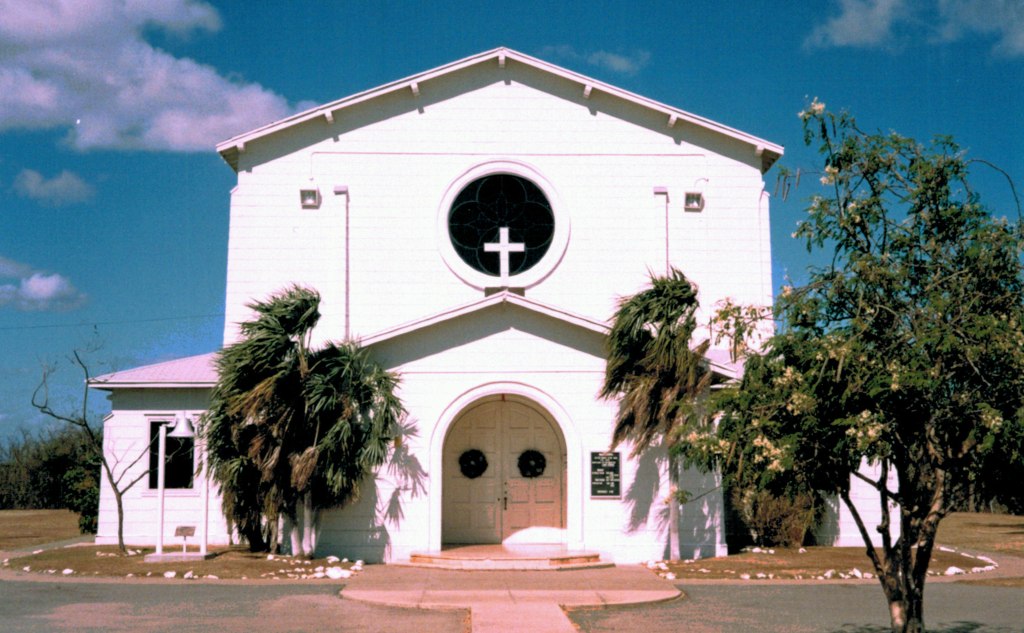
I parked in the middle of the parking lot, between the chapel and the office building. Last month’s threat condition training had taught me that during DELTA, vehicles had to maintain distance from all buildings. Why had we so recently held that exercise? Had we known an attack was imminent? I took a deep breath before exiting my car. Meetings with Chaplain M. required patience and a level of calm I wasn’t sure I could maintain that day. Recently, he’d ordered me to sit on a chair in the middle of his office until I told him how I felt about him. Stubborn, I’d made it two hours before excusing myself to lead Bible Study for the hospital staff. On this day, of all days, I prayed his freak flag would be at half-mast.

Our office sat in the middle of an open-air courtyard, surrounded by a white, one-story classroom building. A roofed walkway with a green tiled floor led a full circle around its inside edge, connecting on one side with our office entrance. A garden of orchids and bougainvillea, tended by Filipino contract workers, members of Iglesia Ni Cristo, created a tropical oasis in contrast to the arid base.

Out of habit, I picked a red bougainvillea blossom. “Hey Iggy,” I called.

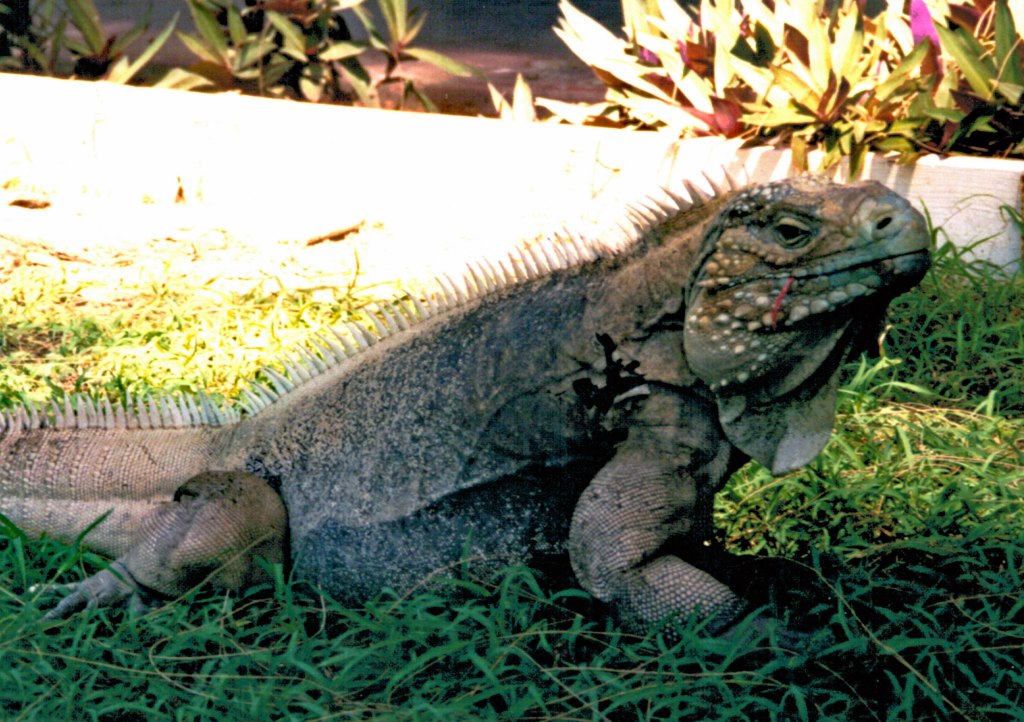
Across the courtyard, a large Cuban Rock Iguana came at full trot. He stopped in front of me and waited for the toss. “Good to see you.” I gave him his treat before entering the office.

The Religious Program Specialist (RP1), the chapel assistant, and I waited outside Chaplain M.’s door. At the dot of 1230, he told us to take seats.

“The United States has been attacked. We are in THREATCON DELTA. I attended a secret meeting this morning for department heads only.” He giggled. “Today’s AMC flight is on hold in Jacksonville. Only mission essential visitors will be allowed on base, no personal visitors. Phone use has been limited to official business only. FM 103.1 and TV Channel 4 are now base news only. A curfew will be in effect from 2100 to 0600. The Navy Exchange, since it is our only store, will remain open during normal hours, but no alcohol will be sold. All boating has been suspended. Our seventeen remaining Cuban commuters were sent back through the Northeast Gate this morning and will not return until our THREATCON status changes. The base migrant camp is on lockdown.”

I took notes on all Chaplain M. passed. So far, so good.

“Any comments or questions?”

I said, “It’s interesting that terrorists chose 9/11 to attack because 911 is our American distress call. And we certainly are in distress today.”

“Chaplain Bender. Stop talking. You may never say that again. The terrorists are not that smart. They don’t understand our systems.”

The pen slipped out of RP1’s hands. She quickly bent down to retrieve it. The Chapel assistant winced.

 Below the notes in my book, I sketched the tail of a horse.

Chaplain M. rose from his seat, walked to his office door, and closed it. Returning, he addressed us in a furtive tone: “Are there any Muslims on base? Military or civilian? Do you know if any of them have any C4? If they do, I want you to tell me immediately. Don’t go to NCIS. Come to me. And if you tell anyone I said this, I’ll deny it.”

Around the horse’s tail, I drew a big ass.

“Chaplain Bender, do you know who has C4?”

“No, Sir.”

“I don’t trust you. You’re not Navy material. You don’t have any leadership or communication skills. I don’t know how you got here. All I know is that if we get into combat, I’d frag you immediately.”

Silence followed.

“RP1, I’ll let you know if the order comes for you to draw a weapon from the armory. We’re going to set a watch here for round-the-clock coverage. You’ll work with me from 0700 to 1900. Chaplain Bender will work alone from 1900 to 0700 to answer emergency calls.”

Chaplain M. rose, retrieved a pink plastic flashlight from his desk, and returned to his seat. He leaned toward me. “Every two hours, from the time you arrive until the end of your shift, I order you to walk the Chapel Hill perimeter. Use this to see.”

At the end of the meeting, I stopped at my office to check messages.

RP1 walked in and closed the door. “I want you to know this now. If the order comes for me to draw a weapon, even though I’m the chaplains’ bodyguard, I will refuse. I would rather go to the brig for disobeying a direct order than to allow a loaded weapon anywhere near that man.”

“Roger that, RP1. I’ll be a witness for your defense.”

After reading a few messages, I sent one to my mother:

From:   Bender, Laura J. (NAVSTAGTMO n15a)                                                   To: Gloria

Glad I could get through to you when I did. We are OK here. Tightened security, though. Important to be cautious. You, on the other hand, don’t have the Marines guarding you. Go home and stay home. I mean it. Our phone system is not working for calls off the base right now. When it comes back up, it will be only for official calls, so I cannot call you. Email should stay up. I am going home now to sleep. I have to be back in five hours to work a 7pm – 7 am shift. Chat later – and stay home. love, Laura

I went home to sleep, but the sunlight in the bedroom made it difficult. Taking a blanket into the walk-in closet, I stretched out on the floor. Frightened voices screamed in my head. I couldn’t stop thinking about passengers on the planes, workers in the towers, and people running for their lives. Lying in the dark for a few hours was as close as I got to sleep.

I reported, as ordered, early for my shift. Chaplain M. had already gone home soon after our meeting, leaving RP1 to tell him if I did not show. After she left, I settled in front of my computer. Thankfully, both the email and the internet were working. I wasn’t alone. At 1900, I walked the circle around the portico, checking classroom doors. Finding them all locked, I strolled Chapel Hill’s perimeter. Two seagulls perched atop the swing set. An iguana slept beneath the front step of the chapel. Not wanting to wake him, I tiptoed past to check the door. My car sat alone in the middle of the parking lot. All was well.

Back in the office, I searched for news. At 1400, in addition to THREATCON DELTA, COMNAVBASE GTMO had gone to DEFCON Three. Assuming that was not good, I continued reading. Base schools were closed until further notice and all non-essential personnel were to remain in quarters. The City of New York announced that 200 firefighters had been killed and 78 police officers were missing. Also, Seven World Trade Center, a 47-story tower, had collapsed from ancillary damage.

An email arrived from my mother:

The Pres. will speak at 9 pm. Now Kabal, Afghanistan is in flames. What a world! We will stay close to home (only out for cat food). The only thing flying over tonight are Army helicopters. Right now, on TV, Congress is standing up and singing God Bless America. After Pearl Harbor was bombed, America became so patriotic – that is what got us through that terrible war. Poor Nell Schroder, who is 86, said “I couldn’t stand another war because I would have to ration sugar.” I told her not to worry because I would give her mine. That seemed to settle her down. I saw pictures of 42nd St on TV and it made me live again standing on that corner when I was ten and reading the bombing of Pearl Harbor 60 years ago. History certainly repeats itself. This must be the first time a foreign power attacked America. I’m back to TV. Talk again later. Mom

At 2100, I grabbed the pink flashlight to make rounds in the sweet evening air. Three banana rats sat near the door to the sacristy, under a picnic table, where someone had left scraps. The trio of raccoon-sized critters happily munched on their find. At the far end of the parking lot, two enormous vultures chowed down on a flattened banana rat. Welcome to the food chain.

Returning to my office, I noticed something moving in the corner near my desk. There, immobilized in the glue of a bug trap, lay a 3” long lizard.

“Here, let me help you.” I squatted to grab him gently around his middle. He didn’t budge. I tried again, but the glue was too strong. Not wanting to leave him there to die, or rip off his legs, I called Claire, the base veterinarian.

“Use baby oil,” she said. “It will deactivate the glue.”

“I don’t have any in the office and I can’t leave. Besides, there’s a curfew.”

“Let me see what I can do.”

Fifteen minutes later, she appeared with a security escort to attend to the “veterinary emergency.” Curious, the escort asked if he could see why she was there. “This is the best thing I’ve seen all day.”

I picked up the trapped lizard and Claire doused him with baby oil. Within minutes, the little guy was free.

“We need to wash off the oil,” Claire said, “so his skin can breathe.”

We took him to the bathroom sink and turned on the water. As soon as the first drops hit him, he slipped off my hand and down the drain. Aghast, the three of us stared at the hole. Suddenly, two tiny feet reached up and grabbed hold of the rim. Then a small head popped out. I put my hand near the drain, and he crawled into my palm. To keep him from finding another sticky trap, we took him outside to release him in a flowerbed. It took ten minutes for him to crawl off the safety of my hand. While we waited, Claire and I had a chance to chat. It felt good to spend time with a friend after such a horrendous day.

Once Claire and her escort left, I returned to my desk to wait for phone calls that never came. At 2300, I again grabbed the pink flashlight to make rounds.

Next to the chapel, I startled a crane nesting behind a shrub. Flapping his enormous wings, he flew directly over my head. I yelled and flailed my arms.

“Don’t worry, Chaplain. It’s only a big bird.”

I turned toward the voice. Two guys from security stood behind me.

“You know there’s a curfew, right?”

“I have perimeter watch.”

“Let me guess, this is El Diablo’s, I mean, Chaplain M’s idea.”

I nodded. “He ordered me to do this every two hours, from 1900 to 0700.”

“And this is the third time we’ve watched you. We have other work to do besides keep you safe. Just tell him the watches were completed and stay in your office. This is our job, not yours. By the way, what did he want you to do if you caught a terrorist?”

“Whack him with my pink flashlight, I guess.”

After midnight, with rounds off my radar and most news feeds repeating the day’s tragic events, I checked my regular list of things to do.

“Prepare liturgy. Write sermon.”

The words glared on the page. This would be no ordinary Sunday. The chapel would be packed with people looking for guidance to get themselves through whatever lay ahead. I’d be standing in front of the Sailors and Marines who would soon head into harm’s way, and the family members who would manage the home front while waiting for their return. What could I say that would be helpful?

So much had changed.

Yes. But much more had not.

Prayer had still given Leigh comfort and hope even as we watched the towers fall. God was still our refuge and strength, a very present help in trouble, even this trouble. Chaplain M. reveled in his “El Diablo” nickname, but that didn’t relieve me of my responsibility to work for the good of others. Compassion and teamwork were a powerful combination. Just ask the tiny lizard. As my mind raced through the day’s events, I called up a blank screen and put my fingers on the keyboard.

“There are some things that do not change for people of faith, even in the midst of unthinkable tragedy and loss. God does not change. Our relationship with Christ does not change. We are still commanded to love one another, which extends even to the others who would harm us. The mandate to overcome evil with good remains. And the Lord still requires of us to act justly and to love mercy and to walk humbly with our God.”

My weary mind and heart wrestled with these thoughts until daybreak.

Chaplain M. arrived at 0700. He reminded me that my usual workday was 0800 to 1600 and working overnight did not relieve me of that duty. He would, however, allow me to eat breakfast before I started.

“Will I then follow with another 1900 to 0700 shift?”

“Of course. I’ve assigned that to you.”

“Have a nice day, Sir. I’m going home to bed.”

On the way to my car, I fed Iggy his morning bougainvillea blossom.

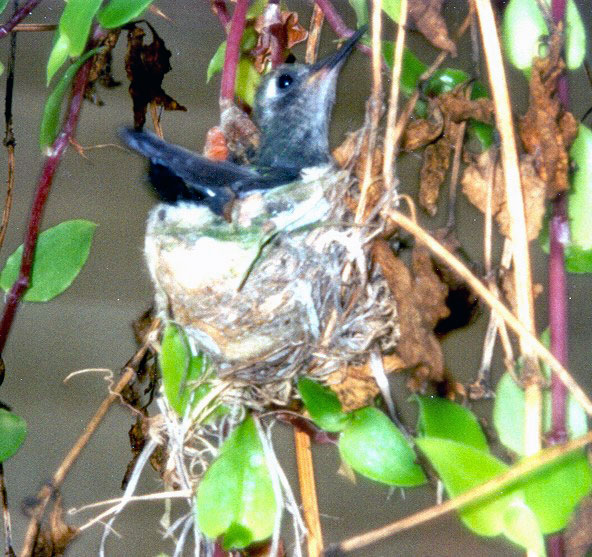
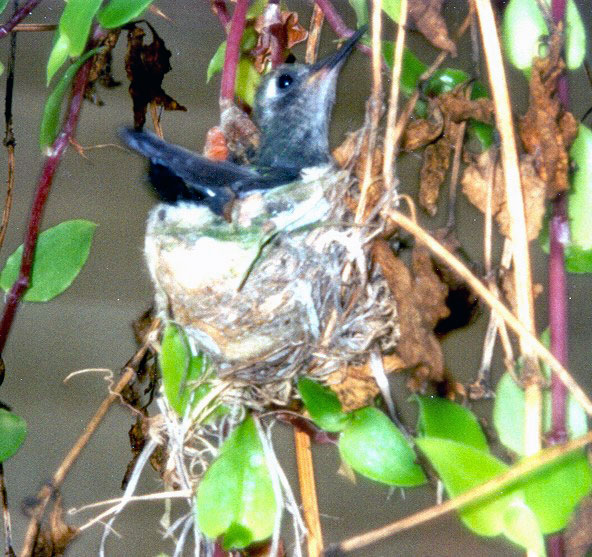
Turning back, I noticed a patch of teal fluff sitting in a tiny nest woven into dying vines dangling from a flower basket someone had hung and then forgotten. I moved in for a closer look. In that precarious perch, open to wind, rain, heat and predators, sat a baby hummingbird, just growing into his spiny beak and iridescent feathers.

“Consider the birds of the air, how they neither sow, nor reap, nor gather into barns, and yet your heavenly Father feeds them.”

The wee bird stared at me through eyes still too big for his face. I don’t think that Bible verse made any difference to him, but it did to me.

Copyright © 2025 bendertales.com

9/11 Adulting Atrocity baptism Brooklyn Character Christmas CoronaVirus Covid-19 Crazy CrazyParishioners Drama ElieWiesel Family ForgetMeNot GTMO GuardianAngel Haironfire Holidays Honor Indifference Iraq Joy Later MaundyThursday Memories Michigas Military Mothers Navy TalkToTeens Thinking Tightrope TrinityCemetery TrustGod USMC USS NEW YORK veteran Vulture Wappingers war WhatMatters wisdom WoundedWarriors writing

To Shield and Protect

Adlesperger Hall sat atop a steep hill in the wooded area above Butler Stadium on Marine Corps Base Quantico, VA. Named for LCPL Christopher S. Adlesperger, who, while fighting in Fallujah, Iraq, had single-handedly raced up a stairway under fire and cleared a rooftop in order to shield wounded Marines from further harm, the building housed the Marine Corps Wounded Warrior Regiment (WWR).

Unlike the Navy’s Safe Harbor Program, which offered as-needed assistance and resources to wounded, ill or injured Sailors, the Wounded Warrior Regiment was an actual military unit. Marines assigned to the unit were those whose medical issues required extensive hospitalization or intervention and precluded their ability to fill an operational billet. Staff members included active-duty and reserve Marines and Sailors, veterans, military spouses and civilians. The Regiment existed not only to keep a tight hold on those in the recovery process, but to advocate for their needs as fiercely as the Marines executed combat.

As the regimental chaplain, I was responsible for two Wounded Warrior Battalion chaplains, one at Camp Lejeune and the other at Camp Pendleton, as well as the chaplain assigned to the Marine Corps detachment in Landstuhl, Germany. I would have traded my supervisory assignment with any of those chaplains in a heartbeat because they provided consistent, direct care to Marines.

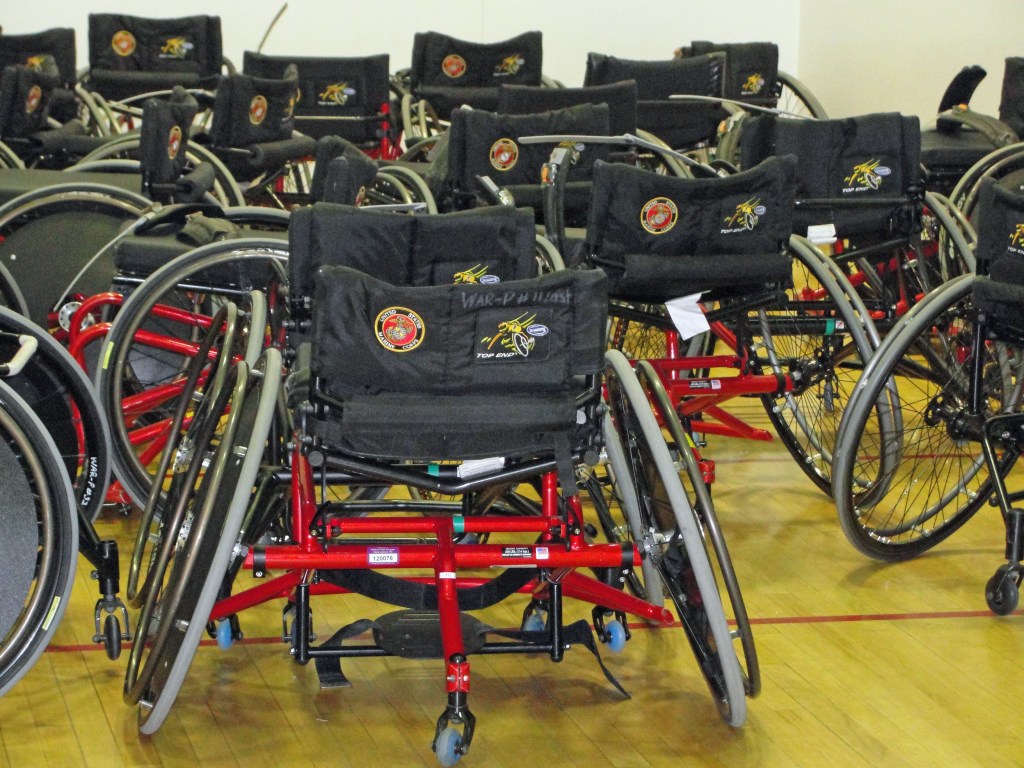
My opportunities to work with wounded, ill and injured (WII) Marines were anything but consistent. I spent Wednesdays at Walter Reed in Bethesda, MD visiting patients and meeting with the families of newly arrived wounded Marines. Tensions were always high in those gatherings as exhausted parents and/or spouses, who had raced across the country after receiving the news, tried to wrap their minds around their Marine’s injuries. Most of the time, these were severe enough to be not only life altering for the Marines but also for their families. I divided the rest of my time between meetings, ceremonies, Warrior Athlete Reconditioning Program (WAR-P) events, and visits to Marine Corps detachments around the country to intervene in the crisis du jour.

Since the Navy had paid for me to get a Masters in Conflict Transformation, they expected me to use it. In Little Rock, Arkansas, I mediated between a wife and a mother with opposing views about the future of their Marine who had been in a coma for a year. Although the Marine died three weeks later, the mother and finally-accepted-daughter-in-law were then able to support each other in their grief. In San Antonio, Texas, the overly anxious family of a severely burned pilot needed a calming influence, and some focused attention during his lengthy stay in the burn ward. In a hospital in Richmond, Virginia, parents who had taken up residence in a waiting room needed to be convinced to go home: Sitting behind a table piled high with loose “tabacky” as they rolled their cigarettes, the dad explained, “If’n our Marine is gonna be here for a few months, we gonna stay, too.   ‘Sides, there’s air conditionin’ here. We ain’t got none at home.” Their Marine had had a quadrant of his skull removed and stored in a freezer to take the pressure off his swollen brain. His second biggest concern was having to return to live with his parents if he recovered.

The Wounded Warrior Regiment’s concern was to find the best possible outcome for all their Marines. Most families were ill situated to care for a gravely injured son, daughter, or spouse without major sacrifices. Someone would have to give up their job to become a full-time caregiver. Houses would need to be renovated to accommodate medical needs and equipment. And serious monitoring would need to be done for families where addictions, mental health issues and illegal behaviors ruled the day.

The issues facing Wounded, Ill, and Injured (WII) Marines were complicated, not only during their recovery phase, but long into the future. In the conference room of Adlesperger Hall, our team met daily at 0800 to fight the barriers to health and wholeness in whatever form they presented themselves.

+  +  +

“CO’s inbound!” the Staff Sargeant bellowed.

I raced in the side door of the conference room to stand behind my assigned seat at the table.

“Attention on deck,” he called. Even the civilians stood tall.

The Colonel and Command Sargeant Major entered. “Seats, everyone,” the CO said. “Good morning, gentlemen and ladies. I trust everyone had a good weekend. Slides, please.”

Around the large wooden table, staff members held pens at the ready.

The SSgt hit the button. The first Power Point slides covered the current high-visibility cases.

“An IED took out a vehicle in Afghanistan. One dead, three injured. Two of those are heading to Landstuhl.”

Across the table, the civilian non-medical case manager noted the name of the deceased.

“We’ll get with the Casual Affairs Coordinator to see if they need anything from us,” she said.

The SSgt hit the button again. “A Marine out of Pendleton went missing over the weekend. Police found him next to his vehicle in the desert. He’d eaten his gun.”

The SgtMaj grunted as he jotted details. He nodded toward the Mental Health Coordinator. They’d worked on these issues too many times together.

The slide changed to reveal the name and contact info for a Marine spouse. “Our whiner, I mean winner, for the day. Somehow, she got a hold of the Commandant’s wife’s phone number and called her Saturday night with a list of complaints.”

The CO shook his head. “How do these spouses get her contact info?”

The command advisor, a civilian, answered. “She gives it out at events and tells people to call her with problems. Who’s going to tell her no?”

I was glad he’d said that. I didn’t want to rat her out. Besides, if Mrs. Commandant could light a fire that resulted in a problem solved for a WII Marine, good on her.

The next few slides covered scheduling. Events included a Hire Heroes Job Fair, a marriage enrichment retreat in Alaska, a cutting horse rodeo on the east coast and an elk hunt on the west coast. Several visits by senior military, politicians, CEOs and anyone else who wanted their picture taken with a wounded warrior made the list, too. Of course, some genuinely wanted to offer assistance. Others knew the publicity value of a photo with a Marine with traumatic amputations. I saw both kinds of visitors at Walter Reed. David McCallum and Leon Panetta made my “good guy” list, but too many others were at best “trauma tourists” and often just there to exploit the Marines for social credit.

“Chaplain, the WWBN West slide lists the date for the San Diego USO Gala,” the CO said. “I got a call Friday from their president. He liked the prayers you wrote for the Warrior Trials, and he wants you to give the invocation for the gala.”

“Sir, we have a chaplain with Wounded Warrior Battalion West. Shouldn’t I call him? He’s only an hour away.”

“Chaplain, that USO donates $100,000 a year for WWR events and three weeks of 24/7 volunteer coverage for the Warrior Trials. If they want you to pray for them, you’ll pray for them. You can check up on the Twenty-Nine Palms detachment while you’re out there, too.”

“Yes, Sir.” I jotted the date and a note to take my mess dress uniform to the cleaners.

Next, it was time for the team to report on current issues.

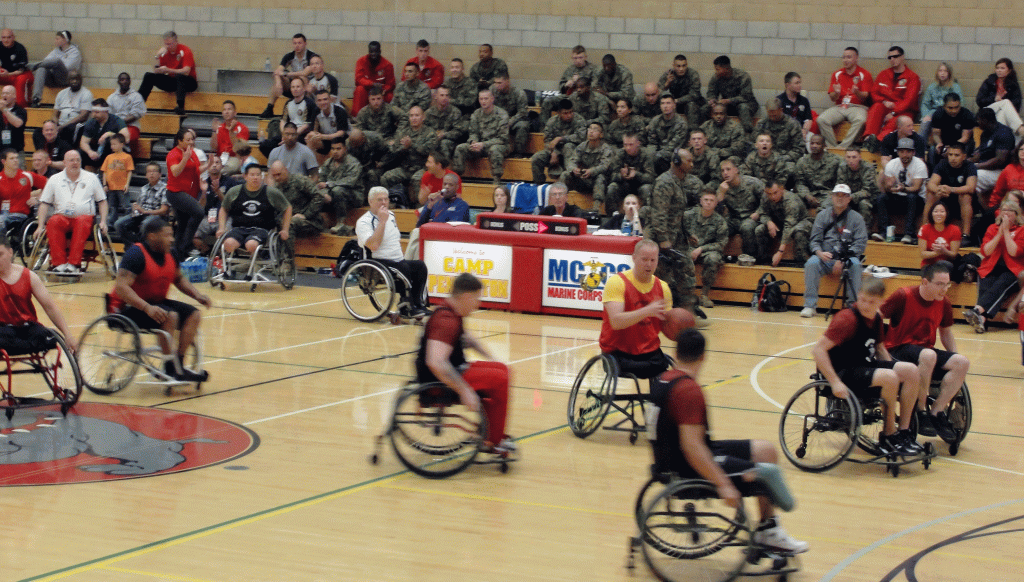
The Family Readiness officer spoke about her weekly conference call with spouses. The Future Initiatives and Public Affairs team described their current strategic lobbying and media activity. The Sargeant Merlin German Call Center, which resourced Wounded, Ill and Injured Active-Duty, Reserve and Veteran Marines and their family members across the country, reported the number of calls received over the weekend and a statistical breakdown of the presenting issues. The Warrior Athlete Reconditioning Program announced the date for the seated volleyball tournament at the Pentagon gym. My second favorite sport, I added it to my calendar. Oddly, it was the one athletic activity where still having one’s legs proved detrimental. But nothing could beat the thrill of Marines playing wheelchair basketball, with the added mix of wrestling, bumper cars and ballet.

A few more sit-reps were shared before SSGT Powerpoint announced, “Let’s end with some good news.” He advanced the slide. “Lance Corporal Smith is finally heading home.”

The CO said, “For those of you who don’t remember this high-vis case from a year ago, he and a fellow Marine were returning to Paris Island after a night out in Savannah, GA. The other Marine, the driver, didn’t notice the traffic circle ahead. He entered without braking, and the curb launched the vehicle into the air. It crashed at full speed into a tree. The passenger side, Smith’s side, took the brunt of it. Lance Corporal Smith has been hospitalized for a year. Have any of you met him?”

I raised my hand. “Sir, I’ve visited with him twice at the Richmond VA and briefly met his mom at the Naval Hospital in Portsmouth after his recent transfer.” I couldn’t imagine how they could send him home. The last time I saw him, he sat drooling in his wheelchair. His only means of communicating were the slight movement of one arm, a few grunts, and some eye blinking. Caring for Smith at home would be a full-time job.

The CO continued, “Lance Corporal Smith is now at the VA in New Haven, CT. At 1100 today, he will arrive at his family home. His Recovery Care Coordinator says a welcome home gathering of friends and family will be there to greet him. This is a great day. One of our men is going home.”

At the end of the meeting, I headed for my office to address items on my STD list. Since many of the tasks on this Stuff-To-Do list were recurring, annoying and usually socially transmitted, it seemed an apt name. Just after lunch, my assistant darkened my doorway.

“Chaps, they’re getting the band back together. Conference room. Fifteen minutes, Ma’am.”

Knowing this couldn’t be good, I grabbed my cup to retrieve more coffee. “Come with me. We’ll probably need it.”

He followed me to the coffee mess. I yawned.

I downed a few gulps of coffee and poured more. “Let’s get to the conference room to hear about the latest disaster.”

The CO arrived a few minutes later. “Seats, everyone. Here are the details. Lance Corporal Smith’s Recovery Care Coordinator (RCC) stopped by Smith’s home at 0930 to make sure everything was in order. No one was home, but the door was unlocked. He let himself in. What he found was an inappropriate environment for someone in Smith’s condition. Most rooms were under construction. There was no running water. And the bathroom attached to Smith’s room had no toilet. He sent me photos.”

We examined them on the screen.

“When Smith’s father got home, our RCC told him his son would not be coming home that day or ever unless the housing situation changed. A heated argument ensued and got worse when the dad found out the RCC had entered his home and taken pictures without his knowledge or presence. In front of the family and friends gathering at the curb, they screamed at each other. The dad grabbed a baseball bat and chased our RCC off his property. Just then, the Ambulette pulled up with the Lance Corporal inside. Our RCC spoke to the driver, and it pulled away.

The lead RCC asked, “Sir, did our guy call the police about the attempted assault?

“No. Thank goodness he was smart enough not to do that, or he could have been arrested for unlawful entry. He entered an empty house without permission.”

“But the dad went after him with a bat.”

“Yes, but the dad could argue he was chasing an intruder. The Marine Corps doesn’t want this mess in the news or for our RCC to be arrested. Thoughts?”

The mental health coordinator asked, “Has the dad contacted anyone since this happened?”

“Yes, he called the VA rep and demanded they bring his son home, but they can’t release the young man until the RCC signs off on the suitability of the residence. And we can’t send a different RCC because the dad has said that if anyone in a Marine uniform comes near his house again, he’ll beat them with his bat.”

I stared at the photos on the screen. Yes, they showed ongoing construction. So what? It wasn’t as if the young man could wander around the house and possibly hurt himself. And the water? Perhaps it had been turned off to install the toilet. Besides, Smith had a catheter and wore a diaper.

I asked, “Sir? He specifically said anyone wearing a Marine uniform?”

“Yes, Chaplain.”

“I have a Navy uniform.”

The room grew silent. Perhaps they were contemplating who would deliver my eulogy…

The CO spoke. “Make the arrangements, Chaps. You fly tomorrow morning.”

As soon as I landed in Hartford, CT, I rented a car and drove to the McDonald’s near the Smith’s home. I downed a cup of coffee, then changed into my Navy dress blue uniform. Looking in the mirror, I smiled and made the sign of the cross. As a Methodist, it’s not part of my tradition, but it seemed like a good idea under the circumstances.

Before stopping at the Smith’s house, I drove around the neighborhood. The modest homes showed age, a few looked run down, but mostly, the area seemed to house blue collar working families.

I stopped in front of the Smith’s home. The grass had recently been mowed. To the left of the driveway sat a rented dumpster, a sign of ongoing renovation. A raised ranch, the house was larger than most others on the street. I took a breath to collect myself. Okay, God, it’s just you and me. Please let me keep my head… and my cool. I walked to the front door and knocked. I heard muffled voices, then the door opened part-way. A tall, black man in work clothes looked out.

“Can I help you?”

“Mr. Smith? I’m Chaplain Laura Bender. I’m here about your son.”

He stared at me intently. I moved my hand to my purse strap so the cross on my sleeve would be visible.

“You’re a chaplain?” He paused and turned his head. Someone behind him spoke but I couldn’t hear the words. He turned back toward me. “Would you like to come in?”

“Yes, Mr. Smith, I’d love to.”

As I entered, I noticed his wife standing on the stairs. “Why don’t you bring her up here to the kitchen and I’ll make us some coffee?”

“I’d love some coffee, thank you. I don’t know if you remember me, but I met you in Portsmouth a few weeks ago when your son was there for an evaluation.”

“I thought you looked familiar.”

“I heard about the unfortunate incident that occurred yesterday, and I’m here to see if we can get things back on track. I’m sure you’re eager to get your son home.”

Mr. Smith and I sat at the table in the middle of the clean and neat kitchen. A small chandelier hung over the stairs I had just climbed.

“What a beautiful fixture,” I said, pointing. “I love the brass flowers interspersed among the lights.”

“I bought it at the Habitat for Humanity store when I was looking for bathroom cabinets. Do you know about that store?”

“Know it? My husband practically lives there. He brought home a light for over our stairs, too. It’s matte brass and looks like shafts of wheat.

Mrs. Smith put three cups of coffee on the table and sat. We chatted about all our good Habitat finds as we drank.

“So, are you doing a lot of renovations?”

“Yeah. See, when our son was in that accident, we were living in an apartment in Bridgeport. There was no way we could bring him home there. No room and we didn’t own the place, so we couldn’t make any modifications. When he got his TSGLI check, we used it to buy this house. I know it was his money, but we needed a proper home for him. The house was cheap because it needed a lot of work, but I figured over time I could get it done. I gutted the kitchen and redid it first. You gotta be able to cook.”

I nodded. “You did a real nice job. Cabinets from Habitat?”

“Mostly everything I’ve installed is. Some men from church helped me, too. But that Marine who came here yesterday let himself in through the garage. All he saw were the rooms I haven’t finished yet.”

I let Mr. Smith vent for a few minutes without interrupting. For the most part, I agreed with him. Although the RCC was required to check the house for suitability before authorizing their son to go home, he shouldn’t have entered without permission. I also wondered how much race and class had been factors in the white RCC’s decision. If a white father in a middle-class suburb was renovating some rooms, would he have acted the same?

“Would you like to see what I’m working on?” he asked. He took me on a tour of the house. We started in his son’s bedroom. A hospital bed sat in the middle of the room, aligned with the window so his son could see life outside.

“See this vertical beam that starts over his bed and extends into the bathroom?” He reached above his head and slid a device along the beam. “A harness attaches here and will help me lift my son. Then I can slide him over to the bathtub.”

“That’s genius.”

He beamed. “I figured I’d need assistance with his weight. I’m not getting any younger.”

I pointed to the now-in-place toilet. “Wax seal give you any trouble?”

“No. I hadn’t planned to do that until today, but since some guys from the church were here for the homecoming that didn’t happen, they gave me a hand. We did the toilet first. Dishes were piling up in the kitchen sink and their wives and mine were giving me the look…”

Proud of his handiwork and happy to show it off, Mr. Smith took me from room to room to see what he’d already done and explain his plans.

Two hours after I had approached the Smith’s front door with fear and trembling, I departed with hugs. My next stop was the VA hospital to see our Lance Corporal. On the way, I called the regimental head of the Recovery Care Coordinators to report on my visit. By the time I reached the VA, the decision had been made. LCPL Smith squeezed my hand when I told him the news, and a tear ran down his cheek. He was ready.

The next morning, as I flew back to DC, Lance Corporal Smith arrived at his new home where his father was now his full-time caregiver, so his mother could continue her work as a hairdresser. Around the country, other parents and spouses began their day by bathing and feeding their wounded, ill or injured warriors. Young men and women who had served their country well, sat on the edge of their bed to attach prosthetic limbs. Too many Marines woke alone in empty homes because their unaddressed PTSD and TBIs had chased away their families. Others wondered if today was the day to end their torment.

I headed back to the Wounded Warrior Regiment to join my colleagues in the continued fight to shield WII Marines from further harm, praying that our efforts would honor their level of commitment and their sacrifice.

Copyright © 2025 bendertales.com

9/11 Adulting Atrocity baptism Brooklyn Character Christmas CoronaVirus Covid-19 Crazy CrazyParishioners Drama ElieWiesel Family ForgetMeNot GTMO GuardianAngel Haironfire Holidays Honor Indifference Iraq Joy Later MaundyThursday Memories Michigas Military Mothers Navy TalkToTeens Thinking Tightrope TrinityCemetery TrustGod USMC USS NEW YORK veteran Vulture Wappingers war WhatMatters wisdom WoundedWarriors writing

Calling Home

The fine Kuwaiti sand blew around us, settling like a coat of talc on everything it touched. I removed my goggles and tried to wipe the lenses, but my sleeve only added more dust. Parting the flap on the Headquarters tent, Chaplain Ron and I entered, then quickly secured it behind us. A few of the admin types looked up to see who was arriving, but finding it was only chaplains, they again buried their heads in their work.

“The CO’s office is in the back.” Ron headed toward the rear of the tent, passing a large dusty table on which sat two printers covered in saran wrap, like everything else electronic. New to the command, I followed closely. He knocked on the tent pole in the area that housed the CO’s desk and cot. “Sir, this is Chaplain Ron. Permission to enter?”

 Commander H. invited us in, but not to sit. He stayed behind his desk.

“Sir, this is Chaplain Bender with Bravo Surgical Company.”

“Welcome. You are the last chaplain to arrive. Two reservists, one a LT and the other a LCDR got here a few days ago. They are in the neighboring camp. Have you met them yet?”

“No, Sir. Only Chaplain Ron.”

“How long have you been in the Navy, LT?”

“Four years, Sir.”

“Hmmm. You are probably not going to like what I am going to say. Chaplain Ron has only been in the Navy for 18 months, but he is my chaplain. Even though he is the most junior of the four of you, I am placing him in charge of you. You may still see me directly, as chaplains do, but he is in charge. How does that sit with you, Chaplain Bender?”

“Commander H., we are here to take care of Sailors and Marines. As long as we do that, I don’t care who has the administrative lead.”

“Very well, Chaplains. That is all.”

Ron walked out smirking. “I’m in charge.”

“Good luck with that. More naps for me.”

After meeting with the CO, Ron took me for a walk around the base. His surgical company lived in tents on the north side and mine on the south of a flat expanse of desert enclosed by a sand berm. The Headquarters tent and the Motor Pool were in the middle. Each side had a shower trailer, a water buffalo with non-potable water, and a row of port-a-potties. The chow tent sat in the middle of the north side.

“Guess I can count the hike from my area to the Chow Tent as PT.”

“You’d better be doing real PT while you’re here. It’s still a requirement.” Ron looked serious. I ignored him.

We walked near a large Bedouin tent on the north side. “This is where I live. There are twenty-five other guys that live here, too.”

“Same arrangement for me. I live with twenty-five women, mostly nurses.”

Not too much further, we came to a smaller tent. “This is Charlie Company’s chapel. This is where I counsel people and lead Bible Study. We hold services in our training tent because its bigger. You and I will alternate leading those.”

“And Bravo Company has a Chapel tent on the south side? I haven’t seen it yet.”

“You did, but one of our 06 nurses said she is too senior to share quarters with anyone, so she claimed it as her private residence.”

“And you allowed that?”

“She’s a Captain. I can’t tell her what to do.”

“Yes, you can, Ron. You are responsible for that space. It’s not assigned to her.”

Ron’s face flushed. “I will let you use my Chapel tent. Just clear it with me each time.”

Later that day, I visited with the Bravo Company CO to inform him that a CAPT nurse had turned space assigned to the Command Religious Program into a residence. Another LT, he said I should say nothing and lead my study groups and counseling sessions outdoors.

My next stop was Commander H. “Sir, one of your nurses has taken Bravo’s Chapel tent as a residence. That space is assigned to us.”

“So, use Charlie’s tent or a training tent when its empty.”

I stared at him. “Is there something else, Chaplain?”

“Yes Sir, I’ve noticed that everyone in Charlie Company sleeps on a cot. Bravo is still sleeping on the floor. When I asked about our cots, I was told we did not have permission to unload them. Our medical staff is not that young. We need cots, too.”

“Back hurting you, Chaplain?”

I stared at him.

“The cots will stay right where they are.”

The next Sunday after the church service, while chatting with one of our senior surgeons, I mentioned that several of our medical personnel had expressed concerns to me about sleeping on the floor where scorpions and spiders often walked. That evening, we got cots.

One day Ron came to me with a complaint. “Your unit is disturbing our unit in the morning. Tell them to be more considerate.”

“What do you mean? They bother your folks at chow? They drink all the coffee?”

“No, before that. Your unit musters at 0545. Ours is not required to muster until 0800. Since the chow hall doesn’t serve until 0700, your folks are stomping around and making noise while they wait. We can’t sleep.”

“Commander H. decided the muster times. Take it up with him.”

The next day, Commander H. changed Bravo’s muster to 0615 so we could form up, get the word for the day, and go directly to chow. He also changed Charlie’s muster to 0815.

“Hey Ron, are you hearing concerns from your people about not being able to contact their families? My folks are getting antsy because they never got to tell their loved ones they arrived safely.”

“No, I’m not hearing any of that since we all got a five-minute call on the CO’s satellite phone the night we arrived.”

 “Really? Let’s go visit the CO. I want to ask him about calls for our unit.”

“He isn’t in right now. He went to a meeting at another base. When I stopped by to deliver his chocolates, that’s what his staff told me.”

“Chocolates? What are you talking about?”

“To keep up his morale, I leave chocolates on his pillow every day.”

I stuck my fingers in my ears. “Please don’t say that again. That’s a picture I don’t want in my head.”

Later that day, I went to see Commander H. without him.

“I’m sorry, Chaplain, but I will not authorize the use of my phone for your unit.”

“We are your unit, too, Sir. We are augmented to you for this mission.”

“And you will be better able to focus on that mission if you are not distracted with news from home.”

“But, Sir, we are very distracted by the lack of it.”

“Your Sailors and Marines are literate, aren’t they? They know how to hold a pen, right? Tell them to write a letter.”

“Yes, Sir, I believe our surgeons and medical staff are literate. I’ll give them the message.”

We all wrote letters. A week later, the not-ready-for-operation-yet postal system returned every letter to us.

 “Ron, next time you deliver chocolates, please tell the CO that the letters he told us to write have all been returned. We are now getting inbound Red Cross messages from frantic families who have not heard from their service member in almost a month.”

“Chaplain Bender, I don’t like your tone. I think it’s time to rein you in. Starting tomorrow, I want you to muster with me every morning so I can review what you plan to do that day.”

“Really, Ron? You want me to get your permission to do my job, every morning? So where would you suggest we meet?”

“Since Charlie Company’s muster is at 0815, you will muster at my cot at 0745.”

“Your cot? In your tent? You’re out of your mind.”

“That’s what I said, and that’s what you’ll do.”

As I stomped away, the image of mustering next to Ron’s cot danced in my brain. The more I visualized it, the more I liked the idea.

The next morning at 0745 exactly, I pushed open the flap on Ron’s tent. Thankfully, his cot was near the entrance. I walked over smartly, stood at attention and announced, “Chaplain Bender, reporting as ordered.” Around me, twenty-five men in various states of dress whipped their heads in my direction.

“Chaplain Bender, what are you doing in here?”

Before I could answer, Ron did. “I told her to muster with me here every day. I’m in charge of her, you, know.”

At the request of one of the senior officers, I left the tent. From outside, I could hear a lot of unpleasant yelling. Soon Ron appeared carrying his seabag and bedding.

“You can’t use my Chapel tent anymore. I’ve decided I deserve a private place to live.”

Two days later, the Senior Chaplain for all Marine units called a meeting. The guest speaker was Colonel M., the Chief of Staff. I rode to the meeting in an ambulance with Ron and our assistants. The other two chaplains Ron supervised were also in attendance. We sat together toward the back of the tent. Colonel M. began his talk with generalities about the pending war, what we should expect and what he expected from us. When he finished, he looked around the room and began asking us for input. He wanted to know how things were going in our units. Seeing me, the only female chaplain, he asked, “Chaplain Bender, how are my female Marines?”

I stood to address him. “Sir, I don’t work with your female Marines.”

“Then where do you work?”

“I am with the Health Services BN, Sir. Specifically, Bravo Surgical Company.”

“So, Chaplain Bender, how is my medical unit?”

A surge of heat rose from my heart to my head. I took a deep breath. If I can’t speak up for the people I serve, why the hell am I here? “Sir, medical is not doing well.”

Every chaplain’s head turned towards me. Most were glaring. How many times at Chaplains School did they warn us never to speak negatively about our leadership?

“Why are they not doing well?”

“Sir, Bravo Surgical Company has been at Camp Guadalcanal for five weeks without being able to contact our families to let them know we arrived safely. I addressed it with the CO and he instructed us to write letters, but those were returned by the postal system. This is becoming a distraction for our personnel. For a week now, we have been receiving inbound Red Cross inquiries from frantic loved ones. If we could make a morale call, Sir, that would help us be ready to cross over into Iraq.”

“Most camps have email. You don’t have it in yours?”

“Not for our use, Sir.”

“Is this a concern for the entire unit?”

“No, Sir. Alpha Company made phone calls home the day they arrived.”

Colonel M. paused, then nodded his head. “Commander H. is your CO, right?”

“Yes, Sir.”

“That explains the problem. He likes to create his own kingdom with himself as the dictator. Thank you, Chaplain. After this meeting I will send two Satellite phones to Bravo Company. They will remain there until everyone in your unit has had a five-minute call home.”

“Thank you, Sir.” Weak in the knees, I sat. What did I just do? Commit career suicide? The other chaplains around me were shaking their heads like they had witnessed my justified demise. Oh, hell, what could the Navy do to me? Send me to Iraq? If I survive, I’ll likely be glad to get out of the military, anyway.

“Attention on deck.” My inner monologue ended abruptly as I snapped to attention for Colonel M.’s departure down the center aisle. When he arrived at the row where I was seated, he stopped, reached out his hand and shook mine. “Thank you for your honesty, Chaplain Bender.”

Ron was on me the minute the Chief of Staff stepped out of earshot. “How dare you throw our CO under the bus.”

“I didn’t throw him under the bus, Ron. He threw himself by not taking care of his troops. I told the truth. If that puts him in a terrible light, he should have acted better.”

“I’m gonna tell him what you did when we get back to the base.”

Chaplain R., a LCDR Catholic priest who LT Ron also supervised, scowled at him. “I’m sure you will, Ron.”

“I don’t like your tone. I’m in charge of you, too. By the way, I know something about your unit that you don’t know.”

“What is that?”

“I’m not going to tell you.”

Chaplain R. put his nose close to Ron’s. “Quit the fucking games. Its poor leadership.”

Ron jumped to his feet. “We are leaving.”

I gathered my things, gave a thumbs-up to the priest, and headed out of the tent.

Once in the ambulance for the ride back to camp, Ron came unglued. RP3 Howell, my assistant and bodyguard, edged closer to me on the seat. As Ron ranted on about my disloyal behavior, I signaled RP3 to keep quiet. I did not want him involved in the mess I had chosen. He had a family to support.

“Stop the vehicle. I don’t want to be around you anymore.” At Ron’s order, his assistant hit the brakes. “Get out, Laura. You can find your own way back to camp.”

When I exited the ambulance, I could see we were only a half mile across the sand from the camp’s entry point. Even though the command had warned us never to walk out in the desert because of random attacks by disgruntled Kuwaitis, I was glad to be away from Ron. As the ambulance sped away, I could see RP3 standing behind me.

“I’m your bodyguard, Ma’am. Besides, if I had stayed, I would have knocked him on his ass.”

“He’s pretty much all ass, isn’t he?”

“Yeah, and he should get in trouble for leaving us out here. But I bet he won’t.” We watched in the distance as his vehicle drove through the gate.

“Come on, RP3, let’s see if we can make it to chow before it closes.”

After lunch, I stopped in to see the Bravo Company CO to report my comments at the meeting and let him know to expect the Satellite phones. I did not see Ron again until dinner when he blew into the chow hall in a huff. I was eating with the psychologists from his company when he arrived.

“I need to see you in private, right now.”

I excused myself from the table and followed him outside the tent.

“I have spent much of the afternoon relating to Commander H. the events of today’s meeting.”

“Did you remember to bring his chocolates?”

“Don’t get smart with me. You’re in big trouble. He has ordered me to get statements from you and both our assistants. I already told him what you said, but he needs a statement about what Colonel M. said about him in front of that room full of people. I’ve already gotten statements from our assistants.”

“And what did they say?”

“They both said the meeting was boring, and they had stopped paying attention after the first five minutes. But I know you heard what he said.” Ron had paper and pen in hand, ready to write.

“Chaplain Ron, I am much older than you. As you know, one problem that comes with aging is cognitive decline. I would like to help you, but I have no memory of what that colonel, what’s his name, said about Commander H. You should get dinner. The chow hall is closing soon.”

He stormed away without eating.

That night, the phones arrived, and every member of Bravo Company signed for a time slot. I waited for my official reaming, but it didn’t occur. Instead, over the next two days, I received tearful hugs, whispered thanks and even an ovation at dinner. The comments overwhelmed me.

“My wife thought I didn’t love her anymore because she never heard from me.”

“I got to hear my children’s voices.”

“You made it possible for me to tell my family I love them.”

“If I get killed in Iraq, at least I got to talk with my family one last time.”

RP3 gave me a big hug. “My wife says we’re having a girl!”

A few days later, I got a visit from the Senior Chaplain. “I bet you are wondering why Commander H. has not taken you to task for the phone issue.”

“Yes, Sir. But I’m ready for whatever he wants to do to me. Hearing the responses from my Sailors and Marines makes the consequences worth it.”

“Don’t worry about consequences. There won’t be any. Colonel M. heard that Commander H. wanted to know what he’d said about him at the meeting. So, he paid him a visit and told him face to face. He also told him he had better be in good humor about what you did because it was the right thing to do. You also need to know that after Colonel M. visited with Commander H., he ordered every unit in Tactical Area Coyote, that’s all the camps getting ready to cross into Iraq, to give their people a morale call before they leave. I just thought you should know. Nice work. Stay safe out there.”

After the Senior Chaplain left, I took a stroll around the perimeter to mull over all that had transpired. I knew I was going to need all the strength God would provide for whatever else lay ahead.

Copyright © 2024 bendertales.com

9/11 Adulting Atrocity baptism Brooklyn Character Christmas CoronaVirus Covid-19 Crazy CrazyParishioners Drama ElieWiesel Family ForgetMeNot GTMO GuardianAngel Haironfire Holidays Honor Indifference Iraq Joy Later MaundyThursday Memories Michigas Military Mothers Navy TalkToTeens Thinking Tightrope TrinityCemetery TrustGod USMC USS NEW YORK veteran Vulture Wappingers war WhatMatters wisdom WoundedWarriors writing

The Homegoing

Thirty-five members of Alpha Surgical Company stood in the parking lot outside the Medical Battalion’s headquarters building. Clad in dress blues, they were thankful for the early morning muster. At Marine Corps Base Camp Lejeune, North Carolina, the weather is oppressive in August, and they wanted to get on the road before their uniforms wilted.

“Where are my drivers?” I asked. Nine corpsmen pushed through the crowd. “Here are the directions and my cell number. It should take four hours to get there.” I handed each driver a printout. “Any questions?”

“Is it okay if we hit a drive-through? Most of us didn’t go to chow this morning.”

“Certainly. Just watch the time. We can’t be late. The service is at 1230.”

“We’ll be there, Chaps,” the senior corpsman said. He pointed toward the vehicles. “Let’s head out.” The cars filled quickly. When the last one turned right out of the lot, I headed toward my Marine-Corps-red Focus. It sat at the edge of the pavement near an open grassy area.

Four days earlier, Alpha Company had finished their early morning run in that spot. As most of the corpsmen did cool-down stretches before heading to the showers, one sat on a nearby log. “I don’t fe…” he said. He rolled forward and landed face-down in the grass.

His buddies sprang into action. One grabbed the medical bag and tried to revive him with smelling salts. Another checked Airway, Breathing, Circulation, then began CPR. The senior man called the ambulance. A corpsman ran to get me, the chaplain. Nothing his friends did changed the outcome. His heart had stopped, and he was dead when he hit the ground.

I got in my car and headed to South Carolina to attend HN McConico’s funeral. Usually, a unit could only hold a memorial service when they lost someone, but McConico’s hometown was reasonably close. I hoped that making the drive, making the effort to honor him with their presence in front of his family, would somehow make up for what these corpsmen saw as a failure — their inability to save their friend.

Usually when I make a long drive, I don’t listen to the radio. I think. Probably too much. But uninterrupted time is precious. My mind wandered. I sipped tepid coffee, checked out the rural farms I passed and considered what it might be like to live there. I wondered about McConico’s hometown. Was it also rural, or did he grow up in a more populated place? Downloaded directions and a printed map didn’t provide much information in that regard. All I knew was that his hometown was not far off I-95 and was not in a city.

The funeral was to be held in the St. John Missionary Baptist Church in Silver, SC. Since McConico was African American, I supposed this to be a traditionally black church. At least I hoped so.

In seminary, I had taken two preaching courses. One taught us to preach to the “frozen chosen” mainline white Protestant churches like my home church. There, “three-point” sermons were basically a philosophical proof with a few anecdotes thrown in to ensure the congregation had something they could remember. Most of the time, these sermons earned the jokes told about them:

“Do you know what the sermon was about this morning? About ten minutes too long.”

“If all the people who slept in church were laid end to end, they’d be more comfortable.”

“There’s a fine line between a long, drawn-out sermon and a hostage situation.”

The second course entitled “Preaching in the Black Tradition” taught by a renowned clergyman began with this advice: Throw out everything you learned in that other preaching course. People can only be inspired when they’re awake. Here’s how a sermon should go:

Start low… go slow… rise higher… strike fire… sit down.

He said the sit-down part was important because too many preachers continue to talk long after the sermon should have ended. He also taught us about “call and response” preaching, something totally unfamiliar to the frozen chosen. All we ever heard from our congregations was an occasional cough. No one dared to say anything out loud, though I’m certain unspoken rebuttals were common. In the black tradition, repetitive phrases build on each other with pauses to allow for “Um hm,” “You know it,” “Praise God!” “Preach it, sister!” and other utterances that indicate the congregation is making the journey with you.

I’d preached a few times in black churches. I liked how the focus was more on the faith of the congregation than on the talent or lack thereof of the preacher. Even though today’s worship service was a funeral, I felt confident we would all leave feeling better.

A half hour from my destination, I exited I-95 on a two-lane main road. Fast-food restaurants gave way to a few mom-and-pop businesses as the road headed into farm country. I followed the directions to a secondary road which alternately passed by farms and woodland. When I came to the next left turn, I pulled over to reread the instructions. The road sign said: “St. John Church Road,” but the narrow unpaved lane seemed wrong. Shouldn’t a church be in town? Who would build in such a remote spot? And why?

With no other option, I turned into the lane. Dust coated the windshield as I passed between cotton fields and tree groves. I drove cautiously on the unpaved surface. Ten minutes into the drive, I rounded a bend and there stood a white clapboard church. It faced away from me, but the steeple cross let me know I’d reached my destination. I turned on the unnamed dirt road just past the building and parked.

An empty hearse waited by the open front door. Despite the heat, men in suits and ties and women in dresses, heels and hose greeted one another on the steps. The men removed their hats as they entered, but the women kept their veiled chapeaus and fascinators fixed. On the far side of the building, a Navy-blue gaggle leaned on dusty vehicles.

“Nice to see you made it,” I said as I approached them. “Are we missing anyone?” Just then, the last car arrived. When everyone had gathered, the senior corpsman instructed them to inspect each other for dust, crumbs and wrinkles. Then we headed for the side entrance not far from where we stood.

An usher met us on the steps. “Welcome. We’re honored to have Clifton’s friends here for his homegoing. You being here means a lot to his family. Follow me. We’ve saved the space where the choir usually sits so you can all be together.”

As I walked to my seat, the usher noticed the cross on my sleeve. “You’re the chaplain, aren’t you? Wait, let me get the pastor. I know he’d want to meet you.”

I remained in the aisle while the usher retrieved the minister, a pleasant man. We spoke for a few minutes, then I took my seat in the third row of the choir loft next to another sailor. He poked me in the arm. “Chaplain, look over there.” He pointed toward the open coffin. “There’s Clifton.”

“Yes, it’s usual to have the coffin brought to church and for it to remain open until the service begins.”

“No, Chaps. Not in the coffin. Next to it.”

“What do you mean?”

The sailor on his other side pointed as discreetly as possible. “Chaps, over there.”

I turned toward the coffin and a chill ran down my spine. Clifton sat on the front pew staring into the coffin.

Another corpsman leaned towards us. “I saw him when we first came in. The usher told me he’s Clifton’s brother Clinton. I don’t think any of us knew he had an identical twin.”

As disconcerting as it was for us to see Clinton wearing our friend’s face, I couldn’t imagine what Clinton felt staring at his own lifeless image.

At 1230, the funeral director strode to the head of the casket. He turned to face the congregation, folded his hands and nodded. Around the room, folks whispered their goodbyes. Turning back toward the casket, he made sure all was in order, then gently closed and latched the lid. Two pall bearers appeared. Together they wheeled the casket into the center aisle, facing the foot toward the altar.

That’s the tradition. A parishioner is always placed feet first, so if they suddenly arose, they’d be facing the altar. The funeral director won’t do that with me. Clergy are always placed with their head toward the altar so if we suddenly woke up, we’d be facing the congregation. I guess that’s so we wouldn’t lose any time getting back to work. Suddenly I felt tired. It wasn’t just the early morning or the long drive. We were here to bury a young man like the ones shifting uncomfortably in pews next to me.

Once everyone had taken a seat, the pastor stepped into the pulpit. He welcomed the family members by name, then turned toward the thirty-five sailors to his left.

“You honor our beloved Clifton by your presence in our house of worship. I know I speak for his family and this congregation by telling you how important is for us to see that Clifton had a Navy family who cared for him enough to make the journey all the way from Camp Lejeune.”

The sailors nodded. Some were able to smile, others sniffed and wiped their eyes.

“It’s also quite a tribute to Clifton that his battalion chaplain has come to be with us today.”

I raised my hand slightly so the congregation could tell which one of us was the chaplain.

“Chaplain Bender will be delivering the eulogy.”

WHO IS DELIVERING THE EULOGY??????????????? He must be joking. No, he wouldn’t do that at a funeral. He means it.

Every head turned toward me. I smiled and nodded as my brain froze and my blood pressure hit the steeple. Okay, Laura, this is not your first funeral. Get a grip. These people need to hear a word of comfort. That’s all. Out of the blue, an old joke popped into my mind. A preacher stands in the pulpit holding a handful of shredded paper. “My dog ate my sermon,” he says. “I’ll just have to rely on the Holy Spirit to guide my words this morning. I promise to do better next week.” What hubris to think God can only inspire the carefully written word. I took a deep breath.

I don’t remember the prayers or the hymns. All I remember is my name being called and then standing in the pulpit with nothing in my hands. I began with a traditional prayer:

“Let the words of my mouth and the meditations of all our hearts be acceptable in thy sight, O Lord, my Rock and my Redeemer.” It was a very sincere prayer.

Start low.

I pointed to the sailors in wilting dress blues. “We had to come here today. We had to be with you to mourn the loss of our friend and fellow corpsman. These sailors before you were on the long run with Clifton. They were there when he took his first pre-dawn step. They were together as the sun rose, and they were there when he finished the race… and when Clifton took his last breath. They were his brothers-in-arms.”

Heads nodded. I took a breath.

Go slow.

“It’s my honor to stand before you and speak about your son, your brother, your loved one, your friend. But I didn’t know him like you did. You were there to celebrate his birth. You were there to watch him take his first step. And you were there scratching your head, trying to figure out if he was Clifton or Clinton.”

“Um hm…”

“You watched him learn and grow, in school and out of school. You taught him manners, how to take care of his things and how to be part of a family.”

“You know it.”

“It was all of you who taught that boy to be a man. You taught him to make good choices. You taught him how to work hard. You taught him to stand up for himself. You taught him to stand up for others.”

“Um hm…”

“And you taught him to love Jesus.”

“Praise God, we did.”

“You know all about Clifton before he joined the Navy. Let me tell you some about who he became.”

Rise higher.

“Clifton was a man who made and kept his commitments. Four years ago, he stood in front of his enlistment officer, raised his right hand and swore to support and defend the Constitution of the United States against all enemies, foreign and domestic. To the day he died, he kept that promise.”

“Amen. Amen.”

“Clifton’s first stop on his Navy journey was recruit training in Chicago. It’s mighty cold in Chicago in December, but Clifton toughed it out. He learned to obey orders. He learned to wear his uniform properly and with pride. He learned to think of himself as part of a team. And he learned to love that team.”

“Um hm…”

“Clifton loved that team so much that he chose to be a corpsman. A corpsman, or medic, for those of you who served in the Army, a corpsman is someone special. He’s the person others go to when they’re hurting. He’s the one who patches up cuts, fixes blisters, and medicates sniffles. He man’s morning sick call, afternoon shifts in the clinic and takes his turn on overnight duty.”

“Um hm…”

“A corpsman is a professional caregiver, a secret keeper, a doting momma and a best buddy rolled into one. We never go anywhere without our corpsmen.”

“Praise God.”

“In wartime, injuries on the battlefield can be horrific. That’s when corpsmen are at their best. When things get real, the cry ‘Corpsman up’ is sounded. And these young men and women in front of you are the ones who answer that call. In spite of very real dangers, disregarding personal safety, setting aside fear for their own life, or the memories they’ll never be able to unsee, corpsmen answer the call.”

“Praise God.”

“Now Hospitalman McConico – that’s what we called him – Hospitalman or HN McConico never made it to the battlefield. He trained for it at Field Medical School. He just never got the chance to test his mettle in that arena. But make no mistake, Clifton was ready. Make no mistake, Clifton was willing. Make no mistake, Clifton was committed.”

“Um hm…”

“Turns out, our friend Clifton had a weak heart. But he also had a good heart. He had a heart for his fellow Sailors and Marines. He had a heart for this country, and he served it well and honorably. And he had a heart for all of you.”

“Praise God.”

“Jesus said, ‘Greater love has no one than this: to lay down one’s life for one’s friends.’ Clifton did just that. He put aside personal comforts, he put aside the quest for financial gain, he put aside many of the vain pursuits this world calls success and he took up the cross, took up the burden of caring for people in their most distressing moments.

“Preach it, sister!”

“Clifton was a good man. A man you raised. A man you taught. A man of virtue and honor. A man we were privileged to call a friend.” I turned toward the pastor, then back to the congregation. “Your pastor’s going to come up now and tell you about this Jesus you love, in whose arms Clifton now rests.”

I returned to my seat to watch a master at work. Clifton’s preacher struck fire immediately and held the flame until we all knew we’d “been to church.”

After the benediction, six strong men came forward. With three on each side, the pallbearers raised the casket high, then turned toward the door. Gently, they lowered Clifton on to their inside shoulders. As one, they walked forward, out the door, and down the steps. I expected them to place the casket in the hearse. Instead, they headed out to the dirt road and continued their slow pace along its grassy shoulder. Family and friends fell in behind, followed by a sea of Navy blue.

A quarter mile down the lane, our solemn procession stopped. In front of us, fewer than fifty modest gravestones, scattered between roadway and tree line, marked the final resting place of the faithful. No fence marked the graveyard’s borders. No monuments caught the eye. It was nothing more or less than a grassy spot along a dusty road under a pale blue sky.

HN Clifton McConico

September 19, 1979 – August 16, 2002

Copyright © 2024 bendertales.com

9/11 Adulting Atrocity baptism Brooklyn Character Christmas CoronaVirus Covid-19 Crazy CrazyParishioners Drama ElieWiesel Family ForgetMeNot GTMO GuardianAngel Haironfire Holidays Honor Indifference Iraq Joy Later MaundyThursday Memories Michigas Military Mothers Navy TalkToTeens Thinking Tightrope TrinityCemetery TrustGod USMC USS NEW YORK veteran Vulture Wappingers war WhatMatters wisdom WoundedWarriors writing

The Mighty Pen Project

For several years, I have participated in the Mighty Pen Project, an intensive writing class for veterans sponsored by the Virginia War Memorial.

https://vawarmemorial.org/mightypen

The professor is David L. Robbins:

Learn more about David here: https://www.davidlrobbinsauthor.com/

David has helped and encouraged us to tell the stories that should not be forgotten. Some are personal, meant only for family and friends. Others document for all readers and historians the experiences of military service in the words of those who lived them.

It’s been a privilege to participate in the Mighty Pen Project. Being part of David’s class and sharing collegially with other writers has helped me tell the stories I couldn’t tell alone. Together, we have helped each other articulate not only the details of our experiences, but the profound truths inherent in them.

If you would like to read or hear these stories, The Virginia War Memorial provides access in two ways:

The Mighty Pen Project Anthology & Archive which preserves, shares, and honors stories written by military veterans and their supporters. Access this rich collection of creative, deeply expressive, and vital documents of service and history here:

https://scholarscompass.vcu.edu/mighty_pen_archive/index.html

The Mighty Pen Podcast which premiered in January 2024. It is a culmination of ten years of Mighty Pen writing classes and shared veterans’ stories. As part of the tenth anniversary of the MPP, the podcast brings select stories to life with dramatic readings by professional actors. The readings are followed by interviews with the writers themselves. This program shares a vast range of experiences had by veterans and their families during war and peace times, during and after their service. The Mighty Pen Podcast is available on Apple PodcastsSpotify, and the VWMF YouTube Channel. New episodes will drop every Tuesday throughout 2024 to commemorate the MPP’s anniversary.

This week, my story, Eyesore, read by Caitlin Nolan, can be heard here:

9/11 Adulting Atrocity baptism Brooklyn Character Christmas CoronaVirus Covid-19 Crazy CrazyParishioners Drama ElieWiesel Family ForgetMeNot GTMO GuardianAngel Haironfire Holidays Honor Indifference Iraq Joy Later MaundyThursday Memories Michigas Military Mothers Navy TalkToTeens Thinking Tightrope TrinityCemetery TrustGod USMC USS NEW YORK veteran Vulture Wappingers war WhatMatters wisdom WoundedWarriors writing

Okay So Far

Camp Chesty, on the outskirts of An Numaniyah, occupied a patch of desert the Marines had taken from the Iraqis on 3 April on their way to Baghdad. Part airfield, it hosted the 1st Marine Expeditionary Force headquarters and subordinate units, housed in tents. Each unit had its own space, separated from the others by sand berms pushed up from the desert floor. Our medical unit, known as the “Devil Docs” arrived on 8 April and set up next to the Harrier landing zone. Having one of those land in your front yard is a spectacle deserving notice. During the day, we would gawk, fascinated at how such a large plane could stop in mid-air and lower itself to the ground. Nighttime required us to be less impressed and more vigilant, since lights left on in a ward or a barracks tent could misdirect and bring a Harrier down on us.

As the only chaplain for the field hospital, I lived on the far edge of the camp between the mortuary and the helo LZ, so I would know immediately when dead or wounded “guests” arrived. The front ¾ of my tent served as the chapel, with wood Connex boxes for pews and altar. My tent mates and I shared the back quarter, divided from the chapel by poncho liners we’d hung for privacy. One of my tent mates was a podiatrist in her mid-twenties who spent her days debriding or amputating feet. The other was the psych tech assistant to my battle buddy Gary, the psychiatrist.

Bald and goofy, Gary’s irreverent sense of humor eased tension in the camp and kept me from justifiable homicide. I lessened his homesickness by being an eager audience for daily tales of adventure starring his eight children. Since we were responsible for everyone else’s mental and spiritual stability, Gary and I kept each other’s secrets and sanity.

One constant in our camp was sand. It swirled around in sidewinders you could see coming across the desert floor. It coated everyone and everything with powdered silt. It stiffened drying underwear, if there’d been enough water to change skivvies from “dirty dirty” to “dirty clean.” It mixed with smoke from our burn pit where we disposed of body parts, bloody blankets, plastic, and everything else no longer viable. And each night it coated my rations, aptly dubbed “tray rats,” as I carried them from the chow tent to ground seating outside.

The chow tent was conveniently located next to the port-a-potties for easy disposal of filtered grub, no matter from which human opening it spewed. This proved helpful for most of the hospital staff who suffered from gastrointestinal issues. I saw it as proof medical types were clueless about basic hygiene. If you didn’t eat so close to where you shit, you wouldn’t need to shit close to where you eat.

I tried to address the issue with the Executive Officer. “Our toilets are plywood seats over metal drums. The flies that land in those drums are the same flies that land on our food. We need to move the chow tent.”

What I got in response was the usual “Chaplain, we’re trained medical personnel. We know what we’re doing. Please stay in your own lane.”

So, there I sat, on the ground, like I did every evening, trying to find an edible portion of the silt-coated goo on my Chinet plate. Within seconds, a fly landed. I swatted him with my spork. He ignored me.

“I know where you’ve been.” I swished my hand at him. He didn’t move. “You’ve been in the shit. Go.” He didn’t. Hungry, I slipped my Spork underneath the silt and took a bite.

“Talking to flies, now?” Gary asked as he lowered onto the sand. “Wanna tell me about it?”

“This is my fly. Get your own.”

He held out his plate. “Already got one. Um, two.”

“Don’t brag.”

“How’s it going?”

“Okay, so far.”

“That’s a punchline. Here’s the joke. A man jumps off the top of a skyscraper. When he passes the 18th floor, a woman leans out the window and asks, ‘How’s it going?’”

“Dare I ask you the same question?”

“Okay so far… Uh oh.”

“What’s the matter, Gary?”

He pointed behind me. I turned to see a Marine hurrying in our direction.

“Chaplain,” the Marine called as he waved to get my attention. “Chaplain. They need you in triage.”

Translation: we have a dead body. Committed to healing, medical personnel hated to deal with the dead. That was a lane they were happy to leave to me.

“They’re playing my song, Gary. Looks like you and your wee buddies will be dining alone.”

On my way to triage, I tossed my dinner with its complimentary fly into the burn pit.

Corpsmen were already unloading patients when I arrived.

“Ambulance?” I asked the triage coordinator. “Not helo? Traffic accident?”

“Gun range. Nearby. Here comes the first one.” She hurried to direct the corpsmen to place the litter on the left side of the triage tent. Blood permeating through torn uniform left droplets in the sand at my feet as they passed. Gun range? What the hell happened out there?

Five more bleeding Marines arrived on litters. The triage coordinator sent one to the left and four to the right. Selection. I hated this part. Stateside, the patient with the most severe injuries would get the first and best care. Here, if treating them would significantly reduce the care and resources available for other patients, or if the likelihood of survival is too low, they’re set aside and given only comfort care. Me. This could be a long night.

Soon a seventh litter came off the ambulance. It carried a body bag. A leaking body bag.

A corpsman stopped in front of me. “Chaplain, where do you want him?”

I pointed to a spot outside the tent where there would be less foot traffic. The corpsmen headed there, then gently rested the litter on the ground.

“Is there anything else you need from us, Chaplain?”

When I gave them the answer they’d hoped for, they headed back to the ambulance. Mopping blood, in this instance, was the preferable choice.

I knelt next to the bag marked “Human Remains. Content – One Each,” and reached for the zipper.

“Chaplain, we need you,” sounded from inside the triage tent.

I patted the bag. “I’ll be right back. I just have to see about one of your buddies.”

“Over here,” the nurse said. She leaned closer to me. “He’s not going to make it.” I nodded as she walked away to assist the next patient.

In front of me lay a barely conscious Marine in his thirties. I slipped my left hand under his. Still warm. “Can you hear me?” A faint squeeze. “I’m Chaplain Bender.” With my other hand, I reached for his dog tags. “Kevin, I won’t leave you. I see you’re Catholic. How about I offer these words to God on your behalf?” I reached in my cargo pocket and pulled out my Prayers for the Dying cheat sheet. “In the name of the Father, and of the Son and of the Holy Spirit. Hail Mary. Full of grace…” Before the prayer ended, I felt his hand relax. Kevin was gone.

“LT,” I called. “You need… he’s uh…”

The nurse poked one of the docs working on the nearby patient. When he walked over to check Kevin, I went outside to take care of the Marine in the leaking bag. I knelt beside him and slid the zipper down enough to find his dog tag, then rezipped it. Buddhist. That’s a new one. I checked my cheat sheet. Catholic. Protestant. Jewish. Muslim. No Buddhist. I closed my eyes. Now what, God? Now what do I do? I have no idea what to say for a Buddhist. I placed my hand on the bag. “Dear God, this young Marine deserves a proper prayer. Don’t let my ignorance take that from him. O God, may my weak words suffice.” Lost in thought, I sat with him for a few minutes until screams from inside the tent caught my attention. On my way into triage, I told a corpsman our deceased Marine was ready for his trip to the freezer.

Only two Marines remained in the tent. On the right, a corpsman was calmly cutting the uniform off her patient while a nurse readied some equipment. On the left, the medical staff was struggling to hold down their writhing, screeching patient. I took a deep breath to steel myself as I listened to his pain-filled cries. A few minutes later, he let out a loud moan, then slumped back on the litter.

“Chaplain. We need you.” I walked toward the group, now standing in a circle around the litter.

“You’ve done your best to save this Marine. He was just too wounded. How about we take hands and offer a prayer for him, his loved ones, and the good work you’re doing for all our patients?”

With hands clasped or on shoulders, the medical staff bowed their heads. I began the prayer. Then I paused, so others could offer their own heartfelt words. When we finished, everyone returned to their work, which was far from over.

“Get the chaplain. I know she’s here. I want the chaplain.” The voice came from the other side of the tent.

I walked toward the remaining patient. “Hi, I’m Chaplain Bender. You’re looking for me?”

Naked from the waist down, the Marine held a Bible close to his chest. “She’s trying to take away my Bible. Tell her she can’t do that.”

I turned to the nurse. “What’s up with the Bible?” I asked, so the Marine could hear her answer.

“He has shrapnel wounds on his lower body and may have some on his torso. He could bleed out if we don’t find them. We only want him to let us cut off the rest of his uniform so we can check.”

“Gunny, that seems reasonable to me. How about if I hold your Bible in front of you so you can see it while they check for wounds?”

He nodded and handed over the book. The nurse continued to work on his lower half, while the corpsman cut off his Cammie blouse and tee shirt.

“Gunny, what’s your name?”

“Alpha, Alpha, Romeo, Oscar, November…” While he rattled off the NATO phonetic letters of his last name, I struggled to make sense of his first. Finally, I got it.

“Aaron, right? Your name is Aaron?

“That’s what I just told you.”

Once his uniform was off, I returned his Bible.

“Aaron, I’d like to say a prayer for you. What would you like me to pray for?”

In a loud voice he said, “Chaplain, pray this nurse takes that tube out of my dick.”

No sound followed his pronouncement. Across the tent, work on the deceased paused. People stopped mid-stride. The gunny’s nurse stared at me, mouth agape. I leaned toward her so only she could hear. “Yes, I will pray, but there will be no laying on of hands or anointing with oil.”

She giggled and spit. Then she resumed her work. Thank you, gallows humor for the save. Slowly, others went about their way. I prayed for the Gunny, then left the tent.

Outside triage, I took a seat on a Connex box to wait for the sunset. I needed to catch my breath. I should have walked further away, because just after my butt hit the wooden box, a Marine I didn’t recognize headed straight for me.

“Where are my men? I know they came here. Where are they?” he asked. “I wasn’t with them when it happened. I should have been there.”

“Do you mean the men who arrived by ambulance?”

He nodded. In the dimming light, wet streaks betrayed where tears had fallen over the layer of sand coating his face.

“Come sit with me for a minute. Then I’ll take you to admin to get the full report.”

He lowered himself onto the box across from me. “Have you seen them? I know some of them are dead.”

“Are you the supervisor of these Marines?”

“No. We’re all friends. We’ve served together for years. Our wives and kids are friends. I should have been with them, but I stayed back to finish paperwork.”

“Stayed back from where?”

“A range near here. We’d captured some Iraqi RPGs, and the guys wanted to get more familiar with them. They’d been shooting all afternoon when a round cooked off in the chamber…”

“I’m sorry. The ambulance brought seven of them here. We were able to save four.”

“Who’s gone? Who died? Can I see them?”

“How about I take you to admin to get the official word, then I’ll meet you afterwards?”

With no other plan, he agreed to that one. I escorted him to admin and went off to find Gary. On the way, I stopped by the chow tent to grab a bottle of water and a paper cup.

Gary was sitting outside his tent when I arrived. “Dare I ask,” he said as I neared.

“I’m okay so far, but three others have reached their destination. I think the other four will make it. You still have that little electric water heater? I need to make tea.”

“Here, have a cookie while I look. My wife baked it.”

“I know what you’re doing. Standard critical incident check-up. If I can eat after going through a trauma, I’m past the critical stage.” I took a bite. Much better than the fly covered mush.

“And why do you need to make tea? Take a cookie for whoever it is.”

“Thanks. I might bring him by for an overnight eval. Three of his friends just died.”

“I’ll fluff the pillows on the extra cot.”

I stopped by the chapel tent to dig a tea bag out of my personal stash. I plugged the heater into a generator near admin, poured in water from the bottle and waited. When it was hot enough, I poured it over the tea bag. The smell of peaches rose from the cup. I closed my eyes and inhaled. Home.

“Chaplain, I’m finished with admin.”

“Did they give you the information to take back to your unit?”

“I got what I came for, but not what I wanted. I should have been with them.”

“Here you go,” I said, handing over the cup of peach tea and the homemade cookie. “Tell me about your friends.” 

We talked for a while. He drank the tea, but I had to remind him twice about the cookie.

“I need to return this,” I said, holding up the water heater. “It belongs to one of our docs. Come, walk with me.”

Gary was still sitting in front of his tent when we arrived. After introductions, which did not include what kind of medicine he practiced, Gary pointed to the empty cot.

“Hey, why don’t you stay here tonight? The road is barely safe in the daylight. I don’t want you to have any more problems tonight. You can hang here with me and my tent mates and we can finish my wife’s cookies.”

Confident the distraught Marine would be safe bunking with a psychiatrist, two psychologists and a few psych techs, I took my leave and headed for the ward to see how the Gunny was doing. I found him with his Bible tucked under his arm.

“How you feeling, Aaron?” I pulled a folding chair next to his cot.

“Not so good, Chaps.”

“How about you rest, and I’ll read you some passages from your Bible?”

He handed it over and closed his eyes.

I began with the 23rd Psalm. “Yea though I walk through the valley of the shadow of death, I will fear no evil.” I moved on to the 91st. “Because he loves me,” says the Lord, “I will rescue him; I will protect him. I will be with him in trouble. With long life I will satisfy him and show him my salvation.” Then the 46th. “God is our refuge and strength, a very present help in trouble.” For almost an hour, I read to him words of promise, hope and salvation.

A corpsman walked up behind me. “Chaps, we have to turn the lights out now. We don’t want to be mistaken for an LZ.”

I nodded and rose to go. Aaron seemed to be sleeping, anyway.

“Don’t leave me,” he whispered.

I lowered myself back into the chair. Since it was now too dark to read, I continued with what I misspent my youth memorizing: Hymns. “When peace, like a river, attendeth my way, when sorrows like sea billows roll; whatever my lot, thou hast taught me to say, it is well, it is well with my soul.” And “Through many dangers, toils and snares, I have already come. Tis grace that brought me safe thus far and grace will lead me home.” I sang until my voice grew hoarse. Before leaving, I reached for Aaron’s hand to pray for him. Clammy. I felt his pulse. Much too fast for someone sleeping. I squeezed his hand, but he didn’t wake up. I switched on my red lens penlight and went in search of a nurse. He returned with me.

“I’m glad you came to get me, Chaps. I think he’s going into shock. I’ll take it from here.”

Duty done, I headed to my tent. Just outside, I paused under the night sky. Then, exhausted, I curled up on top of my dusty sleeping bag to rest.

+ + +

Camp Lejeune, NC

My assistant stuck his head into my office. “Is it okay if I go to lunch? Oh, and Chaps, you got a visitor.”

I grinned. “Have a nice lunch. Tell your wife I said ‘hi,’ and send the visitor in.”

“Roger that, ma’am.”

I stood to greet my guest. He looked familiar. “Have we met before?” I gazed at the last name stitched over the right pocket of his Cammie blouse. Then it clicked. “Alpha Alpha Romeo Oscar November?”

“Yes, that’s right, ma’am. How’d you know my first name?”

“I’m surprised to see you again, Gunny. Have a seat. What’s up?”

“It took me a while to find you, but once I figured out you were at Lejeune, it was easy.”

“Being the only female chaplain helps narrow it down.”

He nodded. “The reason I needed to see you is this: I have no recollection of what happened to me, and the Marines who died, beyond arriving by ambulance. I’m hoping you can help me remember. It’s all so fuzzy in my brain and I really want to know.”

Ouch. Since arriving back at Lejeune months ago, I’d been doing what everyone else had been doing. Stuffing those memories out of sight, and as best I could, out of mind. The last thing I wanted to do was dredge up that shit. But the Gunny had made an effort to find me. And he said he needed to know. So, against my better judgement, I told him. Everything.

I told him about the friend who died quietly and the one who screamed his way out. I told him about the distraught friend who came in search of his buddies, and the one in the body bag. He listened intently. Then he asked about himself, prefacing with a brief description of the surgeries he’d had after he left us.

“Do you really want to know what happened to you in triage?” I asked. “Because it was rather memorable.”

“Then I really want to know.”

I began with the phonetic spelling of his name, the struggle over his Bible and… then recounted the funniest prayer request I ever received.

“Sounds like me.” He grinned.

I mentioned I had spent time with him in the ward, reading from his Bible.

“I’m sorry, Chaps, I don’t remember that at all. But thanks. I’m sure it helped.”

“You were going into shock. I’m not surprised you don’t remember.”

We talked a little more. Then he rose and headed for the door.

“Thanks for talking with me, Chaps, today, and when I was injured. Maybe I’ll see you sometime again.” He walked through the door and into the hallway. A few seconds later, he returned.

“You sang to me, didn’t you?”

“Yes, Gunny, I did.”

“I thought so.” He smiled as he left.

I shuffled the papers on my desk into a neat pile to be worked on after lunch. On my way to the door, I hit the light switch. In the darkness, it all came flooding back. Images. Screams. Odors. Flies. I leaned my forehead against the wall and wept. “God, you know where I’ve been.”

Copyright © 2024 bendertales.com

9/11 Adulting Atrocity baptism Brooklyn Character Christmas CoronaVirus Covid-19 Crazy CrazyParishioners Drama ElieWiesel Family ForgetMeNot GTMO GuardianAngel Haironfire Holidays Honor Indifference Iraq Joy Later MaundyThursday Memories Michigas Military Mothers Navy TalkToTeens Thinking Tightrope TrinityCemetery TrustGod USMC USS NEW YORK veteran Vulture Wappingers war WhatMatters wisdom WoundedWarriors writing

A Word for Those Who Need It: Holiday Version

In the next few days, many of us will gather with extended family to celebrate the holidays. For some, this will be a joyous occasion filled with laughter, stories, good food and the chance to relax with people they love.

Others will spend quality time with relatives who insist on indulging in a favorite addiction, sharing polarizing political views, or displaying gross disrespect at high volume. Since choking the living daylights out of these people will likely displease the host who compelled you to attend the annual installment of the family drama, here are some ways to make it from hors d’oeuvres to dessert without police intervention:

  1. All adult relationships are voluntary. No matter how much your family pleads with you to attend the festivities, you can choose to stay away. You can also choose to manage your attendance by reducing the time you are there, staying in a hotel room if it requires an overnight, or taking a walk with a relative whose company you cherish.
  2. You don’t have to attend every argument to which you are invited. When someone tries to goad you by expressing opinions with which you disagree, you don’t have to respond. Walk away, change the subject, have a bathroom emergency, or simply say, “I’m not going to talk about that today.”
  3. Watch out for HATS. That applies to both you and your relatives. HATS, an acronym for Hungry, Angry, Tired or Sick, describes the times when it is not a good idea to engage in any important communication. When you are “HATS,” you should not talk about your in-laws with your spouse, discuss work challenges with your supervisor, negotiate with roommates about chores, or try to register your vehicle. You should definitely not show up that way to holiday gatherings with extended family. If HATS is an issue for an otherwise pleasant family member, bring them a plate of food, an aspirin or suggest a nap. That might be all they need.
  4. The shortest distance between despair and hope is often a good night’s sleep. To follow on the HATS issue, make sure you are well rested before you attend.
  5. To forgive is to set a prisoner free, only to realize you were the prisoner. This doesn’t mean you must condone or minimize bad behavior. It also doesn’t mean you must reestablish a relationship with the person who hurt you. To forgive is to release yourself, not the perpetrator, from the harm done to you. Forgiveness may also be described as “giving up all hope of a better past.” That might sound silly—who hopes for a better past? But how often do we recount the same old hurts, as if one day the ending will somehow come out better? To forgive is to let that story go, and allow new stories to blossom in its place.
  6. If you are grieving and someone says something like “God needed another angel,” or “She’s in a better place,” or “God never gives you more than you can handle,” here is the translation: “I’m clueless and uncomfortable about what to say, but I care and I’m sorry.”
  7. Hurt people, hurt people. If you think back on your last few family gatherings and realize you were the one who created the tension, this might be the year to be a no show. It’s better to miss an event than to make everyone else wish you had. Then spend the time before the next gathering taking care of yourself. Go to therapy or rehab. Apologize. Learn to let others have an opinion you don’t feel the need to refute. Take meds if necessary. You don’t get extra points in life by toughing it out and making yourself and everyone around you miserable. You deserve a better life and so does your family.

This year, may you not only survive the family gathering, may you seek and find the hidden joys in the midst of it.

Friends are God’s apology for relatives

Copyright © 2025 bendertales.com