This is your fault. Well, maybe not yours in particular, but over the years enough people have told me I should write down whatever story I was telling them, I’ve decided to do it. Perhaps I am ill-advised. No matter. Bad advice often leads to interesting stories.
* Dedicated to military members, clergy and anyone else who gets moved around for work… whether they like it or not.
Pretend it is not coming. Continue to think of yourself in this place with these people forever. Whine over the same daily annoyances as if they are permanent problems. Tell no one you are leaving.
Receive email from your relief. Treat it like an intruder. Wait three days before replying and blame your lateness on “network problems.” Make ominous remark to him about how he’ll have to learn to put up with that, too.
Read and reread his email. Be sure they will like him more. Get depressed. Remember past difficulties with colleagues. Present these to yourself as evidence that it is really time to leave. Completely ignore all information that does not support this thesis.
Pick a fight with a staff member or policy. Get worked up over it. It is easier to deal with anger than sadness.
Do something that you know will be “the last time in this place.” Feel melancholic. Tell no one.
Announce that it is Spring. Clean the junk out of your office. Pretend not to hear someone whisper, “Isn’t she leaving soon?”
Mention matter-of-factly over lunch that you have heard from your relief. Be glad when surprised colleagues ask, “You’re leaving soon?” Brag about new assignment. Keep fingers crossed under the table.
Refuse to call person you are relieving. Fear that “something will go wrong” and you won’t get this assignment if you call. Google new job and gather outdated information.
Tell colleagues nice things about your relief. Begin to pave the road for his success because you care about these people. Once you have convinced yourself about the goodness of your relief by the recitation of his attributes, call him and begin a proper turn over. Laugh a lot during the conversation. Look forward to meeting him. Really. Hope things will go this well when you contact the person you are relieving.
At staff meeting, listen to litany of upcoming challenging work requirements. Remember you are leaving soon. Smile.
Remember you are leaving soon. Panic! Force yourself to call the person you are relieving. Pray he does not answer the phone. He does. Know that he is as conflicted over leaving his assignment as you are over leaving yours. Be nice. Ask lots of questions. Take copious notes. Thank him for his good work. Congratulate him on his new assignment.
Get excited! Make plans. Change plans. Hurry. Wait. Panic. Get frustrated. Be sad. Say goodbye… cry, but don’t let anyone see.
Say hello! Be brave… keep breathing … find your way… business as usual.
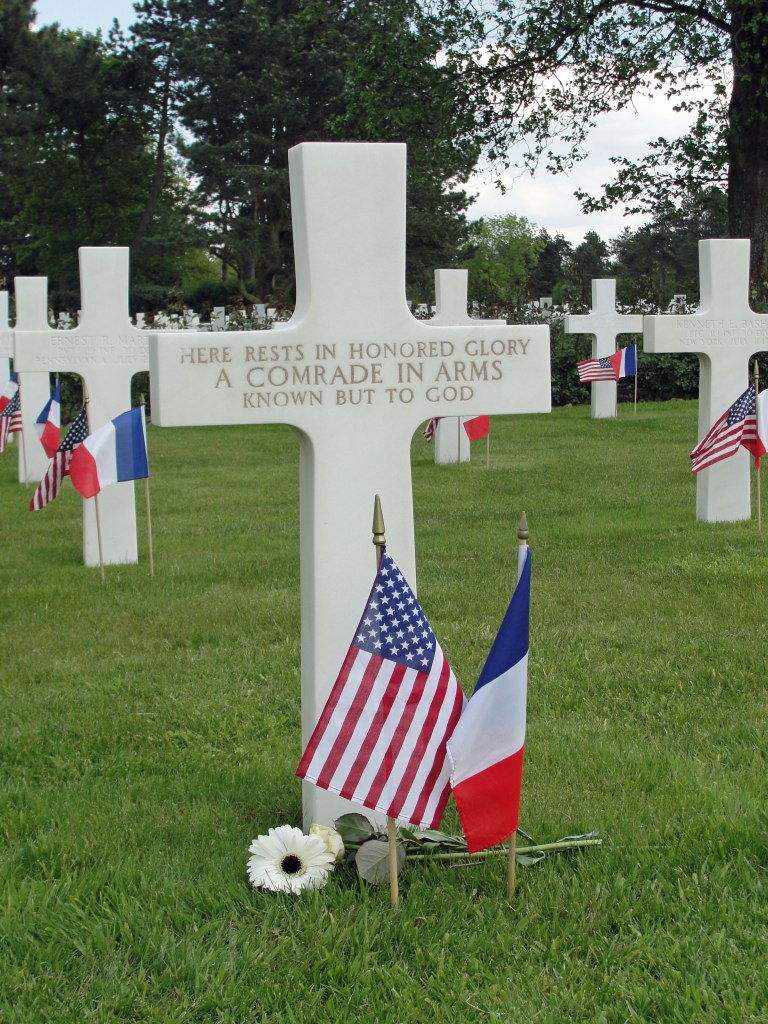
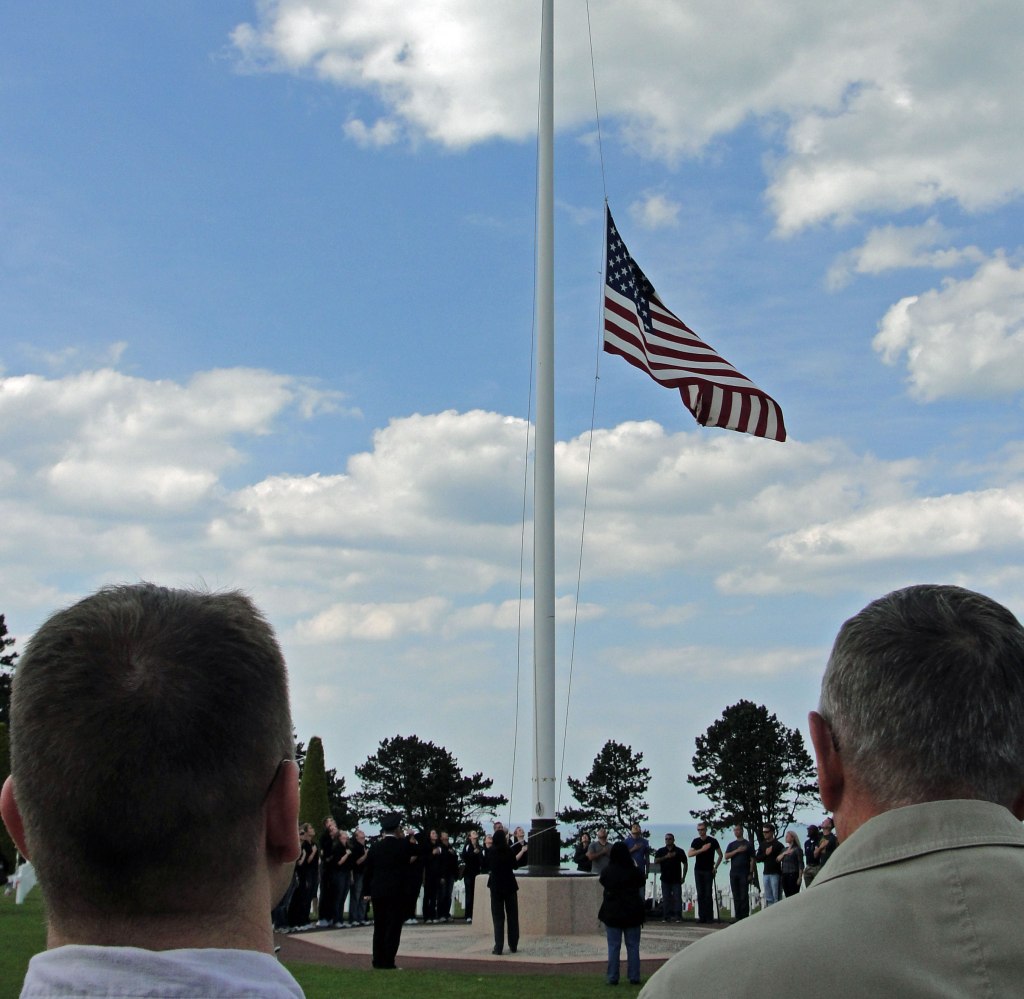
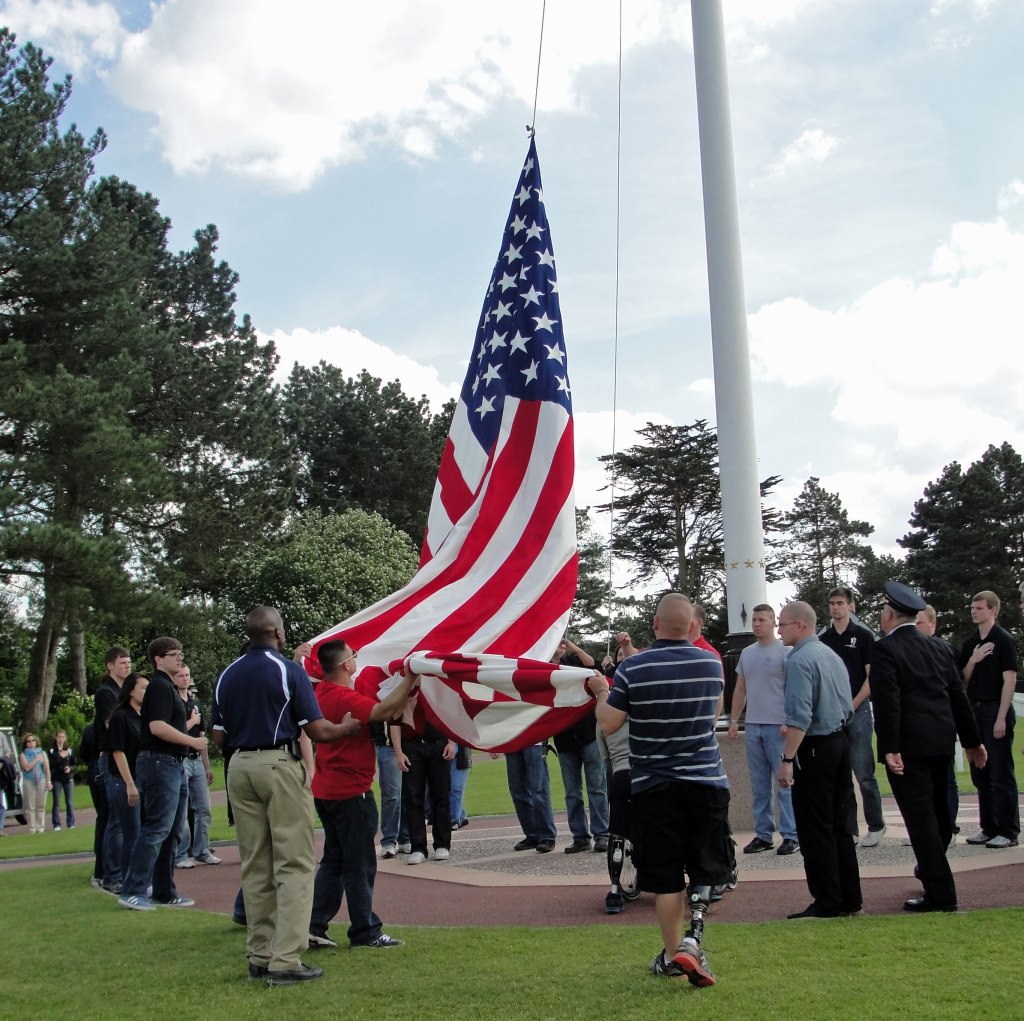
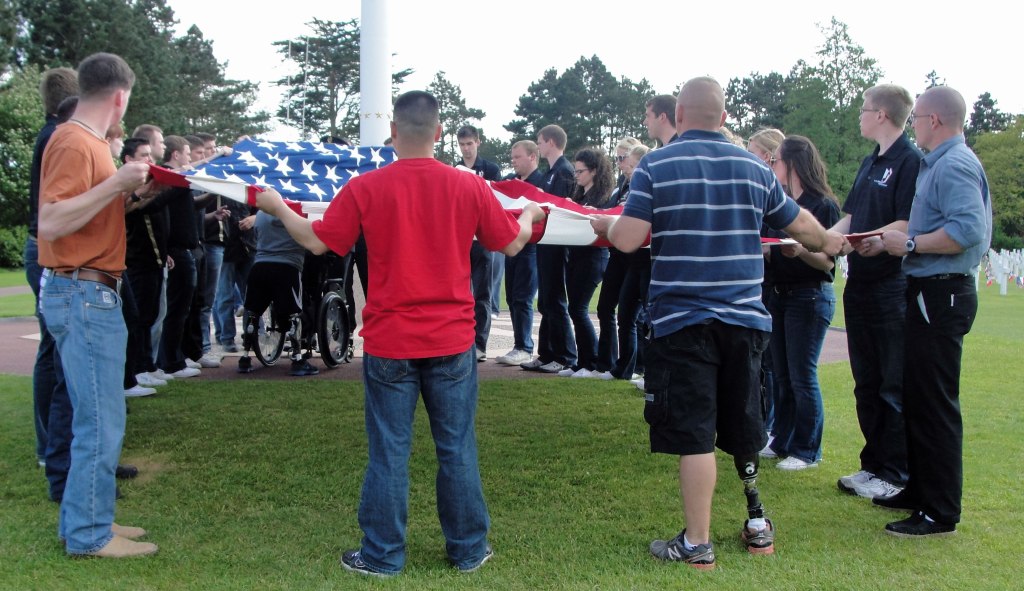
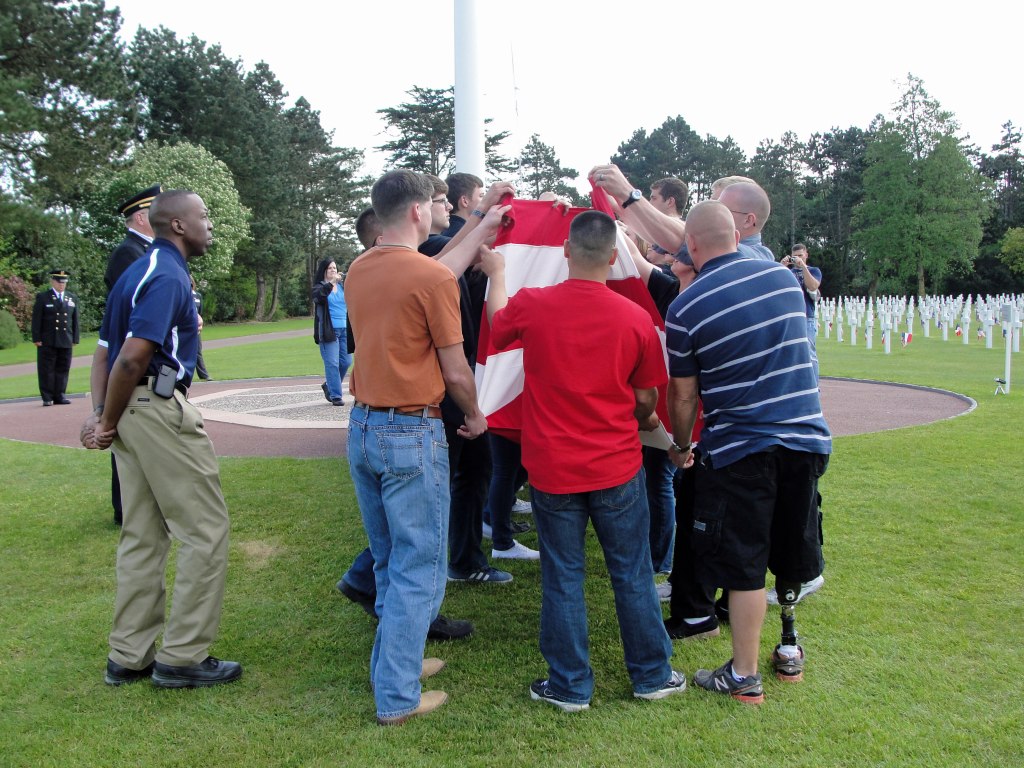
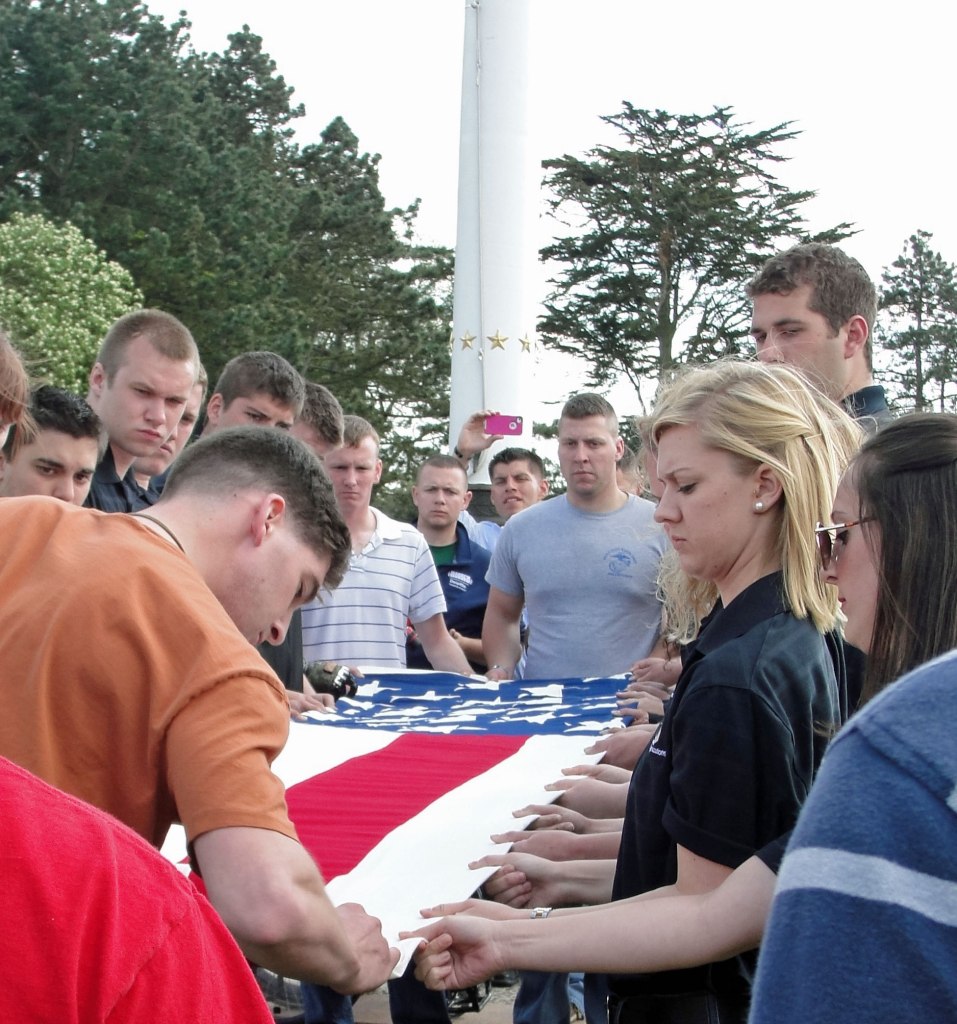
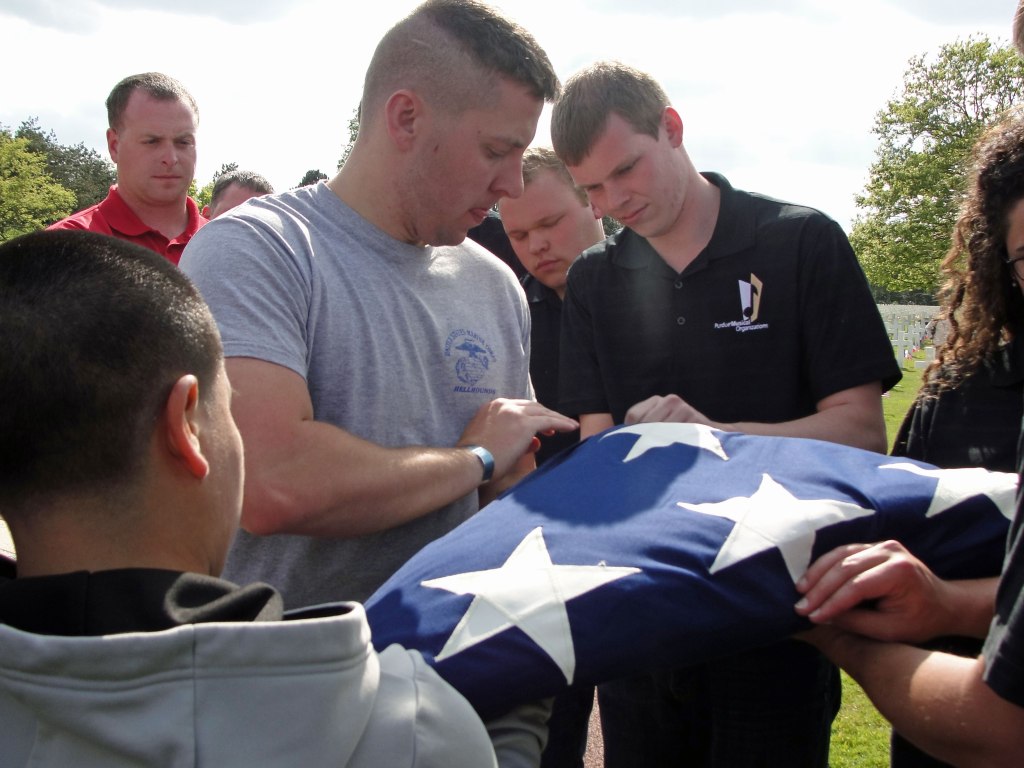
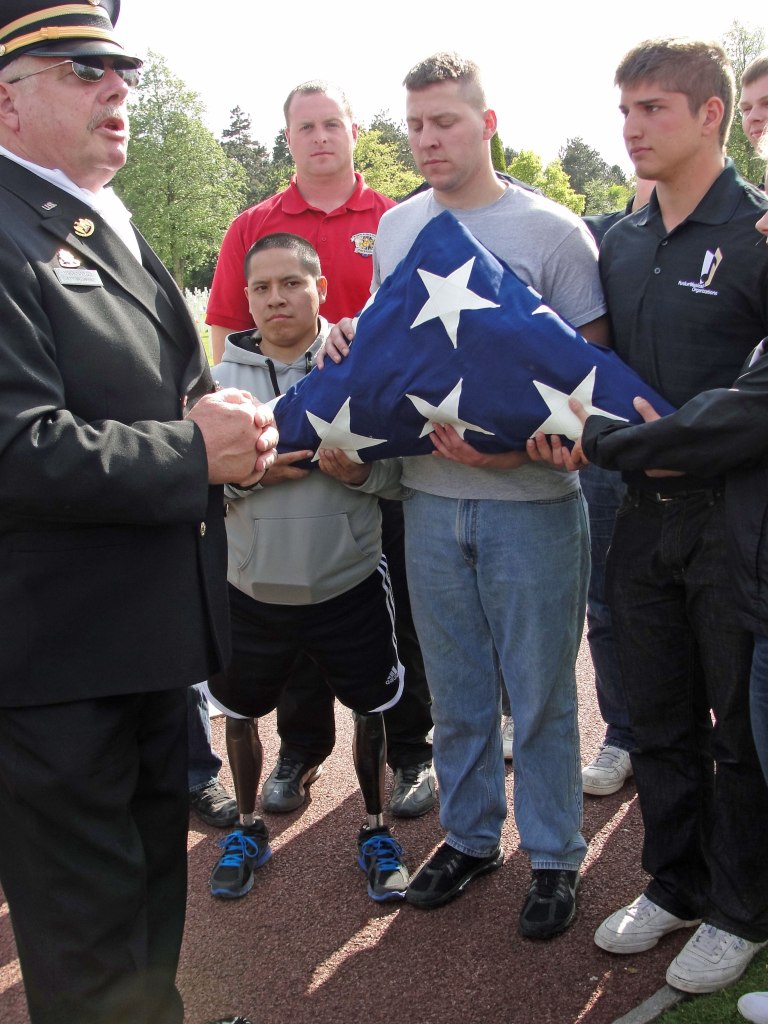
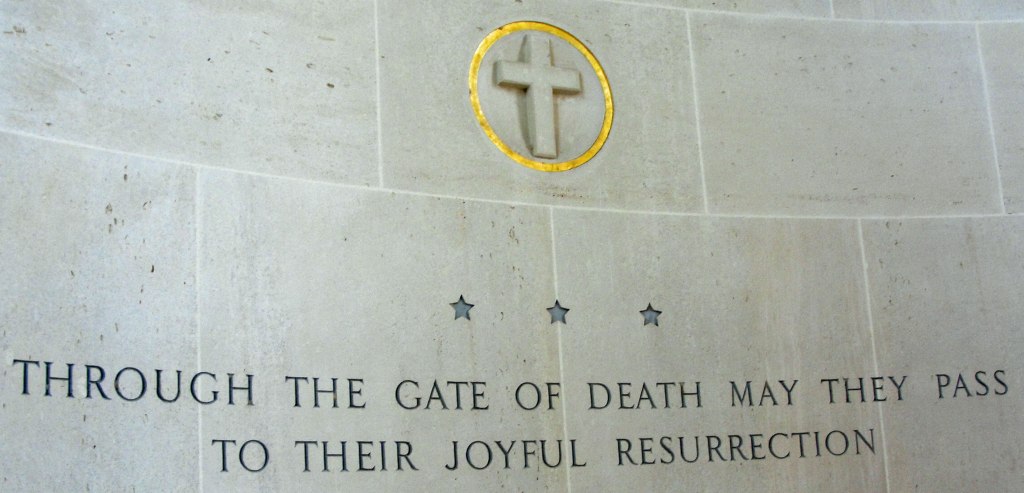
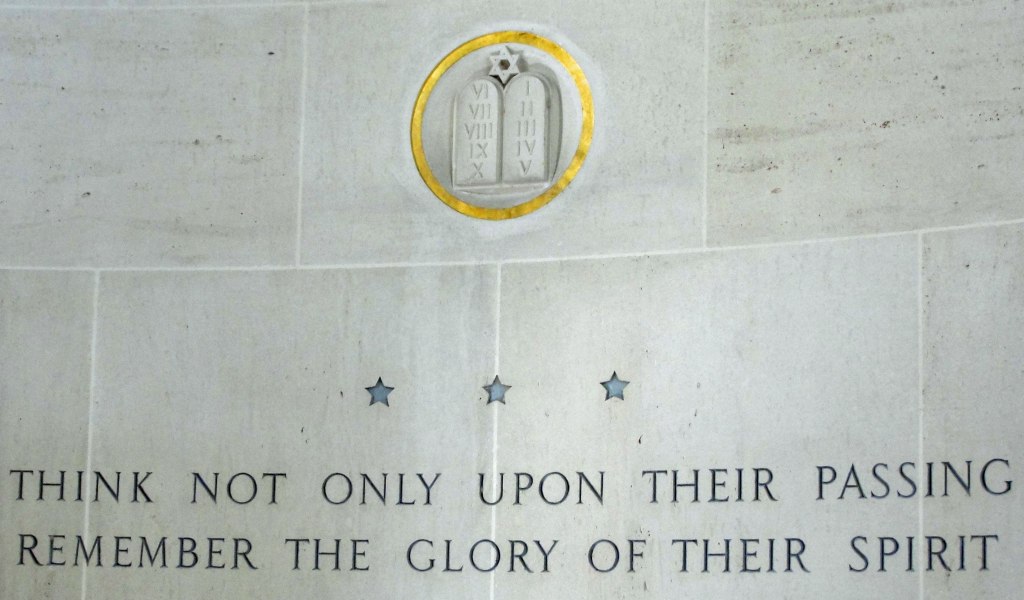
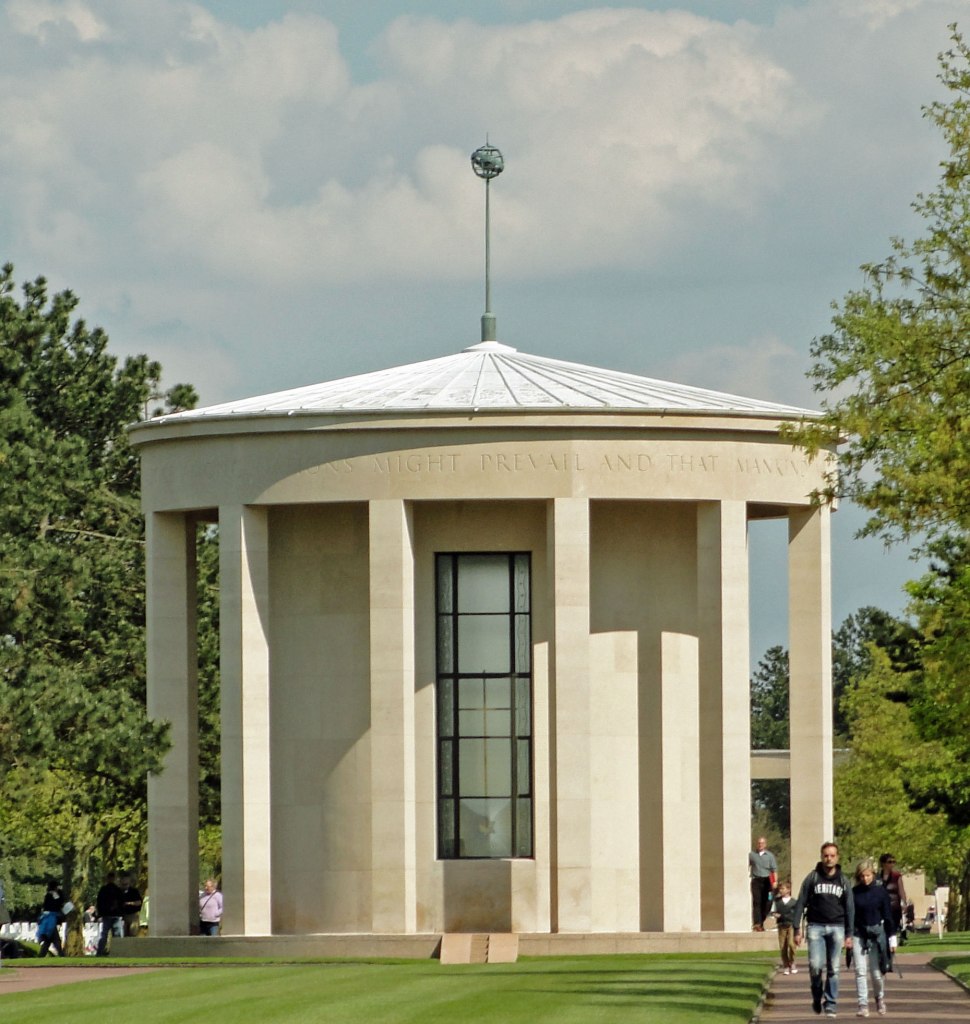
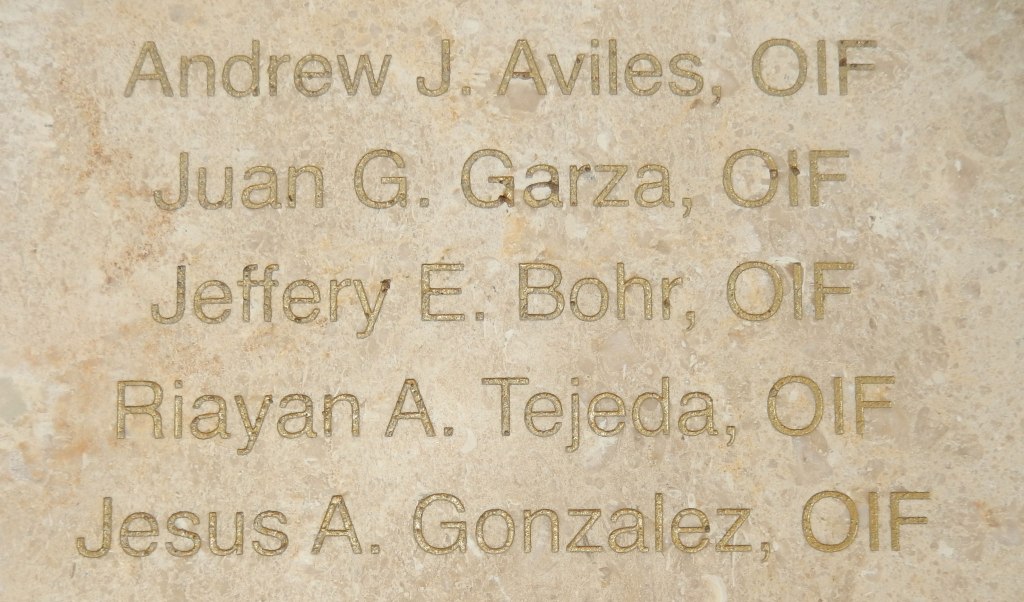
On Memorial Day 2014, the United States Marine Corps Wounded Warrior Regiment visited the American Cemetery in Normandy and with a student group from an American college provided evening colors. As we remember the 76th Anniversary of D-Day this year, here are some photos from that visit and the prayer I offered during the ceremony.
Almighty and Merciful God, we are gathered on this hallowed ground made sacred by the presence of our forebears-in-arms who gave the last full measure of devotion on the shoreline below us.
Standing among so many graves, we are reminded of the cost of war and the sacrifices that have been made throughout our nation’s history by those who have answered the call to protect and defend. Some are known to us as father, grandfather, distant ancestor, close relative, neighbor or friend. Others have stood beside us on the field of battle. Most we know only by their devotion to duty and their physical and moral courage which has preserved for us a just and free nation. With honor and fortitude, they made their stand against all enemies to alleviate tyranny and oppression, build up civil society, provide humanitarian assistance, defend the constitution, uphold human rights and dignity and work toward that glorious day when at last there shall be peace.
And so, O God, in their honor and memory we pause to offer to you a prayer of thanksgiving as we remember them silently in our hearts:
Let us pray for those who fought and died…
Let us pray for those who fought and lived…
Let us pray for those who, through their support, care and love for those who fought, have faced their own battles…
Let us pray for ourselves, that we continue to do all in our power to stand against those who oppose freedom, democracy and the establishment of a just and lasting peace…
O God, may we always remember the patriots upon whose shoulders we stand and may we as a nation always be worthy of those who defend us.
“I remember you,” I mutter, as my fingers read a section.
For a short moment my mind races back to body bags, opened in search of dog tags listing religious preference. A bullet hole in the spine, just below the skull. Searching through a journal for a name, when other ID was missing. Deep screams filling the tent as death came painfully. The sound of my own voice singing hymns to a Baptist as he silently moved closer to heaven, his brain death preceding his last breath by hours. A Buddhist? Did I say the right prayer? God, I hope so.
Enough. Enough.
“I remember,” I say again, my voice hoarse from cheering for the team.
Across the parking lot athletes are leaving the gym,
Two hours of seated volleyball and wheel chair basketball only invigorating them.
They move quickly on prosthetic legs worn proudly with shorts.
A few, with scars on their heads, search for the bus.
These warriors wear their memorials, tattooed on existing limbs, telling the story of how they came to be wounded, who they lost and why it matters.
It’s Mother’s Day again. I know because my Facebook page has been filling up with sweet photos of friends’ moms and heart-felt memes encouraging everyone to appreciate theirs while they still have them. Seeing those sentiments makes me happy for those whose mothers deserve recognition, but it also reminds me that not everyone is as fortunate. So, I’d like to offer a word for those who could never honestly make these posts; who feel the need to fall silent so others may enjoy the day.
Here’s the dilemma:
The ideal mother is a joyful, caring, self-sacrificing, loving being whose greatest desire is to nurture and protect her offspring. In reality, a mother is someone who does her best to manage a household of cranky children, endless meal prep, piles of dirty everything and still try to have a personal life and likely also a job. But on Mother’s Day, and many other days as well, her child still views her as closer to the ideal. Why? Because the child’s love for her bridges the gap.
But then there are those “mothers” whose gap is so wide the Chesapeake Bay Bridge couldn’t connect them to the ideal. As a Navy chaplain, I’ve had a steady diet of their stories, since one of the quickest ways to escape a brutal childhood is to join the military. Some accounts were so awful that it would make me wonder how their now adult child lived long enough to be sitting across from me. Yet even that person would likely hedge on saying their mother was completely to blame. Why? Because something inside told them it was their job to close the gap. Even if their mother cooked meth in the bathtub, shot their sister, was perpetually under the influence, beat, abused, and neglected her children, brought home a continuous line of unstable men, abandoned the family, maxed the credit cards she took out in their name or put Satanic spells on them. Somehow, it was partially their fault.
“If only I were a better daughter, things would be different.”
“I know I am supposed to honor my mother, but how do I do that when she is so neglectful and mean?”
“I hate holidays. All they are is another opportunity to be abused. But my mom says she wants me to come home. Do I have to go?”
“My mother doesn’t work because she can’t pass a drug test. She says if I don’t continue to send my paycheck to her, my siblings will starve. I need to keep some money to live on, but I don’t want to hurt my brothers.”
“What do I owe my mother despite how she’s treated me?”
These painful laments were difficult to hear and often I would drive home telling my windshield what level of harm I wanted to inflict on said “mother” just to get it out of my system. So imagine what the annual arrival of a day to celebrate mothers does to those who’ve suffered through childhood with them. Since rage is not a fit sentiment for a greeting card, silence is all that’s left. But that loud silence also deserves guidance. So, here are a few of my responses that have passed the scrutiny of those who have endured these kinds of mothers, in case one or two might be helpful to someone you know:
You don’t get a free pass in life because you had a crappy childhood. You are still responsible for who you become. Even if your mother was raised in a tough situation, that does not mean she is justified passing it on to you. The same goes for you. Fix what’s broken. Let her be the end of the line for negative and addictive behavior.
In a parent-child relationship, the parent is the responsible party. Even if your mother wants to “identify as a child” and acts like one, that doesn’t make it so. You are not to blame for being too young to be the adult you both needed.
A child’s love is not enough to turn a woman with criminal tendencies into something she is not.
You don’t get extra points in life for suffering or making those around you suffer. If you are psychologically unwell because of your experiences, see a counselor and take meds, if necessary.
Take stock of what you learned: Practical household skills out of necessity? How to be self-sufficient at an early age? The perspective that comes from really seeing where addiction or untreated mental illness leads? You are stronger in many ways because of your difficulties.
You can still believe in the Hallmark card ideal of motherhood, even if your mother didn’t fulfill it. Just know that an ideal is a concept of perfection, a guide toward becoming more excellent, not an achievable end state.
People are not all one thing. Your mother could have been the vilest creature imaginable and still have done a few good things worth remembering.
All adult relationships are voluntary, even the one we have with our mother. If yours is toxic, stay away. If there’s any chance for a future relationship, it will be more possible if it has not been poisoned by continual negative interactions.
The best way to honor your mother is to become the best version of yourself, the one she would have wanted for you if she had been able to do so. This is not something you owe your mother. This is what you owe yourself and the world around you.
As Mother’s Day approaches this year, if your own mother is more worthy of a “pink slip” than a greeting card, let her go. It’s just another day on the calendar. But if you are brave, try to find a way to “rejoice with those who rejoice”. Honoring those who do their best to nurture the family, who cherish children and see that role as essential, is good for us all.
I couldn’t see the words. There was a story there, but the tree was in the way. Who would have planted an elm on a boys’ grave: A grieving mother burying two children forty-five days apart? A father, wanting to honor the lives of his boys with something that would grow stronger each year, as they should have, passing seed and essence to generations to come? Or was it the wind howling over ground which years before had witnessed the Battle of Washington Heights, a great loss for the roughly clad, fledgling Continental Army, who, in their retreat across the Hudson to Fort Lee, left behind nearly 3,000 troops, some of whom died on this land but most who would die that year at the hands of their British and Hessian captors? Perhaps it was not so much the wind as the birds that soared and dipped on its currents, attracted to the adjacent farm once known as “Minniesland,” as if they knew it had been home to artist and ornithologist John James Audubon who had devoted his life to the careful rendering of the natural world.
Was it the intention of those who loved these boys, or just a whim of nature, using breeze or creature to plant a tree that would put its enormous roots literally through the bodies of my ancestors, entwining them and me forever with this place, rich in history, which the original inhabitants called “Manahata,” and we call Manhattan? But there it stood, my DNA rising upwards among the tombs, extending its limbs skyward and casting a large shadow across the path so that those seeking respite from city life could find shade on an afternoon stroll, or tourists wanting to see the final resting places of the famous and the infamous might pause beneath its branches to check the map.
This place, Trinity Cemetery, had few “residents” when Hamilton and Clifford Flock were buried in late autumn of 1850, but over time the population of these four-square blocks has grown to more than 75,000. It is located in an Upper West Side neighborhood known as Hamilton Heights, named not for my ancestor, but for one famous resident remembered, less for being the first Secretary of the Treasury, with his image gracing today’s version of a ten-dollar bill, and more for having died in a duel with then Vice President Aaron Burr. Alexander Hamilton, who my ancestors admired enough to name a son after, is interred not at this Trinity Cemetery, located at 155th Street but at Trinity Cemetery at Wall Street, the closure of which, in 1822, caused the church to look for this second site uptown. Opened twenty years later, these Victorian grounds, bisected north and south by Broadway, were laid out by James Renwick, who when he wasn’t landscaping graveyards, was busy designing Saint Patrick’s Cathedral, one hundred and five blocks south, Vassar College in Poughkeepsie, NY and the Smithsonian Castle in Washington DC.
The Flock plot is in the westerly section, with a view of the Hudson River. Bounded by granite posts and linked by wrought iron rails with a large obelisk just north of center, it is inscribed with the names of the boy’s parents, Alfred and Maria, my third great grandparents.
Through the years several noted residents have joined them on the gently sloping hillside:
Alfred Tennyson Dickens, the oldest surviving son of Charles Dickens, and godson of the poet Lord Tennyson, was buried nearby in 1912, having died of acute indigestion while staying at the Waldorf Astoria. He was only five when Hamilton and Clifford died, having been born two years after his father finished writing A Christmas Carol. Had the Flock boys heard of Ebenezer Scrooge and his midnight transformation? Had they felt a kinship for Tiny Tim: frail and weak, but strong of spirit? It only took a year after it was written for that story to jump the pond, be set to music and performed in 1845 at the Chatham Theater, not too far from their father’s poultry shop on Broadway and 12th Street. Even if they had not heard of the ghosts of Christmas past, present and future, perhaps Hamilton and Clifford had overheard their father relate a tale gleaned from his customers of how hundreds of newsboys had been brought in to see a performance and had behaved so badly the police had to haul a bunch of them off to the ominous Tombs, the House of Detention named such because it looked like an ancient Egyptian Mausoleum. I could imagine that conversation becoming an “instructive” moment between parent and child starting with the phrase “If I ever hear of my boys acting that way…”
Or perhaps Ham and Cliff had had the chance to see acrobat and clown Richard Sands perform his backwards somersaults off his horse May Fly two years later when he also performed at the Chatham during a slump in the theater’s history that allowed for circus acts. The boys would be several years embraced by elm roots by the time Sands invented the act for which he was most remembered–walking on a ceiling using suction cups attached to his feet. Legend had it he died in Massachusetts, plunging from the inside of a dome when the plaster gave way, but he actually lost his life with much less fanfare, succumbing to yellow fever in Havana, Cuba. Buried in 1861 just down the hill from the Flock plot, a tall monument, reminiscent of a Corinthian temple was erected over his grave. In the center a platform sits empty, where once the bust of this circus showman sat encased. Apparently, someone years earlier made the statue disappear and never returned to finish the act.
If a link to Ebenezer Scrooge and a star circus performer are not enough company for two young boys, down the hill nearer the mausoleums is a low, gray granite grave with the word Moore cut in large letters below a list of names. Close by is a small marker, also made of dull gray stone with the letters C.C.M. and nothing else. This marks the last resting place of a dour theologian, professor of Greek literature and Bible and writer of A Compendious Lexicon of the Hebrew Language, likely used as a 19th century cure for insomnia. One wintry day in 1822, while traveling by sleigh from his home in Chelsea to Greenwich Village to buy a turkey, he penned a few verses to read to his own six children on Christmas Eve. The following December a friend had those verses published anonymously in a Troy NY newspaper. It was reprinted many times over the next fifteen years until Clement Clarke Moore finally admitted that this frivolous, unscholarly verse was his own. By that time his “jolly old elf” and sleigh with “eight tiny reindeer” were already reshaping the culture and defining how children like Ham and Cliff might experience Christmas. Of course, their deaths just before the holidays in 1850 likely did much to shape their family’s observance, at least for that year.
There are some other permanent residents of Trinity that would not be so interesting to two young lads: Four New York mayors including the more recently deceased Ed Koch, at least that many congressmen, any number of socialites, including Caroline Webster Schermerhorn Astor, the doyenne of the gilded age and self-proclaimed arbiter of the elite four hundred. There are physicians like David Hosack, whose unusual family practice included trying in vain to save Alexander Hamilton after his 1804 duel in Weehawken, New Jersey where, three years earlier, Hosack also could not save Alexander’s son Phillip after his own duel. One of the most infamous residents is one who excelled in business endeavors and was, at the time of her death, the richest woman in America. Born Eliza Bowen, she married French wine merchant Stephen Jumel and after his death increased her fortune through wise investments. An unwise investment, though, was marrying 78-year-old widower Aaron Burr who promptly began losing her money. So she put him out of her house and, for emphasis, divorced him on the day he died. A strong, independent woman, she was known derogatorily throughout the city as “Madam Jumel,” because as any 19th century citizen would be certain, a successful woman must have some level of connection with the second oldest profession.
Not far from the Flock plot is a vault containing a body recovered at sea a week after a British liner making its maiden voyage sank after colliding with an iceberg. According to the Encyclopedia Titanica the following description helped to identify the floater:
“NO. 124 – MALE – ESTIMATED AGE 50 – LIGHT HAIR & MOUSTACHE. CLOTHING – Blue serge suit; blue handkerchief with “A.V.”; belt with gold buckle; brown boots with red rubber soles; brown flannel shirt; “J.J.A.” on back of collar. EFFECTS – Gold watch; cuff links, gold with diamond; diamond ring with three stones; £225 in English notes; $2440 in notes; £5 in gold; 7s. in silver; 5 ten-franc pieces; gold pencil; pocketbook. FIRST CLASS. NAME- J.J. ASTOR”
At the time of his death, John Jacob Astor IV was likely the richest man in the world, traveling on the largest ship afloat, reported to be unsinkable. Here at Trinity Cemetery, he is just another resident.
A few steps from the Astor vault is a monument in memory and honor of United States Marine Stephen Higginson Tyng, Jr., also lost at sea, but unlike his famous neighbor, never found. He was on his way to Parris Island, South Carolina when his transport ship City of Athens was rammed in the fog by a French warship on May 1, 1918. Married on the day the ship set sail, his wife Elizabeth never remarried and is buried close by. She died May 2, 1964.
The loved, the cherished. The lost, the found. The youthful, the infirmed, the scoundrel, the fascinating and the dull. The busy, the brutish, the fop and the fanatic. First lives, then stories, then just names carved on stone. Passersby read them aloud. Perhaps. Or go by, gazing at the foliage, the marble angels, their timepiece, trying not to imagine themselves here, on the other side of the sod.
Genealogists say we die three deaths. The first is when our body dies. The second when the last person who knew us dies. And the third? The third death is the last time our name is spoken.
Here in Trinity Cemetery, under the shade of my family tree, I, the last of my line, read these names:
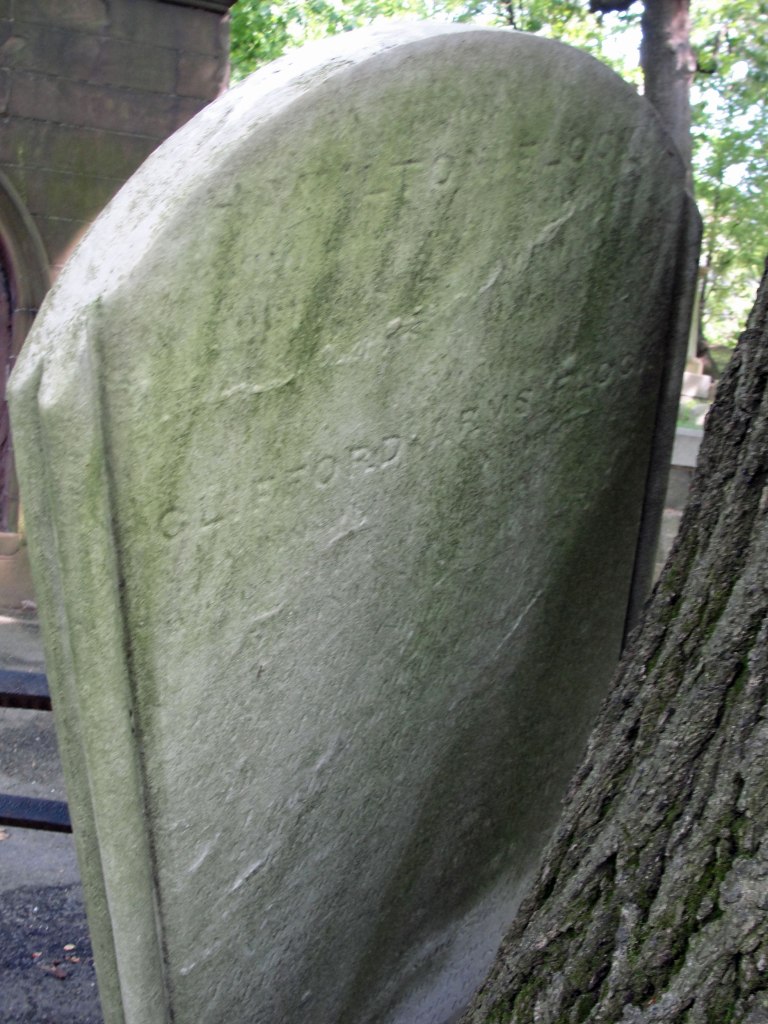
Hamilton Flock. Age 10. Clifford Arms Flock. Age 6 years, 5 months, 20 days. Nothing else under Hamilton’s name is legible. I only know the date of his death from the City Hall records: 29 October 1850, and even there his name is misspelled “Flack.” About his younger brother Clifford, I know a little more. He died of “water on the brain”–hydro encephalitis. Whether this was a problem from birth or the result of an illness or accident is unknown. All the obituary in the New York Herald said was that family and friends would gather on the Friday following his death in his parent’s home “in Fiftieth Street three doors west of Third Avenue” at two in the afternoon and that his remains would be taken to Trinity Cemetery. There all would gather, two weeks before Christmas, to help Alfred and Maria do the one thing parents never want to do–bury their child.
Hamilton and Clifford. They had not lived long enough for time to assign them fame or anonymity. Likely they had played on cobblestone streets, heard stories told to them by firelight, slept in a crowded bed with several other siblings and grew up to the rhythm of the marketplace where their father dealt in poultry and pumpkins. But they were loved. Fifteen lines of illegible carving on a granite slab whose face is wedged up against the bark of that great ancient elm tree attest to that. But there was a sixteenth. Embracing the tree, I leaned in for a closer look:
“… tear is shed.” Wait. A bit of maneuvering. A squint or two. “… farewell tear is shed.” Then above it “… greet them”
On a hunch, I typed the words into a search engine on my android phone. It was the last line of a hymn written in 1833 by Lowell Mason to eulogize Martha Jane Crockett, a sixteen-year-old, well-loved student at the Mount Vernon School in Boston where he worked. He’d composed both tune and words on his way to school the morning after her funeral service. Not as inspiring as “Antioch”, the tune of “Joy to the World” he wrote six years later, nor as useful for mass casualty situations as his tune “Bethany” to which “Nearer My God to Thee” is sung, but heartfelt nonetheless. When the still grieving students arrived in his classroom that warm July day, Dr. Mason put them through their vocal exercises using individual lines of plain music. Toward the end of the session he instructed them to sing those lines in harmony. Then he wrote these words on the chalkboard to be sung with the tune:
“Sister, thou wast mild and lovely, gentle as the summer breeze, Pleasant as the air of evening as it floats among the trees. Peaceful be thy silent slumber, peaceful in the grave so low; Thou no more wilt join our number, thou no more our songs shall know. Dearest sister, thou hast left us, here thy loss we deeply feel, But ’tis God that hath bereft us, He can all our sorrows heal. Yet again we hope to meet thee, when the day of life is fled; Then in heaven with joy to greet thee, where no farewell tear is shed.”
From what I could read on the stone marking Hamilton and Cliff’s grave, these were the verses written there – his parents only creating plurals where the original called for a singular. If the words I could not see were indeed the rest of the hymn, likely they changed gender, too, but the sentiment remained.
“Yet again we hope to meet them, when the day of life is fled; Then in heaven with joy to greet them, where no farewell tear is shed.”
A few more touches to the screen on my cell phone and I was listening to the melody.
I’d come to Trinity Cemetery to see the burial place of my ancestors and save them from the third death, at least for my lifetime. Instead, I walked away, as Clifford and Hamilton’s immediate family may have when the headstone was erected 170 years ago–singing a hymn of promise, peace and belonging.
I love photographs. What I love most about them is how they capture a moment. Moments go by so quickly, children grow up, people move away, places change. It’s nice to have the chance to revisit them without having to depend on memory, which can be so unreliable. Photos also allow us to share reminiscences with folks who weren’t there when they were taken, and can do that even across the generations, which is a real gift. And sometimes photos allow us to see something out of our view, like a bald spot or a photo-bomber, or maybe even something more important.
Over the years I’ve not only taken thousands of photos, I’ve also repaired many of the old ones I inherited from my family. I like doing that, because it allows me to see back to a time before my time. Is that handsome young man with his suit coat slung over his shoulder my father? Did my mother really make that face? Wow, my grandmother is wearing round framed “John Lennon” glasses! Every picture is a discovery–a glimpse of someone I never had the chance to meet, or a vision of somebody’s younger self.
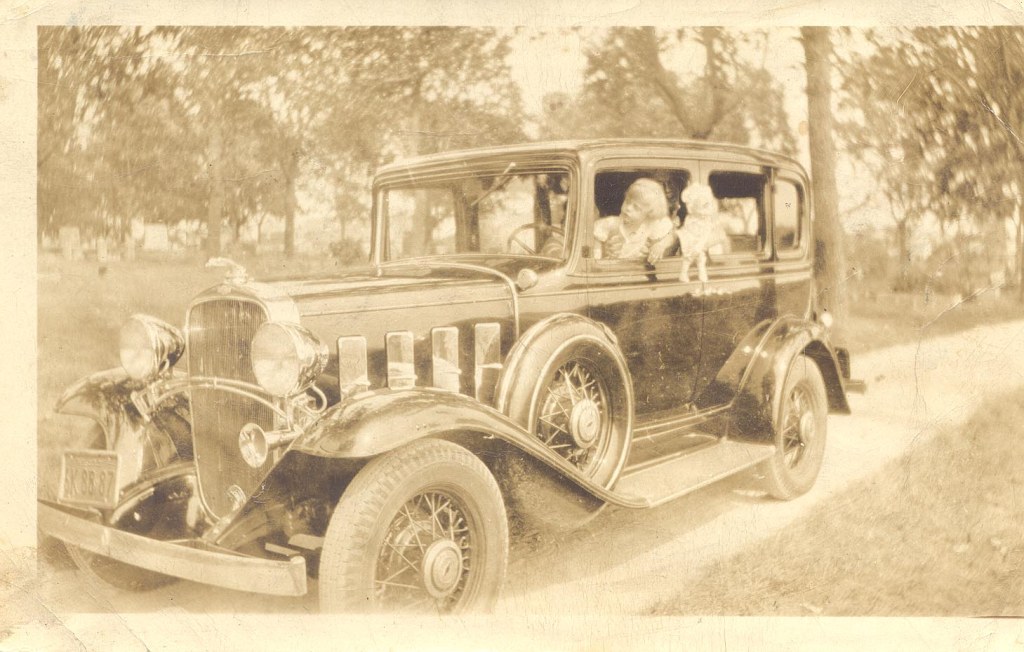
Of the many photos I’ve restored, one small snapshot in sepia tones and cracked with age is particularly meaningful to me. I chose to work on it because of the subject – my mother at age two. In the picture she is holding her favorite doll, Evelyn, and leaning out the window of a parked 1932 Chevrolet.
Before I began the repair work, I scanned the photo, and enlarged it so I could get a better view. As the photo appeared on the screen, details emerged that had not been visible earlier. The first thing I noticed was that the lighter marks in the background, which were not discernible in the smaller version, were actually tombstones. The car was parked in a cemetery.
Then, as I perused its enlarged surface, something else appeared that I had not seen – my grandmother and my aunt! Nana was in the passenger seat with her hands around my mother’s waist, raising her up and out the window, and my rather tall aunt was looking from behind and smiling. In the smaller image, they just looked like shading in the car’s interior. But there they were!
Inspired by that discovery, I continued to work, removing scratches on the surface and restoring several cracks. Then I zoomed out to get a better perspective on the repair. I was not expecting to see anything new, but there was another surprise! In the now restored surface of the photo was a reflection of my grandfather on the side of the car, camera raised to take the picture. Apparently, they had gone together as a family to pay their respects to loved ones at Canarsie Cemetery in Brooklyn where several of my ancestors are buried. In the smaller photo, all I could see was my mom playing in a really cool antique car. It was not until I was able to see the larger picture, remove the impediments and get some perspective that the story began to unfold. Which makes me wonder, if we did that with other pictures, what might become apparent which we otherwise would have missed?
Having recently celebrated Easter, albeit in a strange stay-at-home DIY way this year, one picture that comes to mind is another that, if they had had the technology to take it back then, would have also been taken in a graveyard–a picture of Jesus’ tomb. In its small snapshot form, it likely would tell the story we would expect:
Behind this enormous stone is the final resting place of a manmany had hoped was the Messiah. In the end, he turned out to be just another man whose death was lonely and gruesome.
But if we actually had such a picture and could do with it what I did with my family photo, what might we have seen? What would have become visible as it was enlarged? In that place of death, would we have then been able to discern those unseen hands that were present raising Jesus up to newness of life? Would we have been able to see the reflection of his heavenly Father, who even through death, never took his eyes off his child? I wonder what we might have appeared had we been able to see the bigger picture.
Well, we can, sort of… The gospels tell us about that bigger picture, allowing us to stand back and see how the events of Good Friday unfolded into Easter – how in that graveyard there was more of a story than first met the eye. Surprise! This is not a place of death; it is a place where death will be no more. Put away that too small image in your mind’s eye and come face to face with the IMAX film of the ages!
Now I know that, because of the pandemic, many of us are feeling like we, too, are standing in a place of death. We are cut off from friends and extended family. We are fearful for our livelihood and our future. We unnaturally shrink back from those with whom we must come in contact, as if our life depends on it, and likely it does. Being separated from those we love, the work that is so familiar and the normalcy of the life to which we were accustomed is painful. For others who are struggling to cope with the illness itself and the loss of those they hold most dear, it is an even crueler reality. It is like we are living a perpetual Good Friday with no vision of Easter to help us make sense of it.
This is a tough place, and no one is exempt. So, perhaps, in this moment, the best we can do is keep an eye out for what appeared unexpectedly in my family photo: Those who, out of love, continue to lift us up, and reflections of the Father who is constantly watching over us. Even a glimpse of these will help us know we are not alone, and that my friends, in this uncertain moment, is precious.
For those who observe it, Lent is a serious season. It is a time for reflection, self-denial, penitence and renewal of faith. Modeled on the forty days Jesus spent in the wilderness where he was tempted by the devil, and culminating with an annual recounting of the events leading to the crucifixion, it prepares us to embrace the glorious dawn of Easter and the promise of eternal life with Christ.
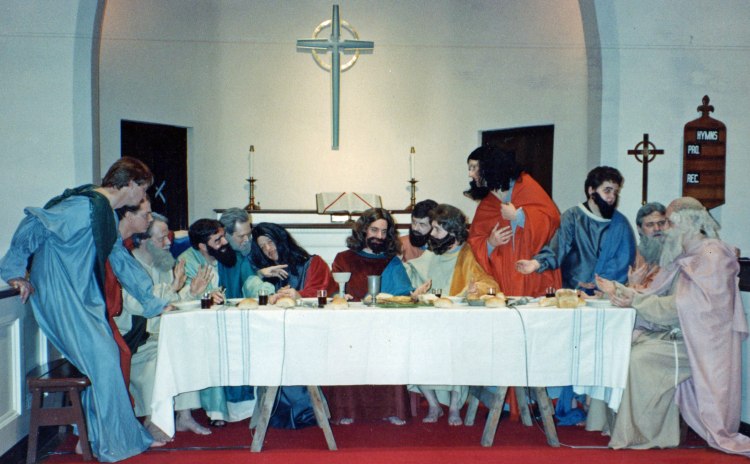
Because the Gospel Passion stories read almost like a script, congregations will often use dramatic performance to bring them to life for the faithful. This may take the form of a multi-voiced reading, the use of sounds such as a rooster crowing or a nail being hammered, changes in lighting, the use of candles, or even a costumed play. It is important to note, however, that as the complexity of the dramatic elements increases, so too does the chance for something to go wrong. How do I know? The Living Last Supper tells me so.
Hyde Park United Methodist Church
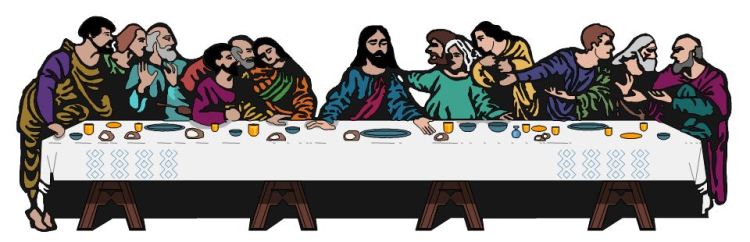
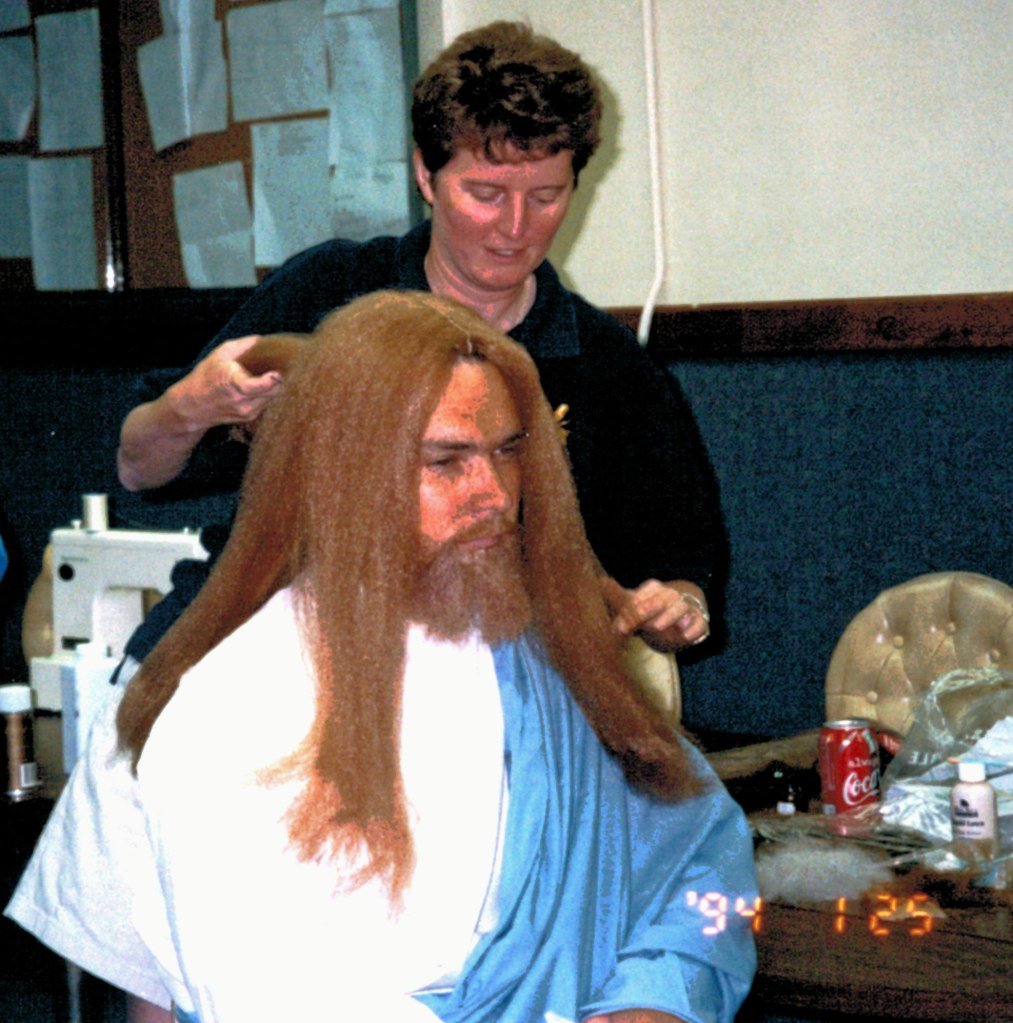
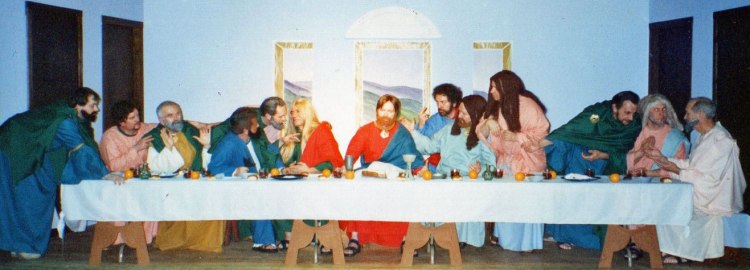
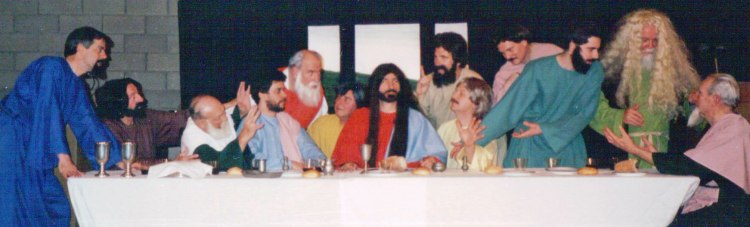
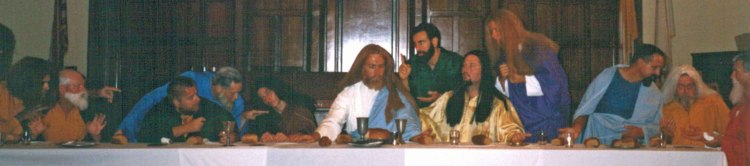
This Lenten drama is a production involving thirteen performers in full costume reenacting Leonardo DaVinci’s interpretation of the last meal Jesus ate with his disciples before he was arrested. The curtain opens on the Upper Room come to life. The table is set exactly as in the famous painting and each actor is dressed, coiffed and posed to match the disciple he is portraying. If you are familiar with the painting, you will remember that it depicts a moment of action in the story, as the disciples respond to Jesus’ statement “One of you will betray me.”
Here are the words of the narrator as the play begins:
“The disciples are startled, each in a different way by the tragic pronouncement made by Christ. One registers horror. Another cries, ‘This is preposterous.’ Another disbelieves what he has heard and reaches for a companion to confirm that his ears have not tricked him. Still another begs Christ to reveal the name of the betrayer while yet another stoutly proclaims his own innocence. Judas draws back from Christ, overturning a salt shaker as he clutches tightly in his fist the bag containing his pitiful reward for betraying his master. Jesus alone is calm in the wake of the turmoil his six words have created. It is at this point that we share what each of the disciples remembered of how he came to Christ and how he felt about him.”
I must admit, I am rather fond of this play. I have to be, to have produced it so many times. And what’s not to love? It’s a great evangelistic tool, since the actors always invite friends and neighbors to watch them perform. It’s educational, as the actors’ monologues introduce the congregation to likely unfamiliar aspects of the disciples’ lives. It’s inspirational for the participants because it makes them feel like “they were there” in that Upper Room. And for me, as a female pastor, it always gave me a chance to get to know the men in the congregation better while providing them with a chance for fellowship and mutual support.
Those are great reasons. But looking back over the many years of Living Last Supper productions, what stands out to me most is how they highlighted just how human the first followers of Jesus were. In the scripture, the disciples can take on an iconic stature. In the body of someone you know, anxious about his pending performance, it is easier to see how like us they were. And that helps us to see how like them we can be. Too often, people are paralyzed by the mistaken belief that God only calls the perfect. Watching his “followers” flub a line, pause for too long trying to recall, lose a piece of beard, knock over a goblet or accidently elbow the guy next to him and still have a place at Jesus’ table is empowering.
United Methodist Church of Wappingers Falls
One year, at the request of a particularly insistent mother, Jesus was played by a 15-year-old. Everyone was nervous about that, since you can never be certain what a teenager might say. Before the worship service I had a literal “come to Jesus” talk with the kid and was satisfied that he was ready. Everything went as planned during the performance. He said his lines perfectly and with appropriate emotion. After the twelve disciples presented their monologues, it was time for him to break the bread. He picked up the loaf from the plate in front of him and recited the Passover blessing flawlessly:
“Praised is He of whose bounty we have partaken, and through whose goodness we live. Praised art Thou, O Eternal our God, Ruler of the Universe, who nourishes the whole world in goodness, grace, loving kindness, and compassion. He gives food to all flesh, for His mercy is everlasting. Because of His enduring goodness, we have not lacked sustenance for all living things of His creation. Praised are Thou, O Eternal, who provides food for all.”
As instructed, he then put his thumbs under the loaf to break it where it was supposed to be cut. But it wasn’t. The altar guild always remembered to do it, but the stage hands obviously didn’t get the memo. Sweat began to roll down Jesus’ forehead as he struggled with the stubborn loaf. Then his hands started to shake. Frustrated and seeing no relief, he mumbled, loud enough to be picked up by the microphone, “Who made this bread?”
There was an awkward pause, then one disciple responded, “I don’t know, but Caesar made the salad!”
While the congregation was reeling with laughter, someone cut the bottom of the loaf and when their attention was again focused on the table, Jesus took bread, gave it to his disciples and said, “This is my body, broken for you,” and we believed Him.
Great Hill United Methodist Church
Communion is a sacrament and should be served reverently. How it is received is another matter. Usually that issue is only observed by the pastor and her/his lay assistant. Since DaVinci told the disciples that if they wanted to be in the picture, they should crowd together on the far side of the table, that makes it easy to allow the congregation to come forward to receive on the empty side. It also gives the actors something they rarely see – a close-up view of their fellow parishioners ingesting the bread and “wine”. So when a woman put “the body of Christ” in her mouth, then retrieved the sopping mass with her thumb and forefinger and dipped it into the chalice, I guess I should not have been surprised by the loud, collective “Eeewww…” emanating from Jesus and His followers.
The Village Church of Bayville
The first time I directed the Living Last Supper, I was 27-years-old and the associate pastor of a larger congregation. Thinking that wrangling a bunch of amateurs into wearing fake beards, long dresses and speaking in public wouldn’t be too difficult, I passed the word for volunteers. Not getting them in a timely fashion, I asked the secretary to put a note in the church bulletin. On Sunday morning, this is what was listed on the announcement page:
By the end of the worship service I had twelve “yeses” and one “maybe”. The maybe’s name was Les. He’d said that if I really needed him, he would do it.
The next day I set about assigning parts to people by body type, age and facial hair, trying to match folks as closely as possible with the DaVinci painting. I had still one disciple too few. I needed Les to play the part of John.
Knowing that that same evening I would see Les’s wife, Doris, at a Sign Language class, I figured I could send a message to Les through her. I sent a message, all right, but not the one I expected. Seeing Doris down the hall at the school, I shouted, “Doris, I need to talk to you about your husband, Les. I need a John.” It took me a full thirty seconds before I realized what I had said. It took no time for Doris and everyone else within earshot to figure it out, and they were in full guffaw long before I had any clue why. When my verbal stupidity finally hit me, so did the crimson in my cheeks. We all had a delightful laugh, and then the embarrassment was over, or so I thought.
Two nights later, the men got together for their first rehearsal. They were nervous about doing speaking parts and had a hard time getting started. Someone asked, “Does anyone know a joke they could tell to ease the tension?”
“I think Rev. Laura should tell what happened the other night after the Sign Language class,” Les suggested. “My wife said it was hilarious.”
Now remember, I am the only woman in the room with thirteen nervous men, and I am their 27-year-old pastor. The fact that I even thought it was okay to tell this story is proof that yet again, I had not engaged my brain before opening my mouth.
I began: “The other night I was at Sign Language class. I knew I needed to talk with Doris and ask her to give a message to her husband for me because I needed him to play a disciple… So without thinking, when I saw her, I yelled down the hall, ‘Doris, I need to talk to you about your husband, Les. I need a John.’ Can you believe it? With twelve the disciples to choose from, I have to pick that one. I mean, why couldn’t I have said, ‘Doris, I need to talk to you about your husband Les. I need a Peter.’
There was a moment of awkward silence as it occurred to me what I had just said. Embarrassed, I hung my head. When I looked up, thirteen men were rolling off their seats, shaking with laughter, and one of them was trying to stuff a script in his mouth. Realizing there was no way to survive this without a moment to compose myself, I headed toward the door. Just as I opened it, I heard a voice call out behind me, “Thank God there wasn’t a disciple named Richard.”
Chapel, Naval Base Guantanamo Bay
My love of the Living Last Supper knew no bounds. We performed it in full costume in Cuba at the Guantanamo Bay Chapel. We even gave a recitation of it on Maundy Thursday in Iraq with the enemy not far away. Of course, in the camp, everyone was in uniform and armed, and we didn’t bother posing like the painting, but thirteen people (including women) read the parts before we shared in Holy Communion. One would think simplifying it in this way would make it less memorable. One would be wrong. Enthusiastic to the nth degree, the Senior Psychiatrist with our unit asked me for his part the day before so he could memorize it. I told him that wasn’t necessary, but he was insistent. When it was his turn to present his monologue he stood up, placed his hands firmly on his hips and looked around, just as the script instructed him.
“I am Simon Peter,” he began. “I was a fisherman when my brother Andrew brought me to Jesus. Jesus looked at me and said ‘Your name shall be Cephas, meaning Rock or Stone‘. Maybe he saw already in me the faith and steadfastness that I would yearn for and which would take so long to grow. I was so headstrong and my impulsive spirit caused me to do and say many things for which I am now sorry. In the Garden of Gethsemane, when the mob came after Jesus, I drew my sword to protect him and cut off the ear of a slave.”
Now at this point in the script, the stage direction told him to draw his sword for emphasis, but he didn’t have a sword. So instead he drew his nine-millimeter pistol and waved it furiously in the air. With that, the congregation hit the deck, afraid that at any minute they might be taken out by a shrink. I winced and shook my head at him, and sheepishly, he holstered his weapon. Then he continued to speak, without missing a line.
The Desert, Iraq
When amateurs perform a liturgical drama, it should be no surprise that things could go wrong, stupid or crazy. But that doesn’t make their offering any less valuable or inspirational. The word “amateur” comes from the Latin “amator” which means “lover.” So those guys in silly beards and oversized dresses anxiously reciting lines that took weeks to memorize are doing it so the people they love can hear the word of God they love and draw ever closer to the God who is love. Perhaps in all our human frailty, that is our best.
The middle of a desert in Kuwait, 2003. After 0200. (2 am)
I am awakened by the sound of someone knocking on the pole holding up the front of the dust-laden tent in which I am sleeping. It is a young woman, one of those responsible for driving our ambulances in convoy, across the border into Iraq, to where we will soon set up our field hospital. This is dangerous work.
“We are leaving in two hours,” she says when I stumble through the tent-flaps. “We need communion. Can you do that now?”
I tell her I’ll be there in 10 minutes, just long enough to put on the rest of my uniform and dig out the field communion kit from our connex box. I reach for my flashlight to see what I am doing. Suddenly the bare overhead lightbulb begins to glow. One of the nurses with whom I am sharing our temporary shelter is by the switch.
“I’m sorry to wake you,” I say. I look and another is gathering my flak jacket and helmet.
“This is important,” she replies. “We’ll help.”
Five minutes later, I head for one of the larger tents. All the ambulance drivers and their security team are inside, standing in a circle, quietly waiting. Knowing I have Sailors and Marines of various Christian traditions gathered there, as I prepare the communion elements I ask, “What’s everyone’s faith group?”
“We are crossing into the combat zone, chaplain,” one of them replied.
I served everyone.
“If thine heart is as my heart,” if thou lovest God and all mankind, I ask no more: “Give me thine hand.”
From Catholic Spirit: A Sermon by John Wesley, published in 1831.
Not everyone born with a silver spoon in his mouth makes a successful transition from privileged child to responsible adult. Peter was one who didn’t. At age 42, he lived in a beach-side studio bungalow on Long Island Sound, conveniently located next to the busiest bar in town. Years before, having worn out the patience of his influential family, residents of a gated estate a few miles from town, they’d set him up with a monthly stipend that provided for his basic needs in return for never returning. Happily, he drank away his money and stumbled home each night to sleep off the effects.
Despite Peter’s perpetual inebriation, occasionally he showed up at church for the eleven o’clock service. How he managed to get up that early was a mystery, but it was one the parishioners did not care to solve. They just let him plop into a coveted back row and left him alone. Perhaps it was because they feared being too close when the acolyte, carrying the brass candle-lighter with the burning wick, passed by, lest they be caught up in the fireball if the open flame ignited the alcohol cloud that settled over his pew. More likely it was so Peter might not accidentally let slip a story that involved them. Methodists are, at least in front of each other, absolute teetotalers…
Since few people spoke with him, Peter always got my ear after the service. One Sunday, as he filed out of the sanctuary on his way to coffee hour, he paused to shake my hand. Leaning forward, he used his other hand to point inside his partially zipped jacket.
“Hey pastor, want a kitten?” he whispered. When I gazed in, I saw a gray ball of fur curled up and sleeping. “It peed on me during the sermon,” he said as he released my hand. I winced as he turned and headed downstairs for a cup of Joe and a cookie.
Another week he complimented me on the duet I had played with a volunteer flautist during the offertory. “I played the clarinet, too, when I was in High School,” he said. “I liked the way it sounded.”
“Do you still play?” I asked, hoping it was something we could encourage that didn’t involve drinking.
“Nope. It was too much work. I gave it up,” he said flatly. He paused before heading for the stairs. “I got a friend who hasn’t been doing too well. Could she call you to talk if she wants?”
“Sure,” I said. “My phone number is on the back of the bulletin.” Just before three the next morning, my telephone rang.
“I can’t sleep,” mumbled a hoarse voice when I answered. Accustomed to calls in the night, I sat up, turned on the light so I could stay awake and pulled the blanket around me.
“Are you having a problem falling asleep or staying asleep?”
“Falling asleep.”
“Have you tried reading a book until you get sleepy?”
“I don’t like to read.”
“Do you need to talk about something?” I asked, realizing at once it was a dumb question. Why else would this man have called?
“No,” said the voice, and then he paused. “Will you play your clarinet for me?” This caught me off guard.
“Who is this?” I demanded.
“Peter … You know, Peter Clark… I was up and thought it might be nice to hear you play again.” I looked at the clock. It was 3:01 AM. I had to be up in a few hours for a funeral.
“So, you aren’t having a problem falling asleep?” I asked, trying to control my growing annoyance.
“Well, not really. I’m just bored. So, will you play the clarinet for me?”
“No, Peter, I will not entertain you. Go to bed and get some sleep. I have a funeral in the morning and I need sleep, too.” I put down the receiver. He did not call back.
The following Sunday Peter showed up in church again. I was standing in the narthex waiting to walk down the aisle when he arrived. The choir was milling about, rustling pages in their music folders and talking in what they thought were stage whispers. He pushed past them and leaned toward me. The smell of alcohol was unusually less pronounced.
“That friend I said wasn’t doing so well… I took her to the hospital last night. They admitted her. I stayed until she got into her room. Then they made me go home. Do you think you could visit her this afternoon?” He looked worried.
“Yes, Peter, I will visit her. Write down her name and room number and give it to me after the service.” During coffee hour, he handed me a scrap of paper torn from his bulletin. Along the edge in pencil he had scribbled “Diane–ICU bed 8.”
“Diane is my next-door neighbor. We hang out at the beach a lot,” he explained.
“Would you like to go with me to the hospital?” I asked, even though the thought of going anywhere with him was none too appealing.
“No… no, I’ve had enough of hospitals. I’ll just see her when she gets better,” he said emphatically.
“OK,” I responded, inwardly relieved. “I’ll call you when I get back and tell you how she is doing.”
That afternoon I headed to the local hospital to see patients. I stopped by to visit Diane first. She was still in the ICU. When I arrived, she was sitting up and talking on the phone. I stood in the doorway and waved. She waved, too, and went on talking. I took out a business card and scribbled, “I’m Peter’s pastor. I’ll come back later,” on the reverse, and placed it in front of her on the bed tray. She nodded.
After visiting three other parishioners, I returned to the ICU. Diane was still on the phone. I stood in the doorway. She raised her hand to let me know she had seen me and went back to her phone call. I waited a few minutes. It was obvious she had no intention of hanging up and talking with me.
“Peter sends his regards. I’ll stop again tomorrow,” I mouthed. She waved again and kept talking.
When I arrived home, I dialed Peter’s number to tell him about the “visit.” I got his answering machine. He was likely out at the bar, so I left a message. Early the next day he called back.
“She’s dead,” he announced.
“Who is dead?” I asked the voice, which sounded like Peter.
“Diane. She died this morning. The hospital just called.”
“Why did they call you?” I queried, remembering he was only a neighbor.
“Because I took her to the hospital. Because she gave them my name when they asked for next of kin. She doesn’t have anybody else, you know.”
“OK. I’ll pick you up in a half hour. Be ready.” I hung up without waiting for a response.
As I pulled into the parking area near the bungalows, I remembered that I didn’t know which was his. Thankfully, Peter was standing outside, accompanied by a small group of women. One was wearing a pink fuzzy bathrobe and Garfield slippers, her oily suicide blonde hair desperately in need of another death wish. The other two, clad in jeans and tee shirts, one which advertised the bar and the other which highlighted the spaghetti sauce she’d recently enjoyed, looked like they’d slept in their clothes. Both of them were smoking, and one was holding a beer. Peter, a stocky man, with dark hair that showed a hint of gray, looked as disheveled as the others. His “old money” fashion sense coupled with his disregard for hygiene made him look pathetic. He was wearing stained khaki pants and an untucked blue flannel shirt. His scuffed boat shoes were dirty, and a leather button on his tan corduroy blazer had come loose and bounced as he talked. I rolled down the window.
“Is that ya pastor?” I heard the woman in the bathrobe drone with a nasally New York accent. Peter nodded and headed for my car.
“We got it all set,” he said as he positioned himself in the passenger seat.
“First tell me what happened to Diane,” I said, curious how a woman burning up the telephone lines a few short hours ago could suddenly be dead.
“Massive heart attack.”
“Must have been massive if they couldn’t save her while she was in the ICU.” I paused. “I am sorry for your loss, Peter. Diane must have been a wonderful friend.”
“Yeah, she was,” he said, “But we got it all planned out, just the way she’d like it.”
“What have you planned? And who is ‘we’ Peter?
“Me and doze ladies you saw me with. They’re her other neighbors. You do funerals, right?”
“Well, yes, but they are usually arranged by family members, not neighbors.”
“Since we’re all she’s got, we’ll be doin’ it,” he said. Figuring that this would sort itself out shortly, I let him continue.
“So, Diane really liked the beach. Most nights the group of us would sit by the water and have a few beers before going to the bar and we’d talk. Not too long ago we got talking about those Viking funerals, you know, the ones where they float you out to sea and set your body on fire… Well, we’re gonna build a raft out of pallets from behind the grocery store. Then we’ll pile sticks on it like they do for the Fourth of July bonfires. If we pour the gasoline on before we put Diane on top, she should burn real good. She might burn all the way to Connecticut. We just need you to say the funeral prayer before we push her out into Long Island Sound. When we get to the hospital, I’ll let them know what we’re gonna do. I think they may let us sign out her body today. I guess we’ll just put it back in her bungalow until we have the wood ready.”
Peter was serious. And so was the hospital social worker when she informed him that only next of kin could arrange for the disposition of a body. Undaunted, he launched into his proposed floating pyre plan, certain that once she heard it, she would be persuaded to fork over the corpse. I watched as her eyes grew wider and wider.
“I’ll take him home now,” I told her, when he finished explaining.
“Thank you,” she said, and leaned toward me. “Is he having a problem?” she whispered.
“Always,” I replied, directing Peter to the door.
“But aren’t we picking up the body?” he asked.
“Not today, Peter.”
In fact, nobody claimed the body since Diane’s only next of kin was her husband, who was in a permanent vegetative state in a nursing facility an hour away. After three months, her remains were released to the county who, I heard, gave her a send-off that was not quite up to Viking standards.
Peter was absent from church for several weeks after Diane’s death. I guessed he was unhappy with me for not being able to get the hospital to hand over the corpse. Then one Sunday, I looked up during the first hymn and there he was, coming in the back door. This time he was not alone. The congregation was singing How Great Thou Art, a hymn everyone knew by heart. We were just starting verse two when Peter and a woman we later learned was Caroline, but was known to her friends as “Candy,” headed up the aisle to the empty seats in the third row. Peter was grinning, pleased to be showing off his arm charm. Soon the singing grew weaker, and I began to notice that people seated on the aisle were paying more attention to our visitors than to the hymn.
When Candy finally slid into the pew, the first thing I noticed was cleavage, which was not something one saw much of in church. Her black leather biker’s blouse was cut almost to her navel, but then again it was a perfect match for the leather micro mini skirt and the black spiked heels with rhinestones across the straps. I was cold just looking at her. “Here we go…” I mumbled, hoping it was not loud enough to be picked up by the microphone.
But after Peter and Candy took their seats, things with the congregation returned to normal. Since it was common for this bunch to get distracted or even to whisper a snarky remark, I thought we might be okay. Then I remembered it was the first Sunday of the month. Communion. The altar guild had planned for intinction at the rail. The common cup and loaf were already in place. Soon the ushers would invite people to walk up the aisle, kneel at the rail, and receive a small piece of bread to dip into a chalice filled with grape juice. I could see disaster looming before me.
“The Lord be with you,” I announced.
“And also with you,” the congregation responded.
I launched into the liturgy. As I was consecrating the bread and “wine” I looked up. Candy was staring at me. I slipped my thumbs into the serrated bottom of the loaf and broke it open. At least the altar guild had remembered to prepare the bread, so I didn’t have to wrestle with it.
When I gave the invitation to come forward and receive, I saw Candy whispering in Peter’s ear. He nodded. Since they were in the third row, it was not long before the ushers directed them out of the pew and up to the altar rail. Together, they kneeled. Murmuring could be heard from those seated toward the front, and from those waiting in the aisle.
The lay leader assisting me walked ahead along the rail, giving each communicant a bit of bread broken from the loaf which he held in his hand. Each person kept their “Body of Christ” until I offered the chalice in which to dip it. Except Candy. She popped hers in her mouth and swallowed. When I got to her with the communion cup, her hand was empty. Before I could get the lay leader’s attention so he could give her another piece of bread, she took action. Immediately she stuck the inch long, polished black and silver nail of her right forefinger deep into the grape juice. She swished it three times around the inside of the cup, pulled it out of the liquid and then used it to make the sign of the cross on her body. When she was done, she stuck her fingernail into her mouth and loudly sucked off the remaining grape juice.
Over Candy’s shoulder, I saw a woman slap her husband on the arm. He closed his eyes as he tried in vain to “stifle himself.”
He’s in trouble… I thought as I offered the cup to the next person. “The blood of Christ, shed for you,” I said out loud.
No one else at the rail let their bread touch the juice; they just moved it close enough to make a good showing. When they returned to their seats, I went back to the altar and grabbed the second chalice I always had the guild prepare in case of hygiene emergencies or other disasters. Then, smiling as angelically as possible, I returned to my place. More people filled in at the altar rail and everything proceeded without issue through the end of the service.
Thankfully Peter and Candy did not stay for coffee hour to hear the church ladies going on about how, besides being noticeably braless, Candy also lacked panties, which had become obvious when she’d kneeled at the rail. “I could see what that hussy had for breakfast!” a member of the Thursday Morning Bible Study exclaimed.
“You could see more than that,” her husband snickered. His wife’s reaction told me he’d be in the doghouse the rest of the day, if not the entire week.
“This is an opportune time to get a few odd jobs done around the church,” I thought. “I must make a list to leave with the secretary since he is likely not the only one who will need to get out of the house for a while…”
The last time Peter came by the church was during Lent. I guess he’d heard we were serving soup and salad on Wednesday evenings, followed by a study. That night we were reviewing the history of the hymns traditionally sung during Holy Week. He must have liked the soup because he ate several bowls full. We were glad he was eating something nutritious and kept filling his plate with salad, too. While everyone else was clearing up the dishes, stacking the tables and setting the chairs around the piano, Peter wandered down the hallway between the church office and the nursery school. Next to the office door was an upside-down ten-gallon bottle.
“What’s with that water cooler jug full of pennies?” he asked when he got back to the fellowship hall.
“The nursery school is collecting pocket change as a fundraiser,” a woman replied.
“Well, it’s mostly pennies.”
“There are other coins in there, too,” another woman declared. “I’ve put lots in myself.”
Just then, the pianist called us to take our seats. “Turn in your hymnals to #231,” she said, “No one wants to be here all night.”
That’s my favorite hymn, I thought, giggling to myself. About fifteen minutes into the program, Peter disappeared out the side door. He returned a few minutes later smelling of cigarettes. Soon after, he got up and headed for the men’s bathroom closest to the fellowship hall. His flush accompanied the last verse of The Old Rugged Cross. When he came back in, he got another cup of coffee and stood near the urn, likely for a quick refill. I lost track of him through the next two hymns, then just before the third verse of Were You There, Edith, a retired school teacher, sprang from her seat. I watched as this spry 70-year-old sprinted out of the room and down the hall where Peter had wandered earlier. Worried, I got up and headed after her. As I did, I heard the hymn end abruptly, and metal chairs scrape the tiles. Apparently, others were worried, too.
At the other end of the hallway, in front of the door that opened into the parking lot, was Peter. He had his back to us and with his right hand he was dragging the enormous bottle of coins. Edith was running up behind him, yelling for him to stop and before we could intervene, she leaped up on his back causing him to lose his balance. In what seemed like slow motion, the two tumbled to the floor.
“What do you think you are doing?” she shouted.
“Well… uh… umph…” was all he could mumble as two men, rushed toward them and reached down to help Edith off the floor. She stood up, remarkably unscathed for having tackled a man nearly 30 years her junior and twice her weight. By that time, the rest of us had gathered and were now staring at Peter, slumped in a heap near the doormat.
“What were you doing with that bottle?” Edith demanded, using her teacher voice.
“Well, I was listening to those hymns, and I started thinking how it says in the Bible that ‘God helps those who help themselves’ so I was helping myself.”
“You haven’t helped yourself a day in your life, Peter. You are in your forties and your parents still pay for everything. All you do is whatever pleases you. If you were my student again, I’d… I’d…” Edith was so angry she couldn’t finish her thought. The gaggle of us stood silently and waited for Peter to get up. He didn’t.
Finally, Edith regained her composure. “You don’t understand that verse at all, Peter, not one bit. Yes, God helps those who help themselves, but what you are doing, Peter, is stealing. This is the last straw.” She paused. “It is about time you are held accountable for your actions. Somebody please call the police.” With that, Peter got to his feet, brushed the dust off his pants, and walked out the door.
I suppose I should have mentioned that “God helps those who help themselves” is from Poor Richard’s Almanac, not the Bible, but I didn’t. I’d had my fill of drama by then and just wanted everyone to go home.
Later that evening a police officer dropped by the parsonage to explain that, like many times before, Peter had been given a stern “talking to,” but since he was well on his way to drunk by the time he received it, it was not likely to make any difference. The officer also explained that it would not be wise to make a report in which we admitted that a parishioner had assaulted Peter. That news would surely make the papers, and she could be in a lot of trouble if he wanted to press charges.
“Peter probably won’t remember what happened after a night of drinking and my advice is to leave it that way,” the officer chuckled.
So that’s how we left it. This decision saved the church from embarrassment, Edith from legal issues, and Peter from ever having to grow up. I can attest to that because the last time I saw him was in the parking lot of the local grocery store. I was heading home on foot with a small bag of staples when I noticed him. Good thing I did, because he was heading straight for me with his car. If I had not leaped into the grass at the edge of the lot in time, I would have made an instant career change to “hood ornament” as he skidded out into the roadway. Maybe he was drunk; he could even have been angry. I’m just glad I did not become the next guest of honor for that well-planned Viking funeral.
























 Bender Tales