χαρακτήρ

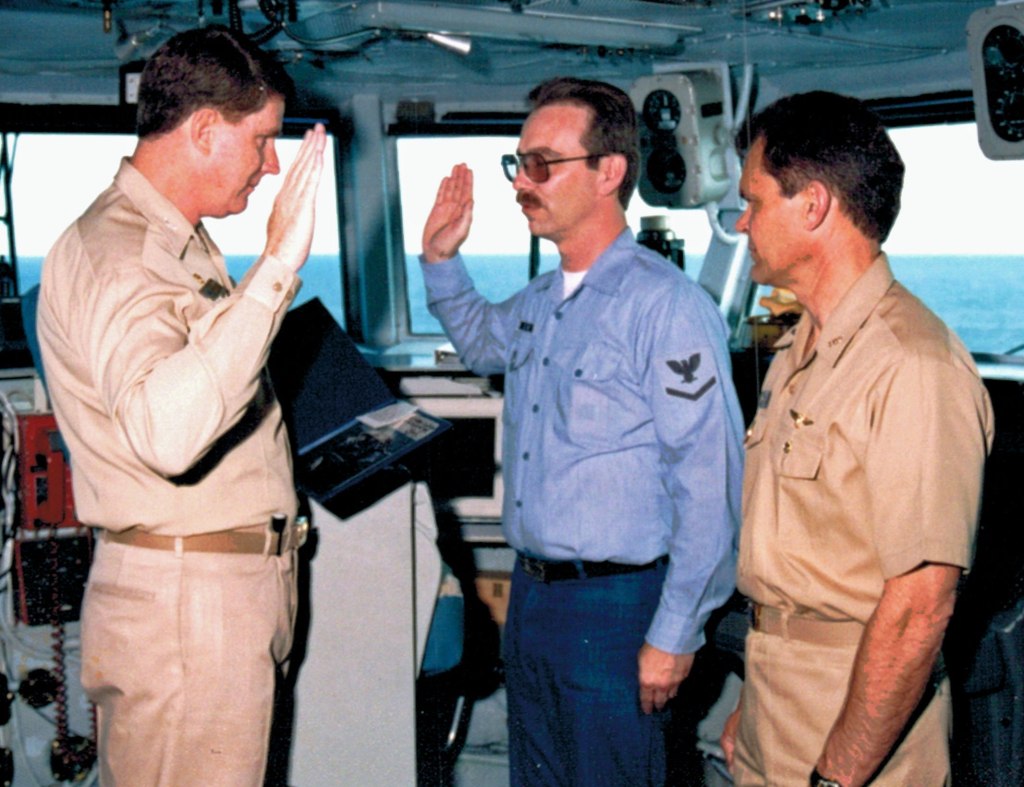
Every time a military member reenlists or accepts promotion, he or she is required to reaffirm the oath of enlistment or oath of office, both of which include these words:

“I will support and defend the Constitution of the United States against all enemies, foreign and domestic.”

This vow, taken by generations of patriots who have backed it up with actions, has preserved the values of our nation, embodied in the Constitution, and if continually upheld will sustain those values for generations to come.

As we look to developing and sustaining our personal values, it might be helpful for us to adopt a similar level of intentionality and commitment by periodically reaffirming that oath with one word change:

“I will support and defend my character against all enemies, foreign and domestic.”

The word “character” comes from Greek and means “to carve” or “to engrave”. It is the pattern engraved in us by the repetition of thoughts and behaviors along which we make moral and ethical choices. Its development is influenced by a variety of sources including family, friends, people we admire, life experiences and media of all sorts.

Like the Constitution, our character also has enemies. Some are foreign (outside us) and some are domestic–they come from inside us. Foreign enemies that assault our character may be friends with destructive habits, family members who manipulate and use us, individuals who devalue or abuse us, people who discourage adherence to moral codes or encourage us to lay aside that which promotes health in body, mind or spirit. Domestic enemies are also many, and may take the form of unmanaged feelings, laziness, addictions, selfishness, procrastination and poor self-image, to name a few. It is vital that we stay alert in the support and defense of our character against these enemies-within-and-without, for they can destroy us.

Instead of letting our characters be determined by default (not making conscious choices), or by reaction (to the behaviors or words of someone else) we must adopt a higher level of vigilance. We must work pro-actively to protect our character so we will not be hijacked by our emotions, our actions will continue to support our core values and our goals, we will not give in to harmful self-indulgence and we will not allow ourselves to be defined by people who have hurt us.

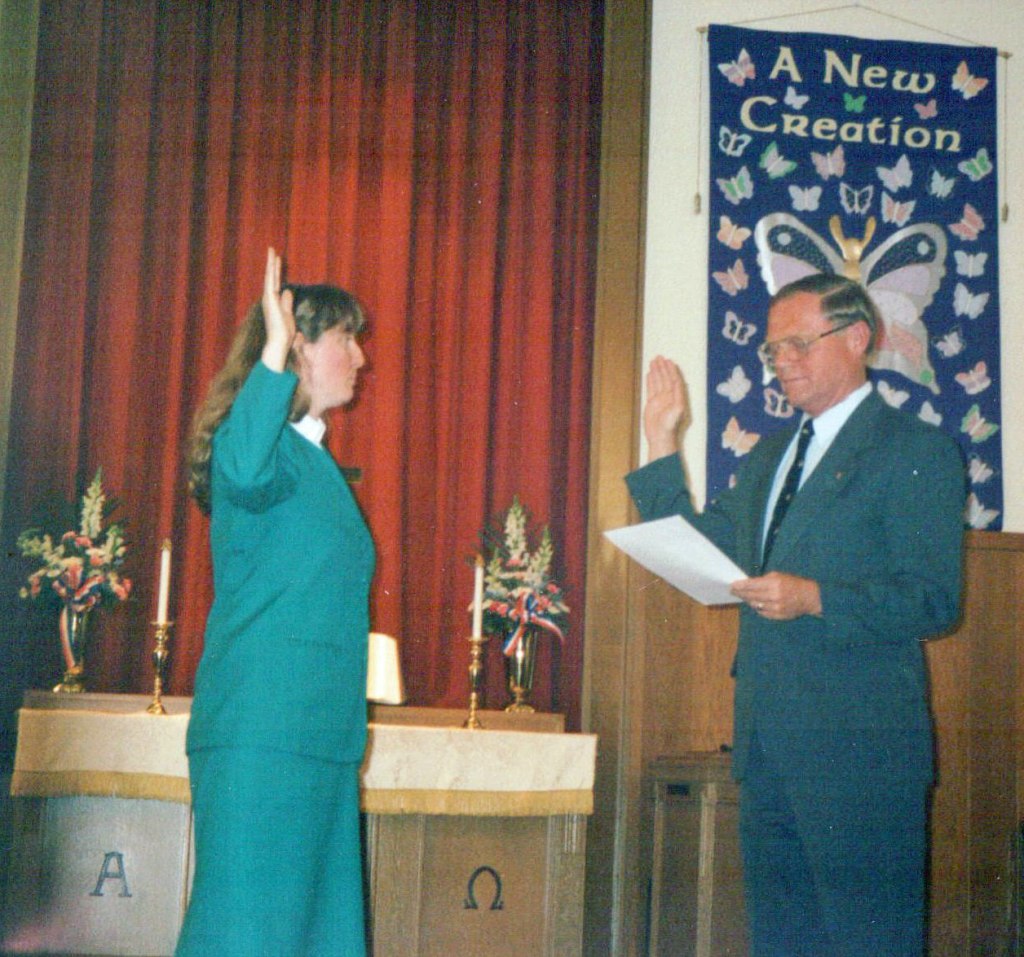
Is your character developing as you desire, or are you letting your life be “engraved” by “enemies”? Are the patterns that are being carved into you by repeated behaviors and thoughts leading you to a life lived with integrity and honor, or to one that is less principled?  If there is any level of dissatisfaction in your answer, today is the right day to make a change. One way to begin your battle plan for the preservation and strengthening of your character is to raise your right hand and repeat these words:

 “I will support and defend my character against all enemies, foreign and domestic.”

Keep in mind that every other vow you make in life depends on how well you fulfill this one.

“We are what we repeatedly do. Excellence, then, is not an act, but a habit.” -Will Durant

The Story of Philosophy: The Lives and Opinions of the World’s Greatest Philosophers

Copyright © 2020 bendertales.com

Gifts for Living

In 2007, I had the privilege to study for a semester under Elie Wiesel. You likely know him not only because he is a Holocaust survivor and recipient of the Nobel Peace Prize but because he is the author of over 35 books, among them Night, frequently required for reading in High School. The course, entitled Hope and Despair,gave us an opportunity to explore these issues through the lens of the collected literature of the Hasidic teachers, or Rebbes as they were called, who lived and taught during the 1700s, primarily in Central Europe. One of the most famous of these Rebbes was Yisrael Ben Eliezer, also known as the Baal Shem Tov, the founder the Hasidic movement.

Once the Baal Shem Tov was approached by his Hasidim and asked why he always answered their questions with a story. Then they waited for him to answer with yet another story, but after a “loving and lingering pause,” he responded: “Salvation lies in remembrance.” 1

Years later the Baal Shem Tov’s grandson, Rebbe Barukh of Medzebozh was talking with his Hasidim about their Torah studies and he told them this story:

“Do you know the legend about the light that shines above the child’s head before he is born? This light enables him to study and absorb the entire Torah. But one second before he enters into the world, the child receives a slap from his personal angel; in his fright, he forgets all that he has learned. So why study if it is all to be forgotten? It is to teach man the importance of forgetfulness–for it, too, is given by God. If man were not to forget certain things, if he were to remember the time that passes and the approaching death, he would not be able to live as a man among men. He would no longer go to plow his field; he would no longer build a house; nor would he have children. That is why the angel planted forgetfulness in him: to allow him to live.” 2

One lesson I learned by serving as a pastor and chaplain for thirty-four years is that the ability to forget can be a blessing. So many of us have suffered things in our lifetime that, were we to think on them often, they would severely impact our capacity to live fully. Sometimes those things come back involuntarily, invading our sleep with disturbing dreams and our waking times with intrusive thoughts. Other times these memories are invited, in the vain hope that if we ruminate on them often enough, the outcome might change. For all of us whose past continues to haunt and disturb, or even just causes us to live with undue caution, regret and pain, the ability to forget is truly a gift from God. It opens to us the opportunity to transcend our injuries and failings, it gives us hope for a future not defined by past trauma and it increases the possibility of forgiveness, both for ourselves and others. For me, one of the surprising delights of aging has been a growing inability to recall past grievances, which makes me wish I could forget more of them and sooner.

Forgetting is a blessing, but so is its antithesis – remembering, for by it we come to know our true selves. We are reminded of who we love and to whom we matter by the photos we carry. Thinking on the kindnesses we have experienced helps us discern our value to those around us. The love of our Creator is recalled by remembering the grace we have received. The difficulties we have overcome point to our resilience. Our ideals and principles are fortified by seeing the trust others place in us. The events and relationships we cherish evoke hallowed memories and fill our lives with meaning. No wonder the Baal Shem Tov declared “salvation lies in remembrance,” for by it we know who we are, what we value, and to whom we belong.

In a world fraught with things that threaten undo us, may God bless both your forgetting and your remembering so you might find both fullness of life and salvation for your soul.

1. Ernest Kurtz and Katherine Ketcham, The Spirituality of Imperfection: Storytelling and the Journey to Wholeness (New York: Bantam, 1992) 155.

2. Elie Wiesel, Four Hasidic Masters and Their Struggle Against Melancholy (London: Notre Dame Press, 1978), 69.

Copyright © 2020 bendertales.com

Pickle Sunday

This weekend many churches, including the one I attend, did not gather for worship in an effort to lower the incidence curve of Covid-19 in our communities. Although some people view the national request to restrict personal liberty as more of an imposition than a necessity, I see it as a sacred duty to follow the guidance of health professionals during the pandemic. As a Christian, I take seriously Jesus’ teaching “Whatever you did for one of the least of these brothers and sisters of mine, you did for me.” (Matthew 25:40) These words reinforce in me the need to choose my actions out of concern for those most vulnerable who are at risk of severe complications and even death from the virus.

As a New Yorker who served twenty years as a Navy chaplain, six of which was with the Marine Corps, three with an office next door to the Sergeant Major with a very thin wall separating us, I often find myself channeling my inner Gunny. Here is the translation:

“Unless you want to shoot Grandma outright, wash your filthy paws, quit picking your nose, keep your butt in the house, shut up and color… Belay my last. Go find something to clean.”

Taking that advice, I was writing (rather than cleaning) when a comment arrived from a former parishioner named Donna.  

“Tell people about your pickle recipe and the sermon you gave about it.”

I admit including a recipe as a bulletin insert was unusual, and yes, I preached about pickles, but unlike some sermons which folks may claim are pointless, this time there really was one. Not only am I going to explain, since Donna asked me to do it, but if you stick with me to the end, there might even be help for that hand-washing problem we’ve been hearing about in the news for weeks-the problem being that so few of us do it properly, if at all. Yuk…

So here goes: (Don’t worry. It’s just a few comments, not a sermon)

For most Christians, baptism is a sacrament. It is also a topic for debate. Should we dip, sprinkle or fully immerse? Should there be Baby Dedication followed by Believer’s Baptism or Infant Baptism followed by confirmation? Since my faith group is of the latter persuasion, is it proper to baptize infants who may sleep or poop their way through the event, or as it happened to me, grab the pastor’s shiny, dangling earring causing a yowl from said pastor that was definitely NOT part of the liturgy? Since baptizing infants requires their parents to promise to raise them in faith until they are old enough to confirm for themselves the vow made on their behalf, what do you do about parents you know are lying? Many times parents would tell me they wanted to “get their kid done” to get the grandparents off their case. I didn’t know whether I should be checking the child’s diaper for that thing that pops up out of a turkey to let you know it’s ready or advertising baptism as an equivalent to the Good Housekeeping Seal of Approval.

Despite all the tradition and lack thereof about the practice of baptism, a few things are essential. Repentance, the turning away from sin and all that separates us from God; water, used to wash away all unrighteousness and as a sign of commitment to that new life; and the invocation of the Holy Spirit, to guide the newly baptized in a way that leads to eternal life in Christ. Which means that baptism is about getting one begun, not done. It is a commencement, at any age, not a “Thank God that’s over” occasion.

So, what does this have to do with pickles?

Having studied Koine Greek, the language of the New Testament, I often feel compelled to peruse the Greek text before I preach. Why waste 3 ½ torturous years learning a language which nobody alive speaks? Besides, the nuanced word usages and meanings are interesting and increase my understanding of the text.

On the day which Donna remembers as Pickle Sunday, the Gospel lesson was Luke 12:49-56, a passage in which Jesus tells his hearers he has come not to bring peace to the earth, but division. This will occur because those who follow his teachings will find their priorities and values reordered in ways that will put them at odds with cultural norms. In verse 50, Jesus speaks of the trials he, too, will undergo in his clash with the establishment. He says, “But I have a baptism to undergo, and what constraint I am under until it is completed!”

In my study of this passage, I spent some time looking over the word translated here as “baptism.” That word is baptizo, which means to cleanse by dipping or submerging, to wash or overwhelm. But later in the same gospel the root of this word is used for merely dipping one’s finger in water. “And he (the rich man) cried and said, Father Abraham, have mercy on me, and send Lazarus (a beggar), that he may dip the tip of his finger in water, and cool my tongue; for I am tormented in this flame.” (Luke 16:24) The Greek word used here is bapto, which means to dip or dye. So, what is really meant by baptism? Is it a simple dip in some water that gets one wet, or if color is added merely changes one’s outward appearance? Or does baptism mean something more?

A statement written by James Montgomery Boice, published in the May 1989 edition of Bible Study Magazine, and quoted in many Bible commentaries, provides an easy-to-understand description of the difference. On Pickle Sunday I read it to my congregation:

“The clearest example that shows the meaning of baptizo is a text from the Greek poet and physician Nicander, who lived about 200 B.C. It is a recipe for making pickles and is helpful because it uses both words. Nicander says that in order to make a pickle, the vegetable should first be ‘dipped’ (bapto) into boiling water and then ‘baptised’ (baptizo) in the vinegar solution. Both verbs concern the immersing of vegetables in a solution. But the first is temporary. The second, the act of baptizing the vegetable, produces a permanent change.”

To get back to our current situation, that of trying to reduce the incidence of Covid-19 by voluntarily curtailing some of our personal liberties and being vigilant about hygiene, it is time for those of us who have been baptized into Christ to take that transforming commitment seriously. We must be at the forefront of care in our communities in whatever capacity we are called. If that means in the trenches, then please take all precautions and practice self-care so you do not wear out from its lack. If that means spending quality time with family in quarantine, be on your best behavior. No one wants to be stuck inside with a self-absorbed _____ (sorry, channeling my inner Gunny again).

Far too many “Christians” have treated their baptisms like they do their hand-washing practices – a dip in the water that changes nothing.  Today, as you soap up for a 20 second scrub, may your hands be transformed from potential lethal weapons into agents of care that make your commitment to Christ obvious to all–from at least 10 feet away, of course.

Oops, this may have turned into a sermon…  😊

Copyright © 2020 bendertales.com

Cora

The first time I heard Cora’s voice was over the phone. “Are you the pastor?” she asked.  It was 1990, and I was female, so most people still phrased that question with more shock than a need for clarification in their voices. “Are you the pastor?” they’d say with disdain or disbelief.  But not Cora; she’d never met me, so she was just trying to make sure she had the right person on the line.

“Yes, I am. How may I help……” I didn’t even get the phrase out.

“Please come over. My husband is dead.” Click. She hung up. I put the receiver down and stared at the phone. It rang again. “My name is Cora and I live at…” She gave me her address.  

“I’ll be right over.”

“Good,” she replied and hung up again.

I wasn’t sure what I’d find when I arrived. Had her husband just died? Was he sprawled on the kitchen floor where he’d dropped or sitting with a blank stare in his favorite chair? Maybe he had died a day or two ago and she had been so paralyzed with grief that she couldn’t find the voice to call. Or maybe he had been dead a long time, and I’d be overcome with the odor when she opened the front door to lead me to the back bedroom where his rotting remains were melting into the mattress.

I drove into the nearby trailer park and followed the numbers around the circle until I found hers. She lived in an older, more established, single-wide with another half attached, which, as it turned out, was a pleasant dining room that caught the afternoon sun. Her front door opened into this room and she was standing at it when I arrived.

“Here I am,” she called, waving an arm around the open screen.   

I introduced myself and she invited me in. I scanned the rooms as I entered. No body in the recliner by the picture window. The kitchen floor was empty. I sniffed the air. It smelled like tea.

“You called about your husband,” I said cautiously.

“Yeah, he died a few months ago, and I’m lonely. I made us some tea. You take sugar?” I nodded. Tea with sugar was my favorite, but after several years of home visitation I had learned to be wary of offered refreshments. Lollys, my pet name for little old ladies, often had trouble seeing if their dishes were clean or remembering just how long something had been in the refrigerator. So I’d learned to eat or drink whatever was offered, kiss it up to God and hope for the best. Cora’s tea was good, and so were the Pepperidge Farm cookies. We ate them right out of the bag.

Cora told me she was 80, and she looked it. Like most women her age she was beginning to fade–her hair had lost its color; she’d shrunk in both height and weight; she had health issues–but what she was losing in physicality she more than made up for in personality. Having worked for many years as a police dispatcher, she had no problem being direct, even with the wiliest of individuals. This trait came in handy when dealing with her usually absent extended family. She told me that the husband who had recently died was number four. Having outlived the first three, she’d then married her childhood sweetheart. His name was Bill, and she really missed him.

“Maybe I should have been more specific when I told you my husband was dead,” she said with a grin. “You probably thought there was a corpse rotting in my bedroom…” We chatted for two hours, and as I left her house, she gently socked me in the jaw. “Come see me again, kid, this was fun!”

She started attending church services and liked to give me commentary on the behavior of the parishioners. With the magnification of her eyeglass lenses, I had no problem seeing her rolling her eyes at their antics when I looked toward her from the pulpit. “Judy is too bossy,” she’d tell me later. “Wayne is a show-off.” Once she asked me about the handsome man who sat in the next pew.

“He’s gay,” I explained.

“Honey, I’m just shopping, I’m not buying.” The next week she showed up in his car. “I told him I needed a ride,” she said with a smirk.

I dropped by when I could. One afternoon was spent trying on hats from the top of her closet. Another was to see the hole in her stomach after major surgery. “I want you to look at it and tell me what you see,” she ordered as the visiting nurse changed the gauze packing.

“It’s a really big hole.”

“That’s what I thought, too,” she said, trying to grin.

Cora was the kind of person who aged, but never grew old. The last time I saw her was just before she turned 90. Having been reassigned to another church in 1994, I hadn’t been her pastor for five years, but we’d kept in touch. I was on my way from the Naval Chaplains School in Newport, RI to my first assignment: two-and-a-half years of isolated duty in Guantanamo Bay, Cuba. We both knew this was the last time we would see each other.

We met at Dennys for lunch. “So what did you do at boot camp?” she quizzed, eager for some fresh story of adventure. I told her about being the nozzleman at firefighting training, about entering and exiting a non-landing helicopter by hanging from a rope, I even showed her the blisters from a three-day hike. She was enthralled.

“Hey Cora, do you think I am nuts for running away and joining the Navy at 40?”

“No, honey, if you want to be me at 90 you gotta do these crazy things at your age!” I rolled my eyes.

When lunch was over, and we were getting ready to say good bye, Cora looked more serious then I’d ever seen her. “Could you promise me something, honey? Would you do my funeral?” I looked straight at her.

“No Cora, I can’t. Your pastor will do that.” She grunted, obviously swallowing some commentary on the new pastor. “I can’t do your funeral, Cora, but there is something I can promise. I promise I will always miss you.” She grinned.

And I still keep that promise.

Copyright © 2020 bendertales.com

Dear Elmer

Written in 2010

Dear Elmer,

It’s Christmastime again. Last week when I was out to sea on USS New York, my husband Ken (you’d like him) brought down the boxes of decorations from the attic and before I got home, had hung your sleigh bells on the front door. I love how they jingle on our way in or out, and they were especially cheery to hear when I arrived home after ten days away. How is it you have been gone for sixteen years and can still bring joy to others?

I remember when we met. I was standing by the side door greeting parishioners on my first Sunday as pastor of my first church. I felt inadequate and awkward; secretly wishing that the real minister would show up and take charge. You stopped to shake hands with me and asked if you could show me around town the next day. I remember that you told me you had made the same offer to the previous preacher on his first Sunday, too, but he had not taken you up on it.  So how could I refuse? You were the patriarch of the congregation–you’d been there longer than anyone else. I didn’t want to turn down your invitation, but I was anxious about it. You were more than fifty years my senior. It seemed silly to imagine I could be your pastor.

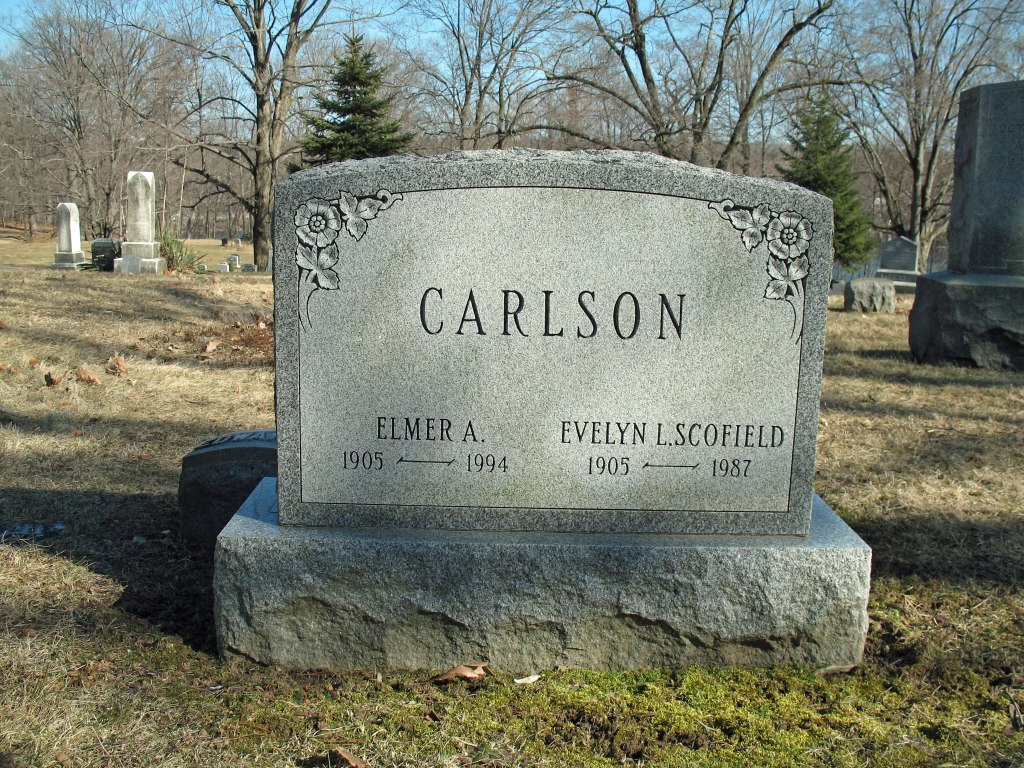
The next day you came to pick me up at the parsonage and we headed straight for the cemetery. That this was our first stop surprised me. We drove up the hill near the more recent interments and got out of the car. “Let me tell you about your congregation,” you’d said as you began pointing to various graves. “Let’s start with their parents who are buried here. That will help you understand why they are the way they are,” you said with a grin.

You know, Elmer, the stories you told me that day gave me valuable insight into the dynamics at play in our church. And when later in the day you took me to the other churches and helping agencies in town and introduced me as you pastor, I started to think or at least hope that perhaps I could be. But nothing made me feel as welcome as when we visited your wife Evelyn’s grave and after telling me at length about her, you paused, looked right at me and said, “You know, she’d like you.” It was the best compliment I could imagine.

Although making me welcome was part of your agenda for that day, I know it was not the whole story. You were also getting things settled. At eighty you knew you would not live much longer, and you needed to make plans. So you took me to see the graves of the people you had known and loved throughout your life and then got down to business. “One day you will bring me here and leave me,” you’d said. “And when you do that, I don’t want you to feel bad. I’ve lived a good life and have now outlived most of my closest companions. On the day you bring me here, Pastor, remember that you are really bringing me home.”

So I guess I should not have been surprised when four and a half years later, on my last Sunday as your pastor before I transferred to my next assignment, I got a phone call after lunch. “Elmer was found dead in his recliner” the voice on the other end of the line said.

“But I just saw him a few hours ago,” I remember responding. “He attended the Sunday service and shook hands with me on his way home. How can he be dead?” But you were. After worship you’d gone back to your house, sat down in your favorite chair and gone home to be with Evelyn and all those people to whom you’d introduced me. And the last thing I did before I left that church for good was take you up the hill in Wappingers Rural Cemetery to where the more recent graves were located and leave you, just as you’d said I would. And I didn’t feel bad doing it. It’s not that I didn’t miss you; we all missed you. You were a sweet and caring man. But I didn’t feel bad because I’d been able to do for you exactly what you’d asked me to do — send you home to that place we both know is wonderful.

Now since it is Christmas again, Elmer, I must report to you on how my other assignment is going. You remember, the one about the bells? It was a snowy day when you gave them to me. The church youth group had stopped by your house to sing a few carols, and as you’d done every year, you’d come out on your porch to jingle the bells and join us in singing. They were real sleigh bells, you’d told us. They’d come off a sleigh you’d ridden in as a child, and the sound of them accompanying the carols never ceased to bring a smile to our faces. They were one of your treasures, so I was surprised when, on what turned out to be your last Christmas, you called me back as the teens headed off toward the next house. Placing the bells in my hand, you gave me the assignment: “Make sure you find a way for them to bring someone joy each Christmas,” you’d said.

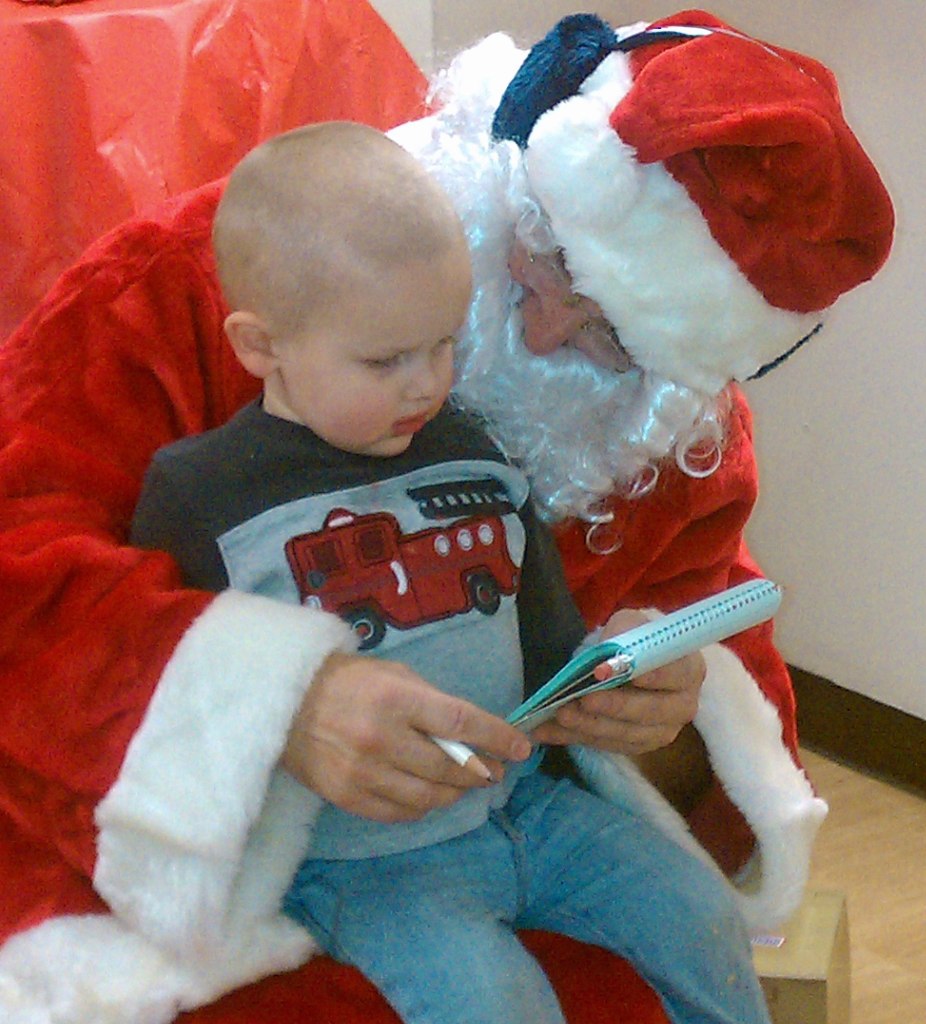
Well, Elmer, here is this year’s report: Tonight, my husband was invited to play Santa Claus for the children of Sailors who are not yet halfway through a nine month deployment. These Sailors will not be home for Christmas, nor were they there for Thanksgiving. They will miss Easter with their families and even Memorial Day. But tonight, when they heard your sleigh bells, their faces brightened with expectation, for Santa (who is not subject to Navy deployments) was arriving as scheduled, just as you did in heaven.

So thank you, Elmer, not only for helping me to become your pastor, but for your perpetual Christmas gift, which warms our hearts every year — that of finding ways to bring joy to others.

Oh, and my husband Ken, he’d like you, too!

Blessings,

Pastor Laura

Copyright © 2020 bendertales.com

What I Learned From Wounded Warriors

For three years I served as the chaplain to the Wounded Warrior Regiment at Marine Corps Base Quantico in Virginia. My job was to provide pastoral care to Wounded, Ill and Injured Marines (WII), their family members and the military and civilian staff who advocated and cared for them. It was a sacred privilege to have served in this capacity.

Although I was there to give support to these Marines, I cannot overstate the valuable lessons I learned from them, which remain with me still:

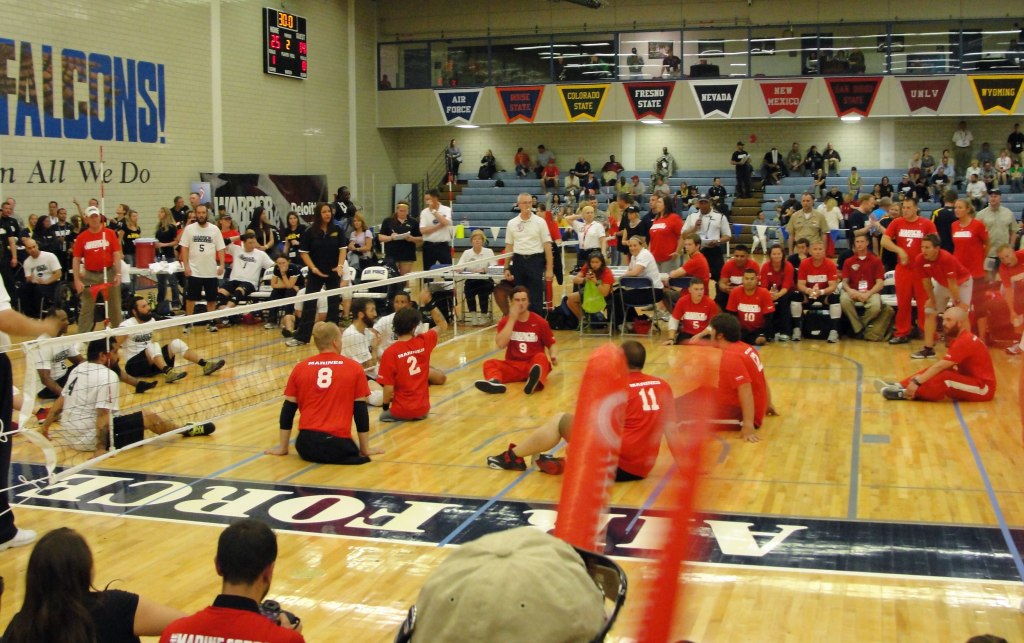
I learned that injury and illness may place restrictions on a person’s activities, but do not define them. When Marines arrive at the hospital, they initially see themselves as patients. At the point they remember they are still Marines, healing increases its pace. The reminder is usually from a Gunnery Sergeant who asks the family members to go downstairs for coffee and then counsels the Marine on his unsatisfactory haircut and lack of visits to the gym. When the WII Marine points out his medical issues, which are often grave, the Gunny reminds him (as only Gunnys can do) that he is still a United States Marine who earned that title, and his responsibility is to adhere to the standards of the Corps. Within days, the patient is again referring to himself as Lance Corporal ____, he has a fresh “high and tight” haircut and he is asking the chaplain how soon he can get on the seated volleyball team. Self-definition matters. The first time I met a quadruple amputee making his way through the corridor with prosthetics, he held the door open for me. An Improvised Explosive Device (IED) removed his limbs, but had no effect on his desire to be a gentleman.

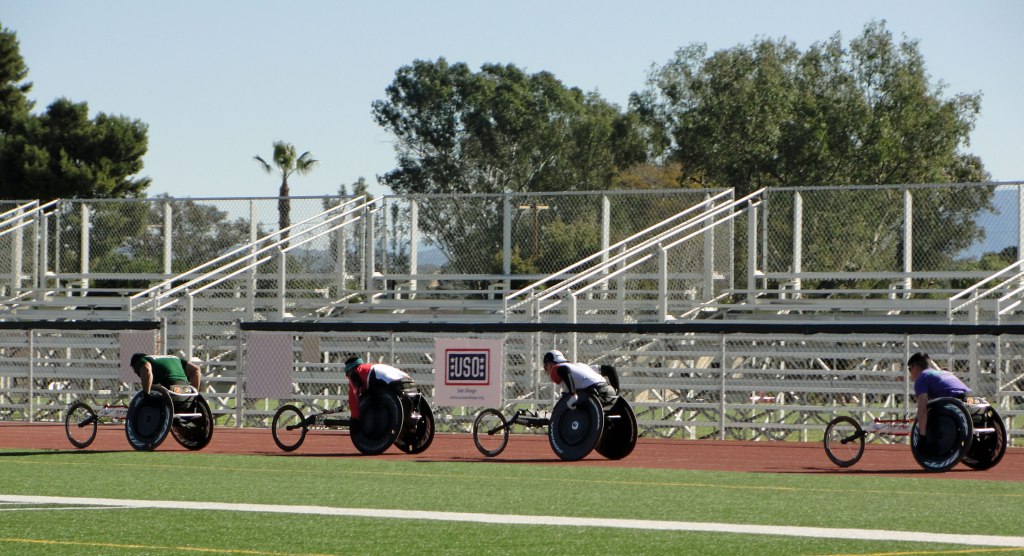
I learned that one of the best ways to decrease difficulties in whatever forms they present themselves is to increase joy. One way is through athletic activities. The thrill of competition, of pushing oneself beyond perceived limits, of cheering for your team is healing. At Regimental events we knew we had succeeded when a Marine referred to him/herself as a swimmer or a basketball player and not in relation to his/her injuries. A key component to increasing joy is the ability to maintain a healthy sense of humor. Case in point, one of the favorite t-shirts for combat injured Marines at Walter Reed states: “Wounded Warrior, some assembly required,” and on the back it says: “I had a blast in Afghanistan.”

I learned that healthy connections are essential. Those who fare the best, whether WII Marines, family or staff members are those who make the best connections. I do not mean those who have the most friends, but those who remain connected to what matters most: the values that define them, the people who love them, the hope for the future that awaits them and the vision of their best selves. As a person of faith, I would also add those who feel connected to the God who never lets them go.

I learned that the call of God upon a person’s life is not voided by illness or injury. It may be redefined and redirected, but it remains. When our WII Marines can discern and answer that call, becoming agents of care for others instead of than just recipients, everyone benefits, especially them.

These lessons about self-definition, joy, connection and calling are among many I will carry with me for the rest of my life. May God continue to strengthen and bless all those whose service to country has wounded them in body, mind or spirit and those who care for them.

Copyright © 2020 bendertales.com

A Single Light

Written in 2012

It was really dark outside when I drove home tonight. Because of the cloud cover, even the moon seemed not to shine. The only lights visible were the (too many, as always) taillights of the cars in front of me on the highway and the occasional street lamps or neon glowing near the exit ramps. When I turned on to a side road through a wooded area, it got darker still. Had it not been for my headlights, I would have had to stop altogether. Sometimes darkness can be so overwhelming – and yet, despite its all-encompassing reach, it cannot overcome even a single light.

Several months ago, a Marine Sergeant with terminal cancer flew to Washington DC as a guest of a charitable organization that helps make last wishes possible. An avid history buff, his desire was to visit his nation’s capital before he died. On the day he toured Arlington National Cemetery, I had the privilege of accompanying him.

The first time I saw him was in his hotel lobby. Seated in a wheelchair, he looked frail and it was evident he was in a lot of pain. We wheeled him out to the van and assisted him in taking a seat.  As soon as he was settled, he turned toward me. “Let me help you, chaplain,” he said as he reached his hand in my direction. His offer gave me momentary pause, but I accepted his kindness, taking his hand as I entered the vehicle.

On the way to the cemetery we drove past monuments and historic buildings. The Sergeant narrated our journey better than any tour guide, including the requisite corny jokes, so all of us might enjoy the trip as much as he.

At Arlington the stories continued, but with a more respectful tone. There were many graves he wanted to visit, especially those of Marines he admired.

By the time we arrived at the Tomb of the Unknown Soldier, the Sergeant was visibly exhausted. In a rare gesture, he was permitted to be wheeled inside the area near the tomb reserved for the press. After a few minutes the announcement was made that we should all rise and remain standing during the changing of the guard. The Sergeant rose from his wheelchair. His whole body trembled with pain. “You may stay seated,” his escort advised.

“No Ma’am,” he said, “I cannot.”

From a distance I watched as this Marine stood in rapt attention, in honor of his fallen comrades.

When a light so filled with kindness, gentle humor, respect and honor shines this brightly, the darkness doesn’t stand a chance.

“In him was life, and the life was the light of men. The light shines in the darkness, and the darkness has not overcome it.” John 1: 4-5

Copyright © 2020 bendertales.com

Vulture Strike

On a Saturday morning in the Spring of 2001, I was invited to ride along with a group of friends getting certified to drive their motorcycles on base in Guantanamo Bay. The military takes safety seriously and requires all bike owners to prove they know how to handle their ride. The plan that day was to end the course at the beach and have a picnic. Not a motorcyclist myself, I was a passenger on the course leader’s bike.

About an hour into the ride, and just past an area with a gorgeous view of the ocean, we happened upon two vultures eating a dead “banana rat” in the roadway. Properly called a “Cuban Hutia,” the vultures’ brunch was a large cavy-like rodent about the size of a racoon. With no natural predators, the base was overrun with them. They were called “banana rats” not because of what they ate, but because of the shape of their poop, which they left everywhere. I thought hutia were cute, which was a good thing because lots of them lived up on Chapel Hill where I worked.

Cuban Hutia

When the two scavengers saw the line of us coming down the road, they left their meal and flew out over the field. Then one circled back. It headed straight for us, colliding with the leader sitting in front of me first. Then the buzzard lost its balance and slammed into my forehead, which, thankfully, was protected by a good helmet. My head whipped back as the sissy bar stopped my fall. In the words of the rider behind me, the bird then started rotating and flipped “beak over butt, beak over butt, beak into the ground-dead.” It was all he could do, he said later, to avoid the whirling buzzard and control his laughter so he could stay upright.

Although he too had been struck, Greg, the leader, never stopped the bike. Reaching back, he poked my leg to get my attention and yelled, “You Okay?”

“Humph… uh… I think so?” was all I could mumble.

“Good. We’ll keep going.”

After what seemed like another hour riding, we got to the beach. Once I got off the bike, my head felt “fuzzy” and I was a bit wobbly. I should have made a trip to the base hospital, but I couldn’t bring myself to walk into the emergency room and say I needed to be evaluated because I had just killed a vulture with my head. As a chaplain, I knew most of the staff, and this incident would be too funny to leave alone. So, I stayed at the picnic and when it was over, I went about my day as best I could.

That night I was scheduled to volunteer for the ten to midnight shift at the Iguana Crossing Coffeehouse on Chapel Hill. Unfortunately for me, the other volunteer was the flight surgeon.

“I heard you had a close encounter today,” he said while looking in my eyes. The story was already spreading like a disease. Then he went over to the wall phone and dialed. “I’m sending Chaplain Bender to see you. Yes, she really head-butted a vulture, and she has a concussion. Yes, she is leaving right now.”

It was only a three-mile drive to the hospital. When I arrived, my friends Ken and Vicki were already there. Ken was an emergency room nurse and Vicki his long-suffering (because of his sense of humor) lovely wife.

“I didn’t think you were working tonight,” I said.

“No, they called me at home. They knew we wouldn’t want to miss this,” he grinned. Wonderful friends, they stayed with me through neck x-rays and other tests until the doctor determined I would be fine, at least medically.

But the next morning, this appeared in my inbox:

A short time later, I got a call from the NCIS agent. “I’ve got a guy out there right now drawing a chalk line around the victim. Don’t leave town.”

Later I got a call from the Marine Colonel. In a voice reminiscent of his counterpart in A Few Good Men he barked, “Chaplain, you are a non-combatant and my Marines are a well-trained force. Why are you the only one here with a confirmed kill?”

It went on for weeks. Even the going away party a year later was not exempt:

Now I’d like to say that transferring to my next assignment would have ended the issue, but thanks to the wily emergency room staff my permanent medical record contains the phrase “Vulture Strike.” Since a review of my health record was required at each new duty station, every time I moved, I had to retell the story. It wasn’t even over when I retired 19 years after killing that buzzard. The woman reviewing my record for the Veteran’s Administration saw the phrase and not only did she ask me about it, but she scheduled me for an MRI to make sure I did not have a Traumatic Brain Injury and to meet with a neurologist to ensure there had been no permanent impairment. I believe she also accompanied my record with a note saying “Ask her about the ‘Vulture Strike’” because all the other doctors I met with for unrelated issues quizzed me about it. Why a gynecologist needed to know about my close encounter with wildlife is a question for which I don’t want an answer.  

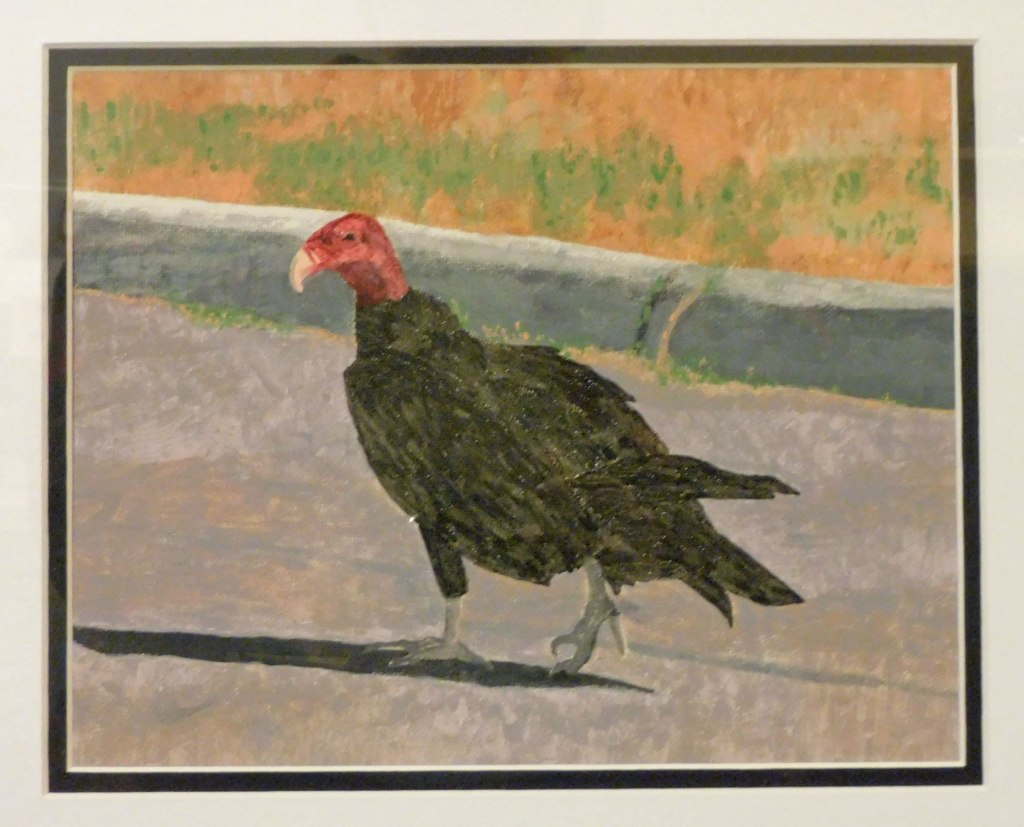
All of this focus on vultures over the last 20 years has caused me to develop quite a fondness for them. Likely it is to counter the guilt of having unintentionally slain one of their number. If I were a Catholic, I could be given some kind of penance to do. But as a Protestant, all I could do is create this memorial:   😊

Copyright © 2020 bendertales.com

Dead in the Head

My last assignment before retiring from the Navy was as senior chaplain to the Nuke School, where highly intelligent Sailors train to become Nuclear Operators. Although my earlier assignments afforded me variety-of-mission and once-in-a-lifetime experiences, this one made me “Mayor of Sad Pandaville” and gave me the opportunity to spend each day locked in a small windowless room talking with a continuous stream of interesting personalities.

As a chaplain, it was routine for me to counsel Sailors as they transitioned from high school student to responsible adult, but at the Nuke School, this took on a whole other form. This “league of extraordinary gentlemen and ladies” with whom I spoke daily, often possessed photographic memories, could grasp complex concepts with ease and likely had achieved great academic success sans studying before joining the Navy. But what often accompanies these enviable traits are other, less helpful ones: a lack of social skills, a shortage of common sense and an overabundance of eccentricity.

When I asked a Sailor what he did for fun, he replied, “I am writing a sonata.” Another said that as soon as he got to his apartment off base each evening, he and his roommates donned their Dungeons and Dragons costumes and stayed in character until they had to return to work. One young man disclosed that when his parents wanted to punish him, they disallowed him to do math. Of course, I also helped students deal with “normal” issues such as the death of a parent, a breakup with a significant other or high stress levels. But interspersed were Sailors dealing with tragedies like “someone looked at me funny” or “somebody rearranged the stuff on my desk.” I never knew what issue was about to walk through my door, plop down in the chair and present itself.

In truth, I loved working with these incredible personalities; they were unique… like snowflakes… How could I ever forget our enthusiastic Light Saber Dancer, or those who “identified as furries” who tried to sneak into study hours wearing animal tails, or the school’s Christmas tree decorated with Pokémon cards? And I will certainly never forget the sailor who attended band practices in his pajamas with mismatched socks, and concerts wearing a bright yellow Pikachu onesie, or the guard at the front door who announced as I walked past him “Chaplain, I am so excited, my elf suit finally arrived.”

Likely there are those who will not forget me, either, like the kind Sailor who complimented me by telling me he loved to come talk to me because it was like going to see his own grandmother. (I let him live…) Or the one who said he had heard I was leaving and who told me I should write down my wisdom before I passed. (I checked my pulse after he left…)

Which brings me to this story:

One morning during our daily senior staff stand-up meeting with the Commanding Officer, I began to feel faint. Not wanting to pass out in the command suite and give them fodder for yet more “old jokes,” I walked down four flights of stairs so I could be out of sight in my office if I collapsed. Once there, I mistakenly thought it prudent to visit the “female head” or ladies room, where, with all that porcelain and tile, there can be no soft landing.

When I came to, my first thought was that someone had lost their eyeglasses. Then I realized my nose was a few inches from the floor and the spectacles were mine. Eventually I hoisted myself up on the toilet seat and, still groggy, tried to walk the 50 steps back to my office. I managed about five and passed out again between the inner and outer doors of the bathroom. Finally, a Sailor who, thankfully, had been an EMT before the Navy, found me. While she was calling for help, I lost consciousness again.

When I came to, there was a gaggle of folks watching emergency personnel readying me for transport. It was then that I realized I had broken my ankle, so I reached down and without thinking, snapped it back into place. Since my blood pressure upon being revived was only 70 over 42, they hauled me and my broken right ankle, sprained left ankle and wrist, and sliced open face from where it hit the hinge on the back of the stall door, off to the hospital for an overnight stay. It was quite an ordeal.

A few months later, a young Sailor came to see me saying he wanted to apologize for something. Then he told me that the morning I had passed out, he had been the quarterdeck supervisor responsible for the building’s entry doors and those who guarded them. He said that while he was working, a female student had tiptoed over to him, leaned forward and whispered, “The chaplain is dead in the head.” When he asked her if she was sure, she said, “I poked her and she didn’t move. I poked her again, and she still didn’t move. The chaplain is dead in the head.” Then she tiptoed away.

So I asked him what he did after she had said that and he replied, “As watch supervisor I am authorized the see that all watch-standers get lunch and that the floors get swept. I was not briefed about what I should do for a dead person, so I did nothing. I’m sorry I left you there.”

Nukes. You gotta love ‘em. They are unique. Just imagine, somewhere out in the fleet today is a Sailor who may one day tiptoe over to her supervisor and whisper, “Um, there’s a problem with the reactor” and then tiptoe away.

I will miss the crust of the earth.

Copyright © 2020 bendertales.com

Posing for my Statue

Metairie Cemetery looks like a miniature McMansionville. Every street is lined with houses for the dead, many far nicer than those often occupied by the living. Most are constructed of marble with carved accents and accompanying statuary.

A few have elaborate stained-glass windows, which I find puzzling, since stained- glass can only be appreciated from the inside with the light shining through and since the residents of these dwellings are currently dead, well… it seems a waste.

But on the day I visited, I had no room to talk about what made sense since I’d spent most of the sweltering hot afternoon wandering alone in search of a statue I’d seen only in a photograph. I had no clue where it was located, and to make matters worse, I believed it to be inside one of the mausoleums.

So, I wandered with camera in hand from one curious tomb to another, peering in any opening for a glimpse of the angel. My angel. I really wanted to see her with my own eyes, for I felt that if I had a guardian angel, it was she who had been that stone carver’s inspiration. Who else but my angel would have flung herself over top of an altar in exhaustion, her right arm bent under, cushioning her head and her left dangling in despair? Only my angel could look so worn out and frazzled, with her wings tucked around her like she might be trying to escape for a few minutes beneath them before she had to resume the no doubt frustrating task of watching over me. So I searched, for I believed that in that cemetery was a statue that defined my life in a way no other could.

I had just come around a corner on foot, camera at the ready when I saw it. Oh no, not the angel–I found her a little while later, tucked away in a tomb west of the front gate. And yes, when I eyed her, I half expected her to raise her marble head and say with an exasperated tone, “What? Can’t I have just a few minutes of peace?”

And why would she need them? Because in that cemetery I also found this carving, which I know is of me, even though I do not remember posing.

Copyright © 2020 bendertales.com